Discovery of Goujiang in Panyu
Magistrate Tang Meng tasted fermented Sichuan Goujiang sauce in Nanyue and learned that it reached Panyu via the Zangke River from Yelang.
Western Han (西汉) · HISTORICAL EVENT
唐蒙通西南夷
Tang Meng's Opening of the Southwestern Barbarians (135–130 BCE, from the sixth year of Jianyuan to the fifth year of Yuanguang under Emperor Wu of Han) was a watershed geopolitical expedition that incorporated the tribal peoples of the Guizhou-Yunnan plateau into the imperial commandery system. In 135 BCE, while serving as a diplomatic envoy to the Kingdom of Nanyue, Magistrate Tang Meng tasted a rare pepper-like delicacy known as Goujiang sauce in Panyu…
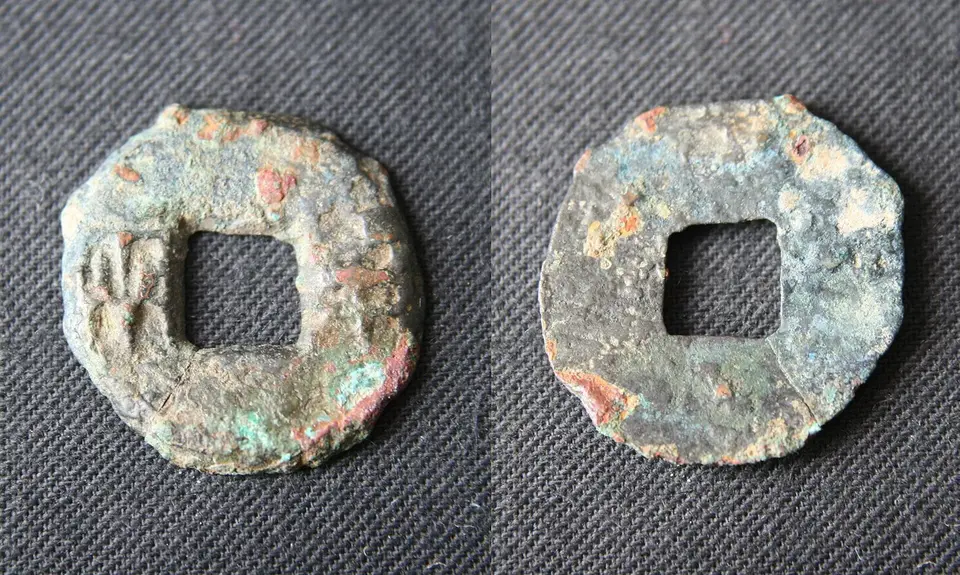
Tang Meng's Opening of the Southwestern Barbarians (135–130 BCE, from the sixth year of Jianyuan to the fifth year of Yuanguang under Emperor Wu of Han) was a watershed geopolitical expedition that incorporated the tribal peoples of the Guizhou-Yunnan plateau into the imperial commandery system. In 135 BCE, while serving as a diplomatic envoy to the Kingdom of Nanyue, Magistrate Tang Meng tasted a rare pepper-like delicacy known as Goujiang sauce in Panyu (modern Guangzhou). Inquiring into its origin, he deduced that it was transported down the broad Zangke River from the Kingdom of Yelang, which obtained it from the Shu region. Tang Meng memorialized Emperor Wu, proposing to establish tributary ties with Yelang and utilize the Zangke River to float armies directly behind Nanyue's defenses. Impressed, Emperor Wu commissioned Tang Meng as General of the Household to lead an expedition into Yelang, successfully securing the allegiance of Marquis Duotong. Tang Meng created Jianwei Commandery and mobilized thousands of laborers to chisel the mountainous Southern Barbarian Road. Although heavy labor triggered local grievances that required pacification by poet Sima Xiangru, Tang Meng's initiative shattered centuries of southwestern isolation, opened the Southern Silk Road, and paved the way for the imperial annexation of Lingnan.
Magistrate Tang Meng tasted fermented Sichuan Goujiang sauce in Nanyue and learned that it reached Panyu via the Zangke River from Yelang.
Returning to Chang'an, Tang Meng memorialized Emperor Wu proposing to win over Yelang and launch a surprise riverine campaign against Nanyue.
Commissioned as General of the Household, Tang Meng led a thousand troops and gifts to Yelang, securing the submission of Marquis Duotong.
The Han court founded Jianwei Commandery in the Yelang borderlands; Tang Meng mobilized Ba-Shu soldiers to chisel the Southern Barbarian Road.
Facing popular unrest caused by onerous corvee labor, Emperor Wu dispatched Sima Xiangru to pacify Ba-Shu through persuasive public proclamations.
Returning from Central Asia, Zhang Qian reported seeing Shu cloth in Bactria, proving the strategic viability of the southwestern trade route to India.
Following rebellion in Nanyue, Emperor Wu ordered Ba-Shu and Yelang flotillas to descend the Zangke River alongside northern expeditionary forces.
Allied forces stormed Panyu and conquered Nanyue, establishing nine southern commanderies and fulfilling Tang Meng's overarching strategic design.
In the early Western Han Dynasty, the Southwestern Barbarians referred to dozens of diverse ethnic tribal confederations distributed across southwestern Sichuan, Guizhou, and Yunnan. Although the First Emperor of Qin had constructed the Five-Foot Road connecting Shu to Dian, post-Qin chaos led to the collapse of imperial presence in the southwest, allowing mountain thoroughfares to fall into disuse for decades.
During the reigns of Emperors Wen and Jing, the Han court practiced non-intervention, maintaining border passes only along the fringes of Ba and Shu to bar the export of iron weapons. Merchants conducted clandestine contraband trade through rugged paths. Cut off by towering peaks and deep gorges, over a hundred autonomous polities flourished, among which the Kingdom of Yelang along the Zangke River was the most formidable, commanding over one hundred thousand armed warriors. However, the imperial court remained completely ignorant of the region's geography and river systems.
Following his ascension in 141 BCE, Emperor Wu abandoned passive non-action in favor of vigorous imperial expansion. In the south, the Kingdom of Nanyue, founded by Qin general Zhao Tuo, held the Lingnan expanse (modern Guangdong, Guangxi, and northern Vietnam). While nominally acknowledging Han suzerainty, Nanyue rulers declared themselves emperors domestically, posing a latent threat to the empire's southern border.
In 135 BCE (Jianyuan Year 6), King Ying of Minyue invaded Nanyue. In response to appeals for help from Nanyue, Emperor Wu dispatched General Wang Hui to strike Minyue. Following Minyue's defeat, Wang Hui dispatched Magistrate Tang Meng to Panyu to reassure Nanyue of imperial goodwill and appraise its military dispositions.
Upon arriving in Panyu, Tang Meng was received at a state banquet by the Nanyue court. During the feast, he was served a spicy, aromatic condiment called Goujiang, made from fermented forest berries. Intrigued by its exotic flavor, Tang Meng asked where the sauce came from. Nanyue officials replied that it was carried down the Zangke River from the northwest, noting that the river was several li wide and emptied directly beneath the walls of Panyu.
Being an astute northern administrator, Tang Meng recognized the strategic significance of this statement. Returning to Chang'an, he questioned merchants from Sichuan who routinely operated on the frontiers. The merchants confirmed that Goujiang was produced exclusively in Shu and smuggled beyond the passes into Yelang, where it was loaded onto barges and floated down the Zangke River into Nanyue for immense commercial profit. This revealed a secret, navigable river route linking the Sichuan basin directly to the heart of Nanyue.
Synthesizing this commercial intelligence, Tang Meng submitted a visionary memorial to Emperor Wu. He pointed out that Nanyue controlled several thousand li of territory and commanded hundreds of thousands of troops behind the formidable barrier of the Five Ridges. A direct frontal assault across the mountains would be protracted, perilous, and logistically ruinous.
However, an indirect approach through the southwest offered tactical surprise. The Kingdom of Yelang fielded over one hundred thousand warriors and controlled the headwaters of the Zangke River. If the Han court secured Yelang's submission, imperial forces could recruit tens of thousands of Ba-Shu veterans, build transport flotillas, and float down the Zangke River into Panyu. Caught off guard from the northwest, Nanyue would collapse. Tang Meng summarized: "With the might of Han and the wealth of Ba and Shu, opening Yelang and descending the Zangke River will take Nanyue by complete surprise—a masterstroke to subdue the south!" Emperor Wu embraced the strategy without hesitation.
In the autumn of 135 BCE, Emperor Wu commissioned Tang Meng as General of the Household, granting him imperial tallies and command of one thousand soldiers. Mobilizing tens of thousands of logistical laborers, Tang Meng carried immense quantities of silk, mirrors, and gifts into the southwestern interior via Hejiang.
Tang Meng reached the royal settlement of Yelang and met with its supreme ruler, Marquis Duotong. Conducting formal ceremonies, Tang Meng read Emperor Wu's edict, displayed imperial arms, and distributed generous gifts of woven silk. Tang Meng presented a clear proposition: if Yelang submitted to Han suzerainty, the emperor would establish commanderies to protect its people, allowing their sons to serve as imperial magistrates with hereditary honors; defiance would invite ruin. Impressed by Han wealth and aware of its military power, Duotong consented to become a vassal. Over a dozen neighboring tribal chieftains followed suit, bringing Yelang under imperial suzerainty.
Following this diplomatic triumph, Tang Meng petitioned the court to establish Jianwei Commandery in the borderlands between Shu and Yelang, stationing imperial magistrates to administer the territory. To secure communication between the Sichuan basin and the Zangke River, Tang Meng mobilized tens of thousands of laborers from Ba and Shu to undertake the construction of the Southern Barbarian Road (Yelang Road).
The engineering project required cutting through granite precipices, spanning roaring rivers with suspension bridges, and carving cliffside galleries. Dense jungle miasmas, venomous reptiles, and relentless rain caused heavy casualties among the laborers. Enforcing rigid military discipline, Tang Meng executed negligent overseers, provoking widespread fear and triggering desertion and grain riots across the Ba-Shu region.
Recognizing that excessive labor levies threatened stability in the southwest, Emperor Wu deployed cultural diplomacy. He dispatched the renowned poet and Shu native Sima Xiangru as an imperial envoy to pacify the region.
Arriving in Chengdu, Sima Xiangru issued famous proclamations titled Proclamation to the Elders of Ba and Shu and Refutation of the Shu Elders. He articulated the grand strategic rationale of opening the southwest: not for monarchical vainglory, but to expand the realm, assimilate diverse peoples, secure southern frontiers, and bring long-term prosperity. Concurrently, Sima Xiangru condemned the harsh punishments inflicted by previous overseers. His eloquence quelled public resentment, allowing road construction to proceed under more sustainable conditions.
Tang Meng's achievements revealed their true value in subsequent decades. In 126 BCE (Yuanshuo Year 3), explorer Zhang Qian returned from Central Asia, reporting that he had seen bamboo canes from Qiong and cloth from Shu in Bactria (modern Afghanistan), having been traded through India. This confirmed the existence of an ancient southern trading route linking Sichuan through Burma to the Indian Ocean.
In 112 BCE (Yuanding Year 5), when Prime Minister Lu Jia staged a coup in Nanyue, Emperor Wu launched Tang Meng's long-prepared invasion. General Lu Bode descended the Huang River, Yang Pu sailed down the Zhen River, while General He Yi mobilized Ba-Shu troops and Yelang naval forces down the Zangke River. Converging from three directions, imperial forces stormed and burned Panyu in 111 BCE, capturing Lu Jia and extinguishing the ninety-three-year-old Kingdom of Nanyue. Emperor Wu organized Lingnan into nine commanderies, realizing the strategic vision conceived by Tang Meng over a jar of sauce.
The most immediate institutional outcome was the incorporation of the southwestern tribal regions into the centralized imperial administration. Following the founding of Jianwei Commandery, Emperor Wu established seven commanderies across the southwest, including Zangke, Yuexi, Shenli, Wenshan, and Yizhou, appointing rotating civil magistrates and enforcing statutory laws. The Guizhou-Yunnan plateau transitioned from fragmented tribal leagues to formal administrative units of the Chinese empire.
The Southern Barbarian Road constructed by Tang Meng connected the Sichuan basin through Guizhou to the Zangke River, linking with the older Five-Foot Road to form the backbone of the Southern Silk Road. Central Chinese iron tools, textiles, and agricultural methods flowed into the southwestern highlands, while horses, cattle, and exotic goods moved north, fostering ethnic assimilation and commercial exchange.
Tang Meng's strategic blueprint proved crucial during the final conquest of Nanyue. Utilizing the base at Jianwei Commandery and the navigable Zangke River, imperial armies launched a two-pronged amphibious assault that caught Nanyue defenders completely unprepared, culminating in the annexation of Guangdong, Guangxi, and Hainan Island into nine commanderies.
Historians throughout Chinese history have praised Tang Meng's foresight and initiative. The appraisal in the Records of the Grand Historian by Sima Qian observes: "Tang Meng deduced the path of the Zangke from fermented Goujiang in Nanyue, opened Yelang, received imperial appointment, and mobilized Ba-Shu troops to construct roads. Though labor exactions were severe, the incorporation of the southern barbarians truly began with Tang Meng."
In the Book of Han, Ban Gu noted: "Emperor Wu possessed sweeping vision, opening distant frontiers. Tang Meng submitted his plan, Yelang submitted, and Jianwei was founded. When Nanyue was ultimately pacified and the southern seas brought into tributary communion, Tang Meng's foresight was fully revealed." Song Dynasty scholar Zhu Xi praised Tang Meng as a strategist who discerned the vulnerabilities of an entire state from a single jar of sauce. Modern historians revere Tang Meng as the pioneering road-builder of the Southern Silk Road, whose geographic insight unified diverse ethnic regions into the Chinese nation.