Relocation to Xuchang
Cao Cao escorts Emperor Xian to Xuchang, establishing control over the court.
Eastern Han Dynasty (东汉) · HISTORICAL EVENT
汉献帝禅让与东汉灭亡
The Emperor Xian of Han's Abdication and the Fall of Eastern Han (汉献帝禅让与东汉灭亡) marked the historic termination of the Eastern Han dynasty in 220 CE through the formal transfer of imperial sovereignty to Cao Pi of Cao Wei. During the late Eastern Han, cycles of consort and eunuch domination followed by the Yellow Turban Rebellion collapsed imperial authority into warlord fragmentation. In 196 CE, warlord Cao Cao escorted Emperor Xian (Liu Xie) to…
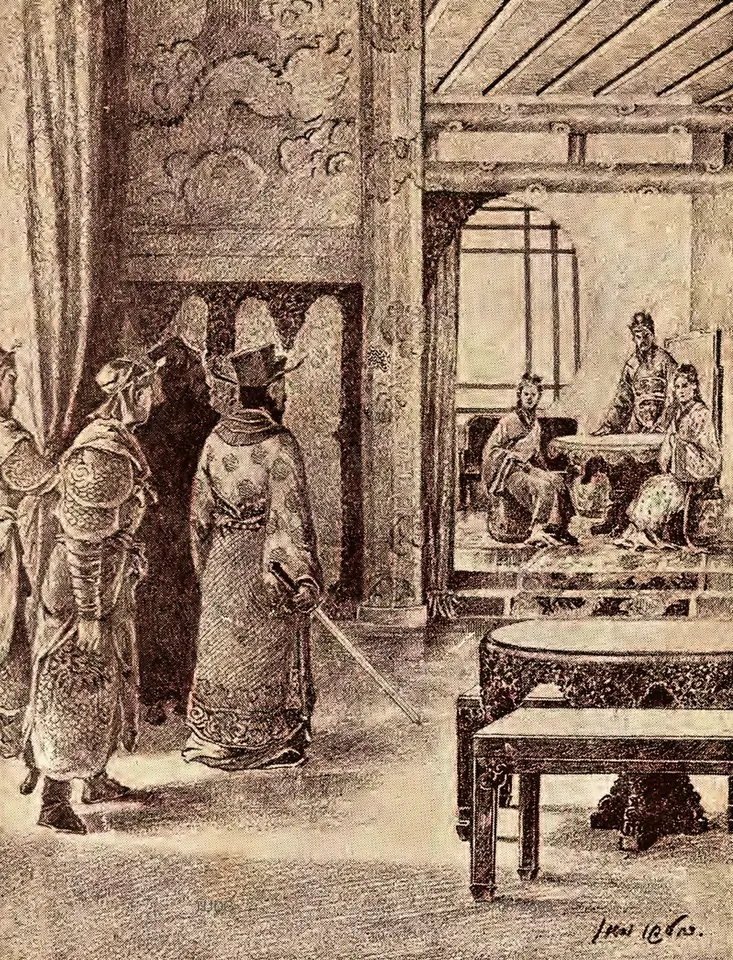
The Emperor Xian of Han's Abdication and the Fall of Eastern Han (汉献帝禅让与东汉灭亡) marked the historic termination of the Eastern Han dynasty in 220 CE through the formal transfer of imperial sovereignty to Cao Pi of Cao Wei. During the late Eastern Han, cycles of consort and eunuch domination followed by the Yellow Turban Rebellion collapsed imperial authority into warlord fragmentation. In 196 CE, warlord Cao Cao escorted Emperor Xian (Liu Xie) to Xuchang, employing the emperor's prestige to defeat rival warlords, consolidate the north, and assume the title of King of Wei, rendering the Han court a political fiction. Following Cao Cao's death in the first month of 220 CE, his son Cao Pi inherited the kingship and the chancellery. Ministers Hua Xin, Wang Lang, and Chen Qun orchestrated an overwhelming campaign of memorials urging Cao Pi to ascend the throne under the cosmological Five Phases doctrine. Coerced by the Cao Wei military presence, Emperor Xian promulgated imperial abdication rescripts in the tenth and eleventh months. Following customary formal refusals, Cao Pi climbed the newly erected Abdication Platform at Fanyang to accept the Imperial Jade Seal, founding the Wei dynasty under the Huangchu era. Ennobling Liu Xie as the Duke of Shanyang, this transition ended 195 years of Eastern Han rule and four centuries of Han supremacy, inaugurating the Three Kingdoms Period and establishing a recurring template for medieval dynastic usurpation.
Cao Cao escorts Emperor Xian to Xuchang, establishing control over the court.
Emperor Xian ennobles Cao Cao as King of Wei, granting the Nine Bestowals and state apparatus.
Cao Cao dies in Luoyang; Cao Pi inherits the title of King of Wei and plans the dynastic transition.
Emperor Xian issues the first formal abdication decree; Cao Pi performs the ritual three refusals.
Chancellor Hua Xin delivers the Imperial Jade Seal to Cao Pi, completing the protocol of transfer.
Cao Pi ascends the throne at the Fanyang Abdication Platform, extinguishing the Eastern Han and creating the Wei dynasty.
Following the reign of Emperor He, successive Eastern Han child emperors allowed political control to oscillate between dowager empresses' consort clans and palace eunuchs. The Disaster of the Partisan Prohibitions alienated scholar-officials, while the 184 CE Yellow Turban Rebellion shattered the rural economy. To suppress regional revolts, the court devolved military authority to provincial governors, spawning militarized warlord regimes under Dong Zhuo, Yuan Shao, Yuan Shu, and Cao Cao. As Luoyang and Chang'an were reduced to ashes, young Emperor Xian wandered as a destitute puppet.
In 196 CE, Cao Cao seized the strategic initiative by escorting Emperor Xian to his base at Xuchang, establishing the political advantage of "commanding the insubordinate under imperial authority." Through the Battle of Guandu and northern expeditions, Cao Cao eradicated rival coalitions, secured the Central Plains, and purged court plots led by Empress Fu, Consort Dong, and loyalist conspirators. By 216 CE, Cao Cao was created King of Wei with the Nine Bestowals, establishing an independent ministerial administration that completely displaced imperial authority.
In the first month of 220 CE, Cao Cao passed away in Luoyang. His eldest heir Cao Pi succeeded to the titles of King of Wei and Imperial Chancellor, inaugurating the Yankang era. Unlike his father, who maintained nominal deference to the Han throne, Cao Pi and his generation of courtiers had no historical allegiance to the Liu imperial house.
Beginning in the second month of 220 CE, Chancellor Hua Xin, Imperial Censor Wang Lang, General Chen Qun, and strategist Jia Xu coordinated a systematic campaign to prepare the transition. They mobilized court astrologer Xu Zhi to present memorials cataloging auspicious omens—stone horses, white pheasants, and yellow dragons. Grounding their claims in Zou Yan's Five Elements philosophy, they proclaimed that "the fire virtue of the Han is exhausted, while the earth virtue of the Wei is ascendant," unleashing coordinated petitions demanding that Cao Pi accept the celestial mandate.
Under relentless pressure from civil and military officials, Emperor Xian recognized that armed resistance was impossible. On the thirteenth day of the tenth month of 220 CE, Emperor Xian issued his first abdication edict, offering to emulate the ancient sage kings Yao and Shun by transferring the throne to the King of Wei.
To cultivate an image of Confucian humility and legitimacy, Cao Pi followed ancient ceremonial conventions, submitting three successive memorials declining the throne. On the twenty-fourth and twenty-seventh days, Emperor Xian issued further edicts imploring Cao Pi to submit to celestial will. Finally, on the twenty-ninth day, the emperor dispatched Chancellor Hua Xin to the Wei court, bearing the Imperial Jade Seal and imperial red ribbons, which Cao Pi accepted before assembled ministers.
On the first day of the eleventh month of 220 CE (November 25, 220), Cao Pi completed the construction of the colossal Abdication Platform at Fanyang (modern Linying, Henan). Tens of thousands of Wei courtiers, palace guards, Southern Xiongnu chieftains, and foreign envoys assembled around the platform. Emperor Xian ascended the platform in full imperial regalia, formally transferring the jade seal and imperial standards to Cao Pi.
Ascending the altar to sacrifice to Heaven, Cao Pi assumed the imperial throne, proclaimed a general amnesty, christened the dynasty "Great Wei," and adopted the reign title "Huangchu." Addressing his assembled ministers, Cao Pi famously quipped: "Now I understand how Shun and Yu succeeded to the throne!" Displaying imperial magnanimity, Cao Pi invested Liu Xie as the Duke of Shanyang with a ten-thousand-household estate, permitting him to use imperial carriages and ancestral rites without performing vassal obeisance. Liu Xie retired peacefully to Shanyang, concluding his troubled political life in dignity.
The abdication of Emperor Xian dismantled the unified political framework established by Liu Bang in 202 BCE and revived by Liu Xiu in 25 CE. Rejecting Wei legitimacy, Liu Bei proclaimed himself emperor in Chengdu to preserve the Han line (Shu Han), followed by Sun Quan's accession as emperor of Eastern Wu. China officially fractured into the tripartite confrontation of the Three Kingdoms Period, dividing the realm for six decades.
Cao Pi's ascension at the Fanyang Platform established a formalized institutional mechanism for dynastic usurpation. By rejecting violent regicide in favor of choreographed civilian protocols—involving petitions, simulated refusals, transmission of jade seals, and noble retirement—Cao Pi forged a precedent that was replicated by Sima Yan against Cao Wei in 265 CE, Liu Yu against Eastern Jin in 420 CE, and across the Northern and Southern dynasties, defining the ceremonial language of imperial transition in medieval China.
In the Records of the Three Kingdoms (Sanguozhi, Basic Annals of Emperor Wen), Chen Shou praised Cao Pi's versatile talent: "Emperor Wen possessed literary elegance, vast learning, and diverse arts. Had he matched these with broader magnanimity and impartial justice, striving toward moral governance, how could he have fallen short of the ancient worthy rulers?"
In Zizhi Tongjian, Song historian Sima Guang delivered a critical verdict: "The fall of the Han did not occur at the Yankang abdication, but began with the moral failings of Emperors Huan and Ling, the atrocities of Dong Zhuo, and warlord fragmentation. The Cao family commanded all under heaven, claiming the throne with ease. Yet employing the facade of peaceful abdication to mask raw usurpation, while sparing the Duke of Shanyang, can never shield them from the censure due to rebellious subjects."