Forced Transfer Edict
Emperor Li Congke orders Shi Jingtang transferred to Tianping, triggering rebellion in Taiyuan.
Later Tang Dynasty (后唐) · HISTORICAL EVENT
石敬瑭割让燕云十六州
Shi Jingtang's Cession of the Sixteen Prefectures (石敬瑭割让燕云十六州) was a catastrophic geopolitical event during the Five Dynasties and Ten Kingdoms period that reshaped East Asian history. In 936 (the third year of the Qingtai era), acute suspicion between Later Tang Emperor Li Congke and Shi Jingtang, Military Commissioner of Hedong, prompted the court to order Shi's forced transfer. Shi rebelled at Taiyuan and was quickly besieged. On the advice of…
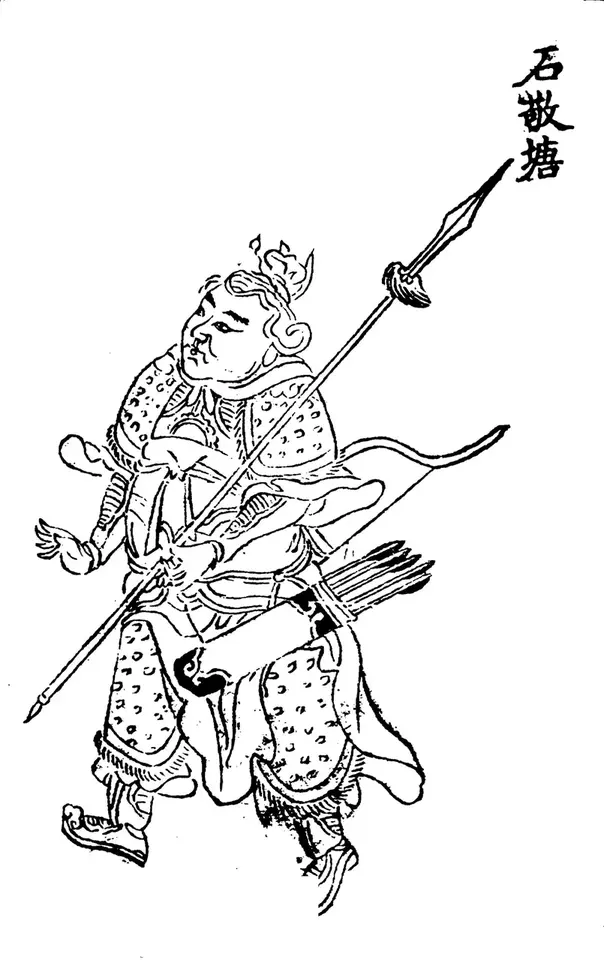
Shi Jingtang's Cession of the Sixteen Prefectures (石敬瑭割让燕云十六州) was a catastrophic geopolitical event during the Five Dynasties and Ten Kingdoms period that reshaped East Asian history. In 936 (the third year of the Qingtai era), acute suspicion between Later Tang Emperor Li Congke and Shi Jingtang, Military Commissioner of Hedong, prompted the court to order Shi's forced transfer. Shi rebelled at Taiyuan and was quickly besieged. On the advice of strategist Sang Weihan, Shi appealed to Emperor Taizong of Liao (Yelü Deguang), pledging to cede the strategic Sixteen Prefectures, honor the younger Khitan monarch as his imperial father, and provide annual tributes of 300,000 bolts of silk. Yelü Deguang intervened with 50,000 elite cavalry, annihilating the Later Tang army and enthroning Shi as Emperor of Later Jin. The cession dismantled the historic northern mountain defenses of the central plains, permanently altering strategic balances between northern nomadic powers and agrarian China.
Emperor Li Congke orders Shi Jingtang transferred to Tianping, triggering rebellion in Taiyuan.
Shi Jingtang executes imperial messengers, establishes defensive positions, and openly revolts.
Imperial general Zhang Jingda encircles Taiyuan with siege works, pushing defenders to exhaustion.
Sang Weihan persuades Shi Jingtang to petition the Khitan court, promising territory and vassal status.
Yelü Deguang leads 50,000 elite horsemen through Yanmen Pass, encircling imperial forces at Jin'an.
Zhang Jingda is assassinated by mutinous subordinates; tens of thousands of imperial troops surrender.
Yelü Deguang enthrones Shi Jingtang as Emperor of Later Jin; Shi honors Yelü as imperial father.
Rebel armies reach Luoyang; Emperor Li Congke self-immolates, extinguishing Later Tang.
Later Jin envoys officially hand over cadastral registers and maps of the Sixteen Prefectures to Liao.
The Sixteen Prefectures of Yanyun spanned the natural frontier between the Taihang and Yanshan mountain ranges, divided into seven southern sub-prefectures (You, Ji, Zhuo, Ying, Mo, Shun, Tan) and nine northern sub-prefectures (Yun, Ru, Gui, Wu, Xin, Wei, Ying, Huan, Shuo). Characterized by rugged peaks and critical defiles—such as Juyong Pass, Gubeikou, Songting Pass, and Shanhaiguan—coupled with the Sanggan and Juma rivers, this region had served as the paramount defensive bastion safeguarding the North China Plain against nomadic incursions since antiquity.
Following the An Lushan Rebellion, the Tang court lost direct centralized control over the Fanyang (Youzhou) circuit, which was dominated by autonomous military governors. Throughout the late Tang and early Five Dynasties, warlords such as Liu Rengong and Liu Shouguang ruled the territory until conquered by the Shatuo leader Li Cunxu of Later Tang. The fertile fields, advanced metallurgy, and dense population of Youzhou made it the supreme geopolitical prize along the northern frontier.
While the Five Dynasties exhausted their military resources in incessant civil warfare, the nomadic Khitan confederation unified under Yelü Abaoji and expanded aggressively southward. Recognizing that nomadic cavalry required agrarian resources to sustain imperial statehood, Khitan rulers persistently coveted Youzhou, launching frequent raids across the border.
In 934, Prince Li Congke seized the Later Tang throne through a military coup at Fengxiang. Although veteran general Shi Jingtang supported Li's accession, deep mutual distrust festered between them. As the son-in-law of former Emperor Mingzong and commander of the premier garrison at Taiyuan, Shi Jingtang commanded immense military prestige. Fearing imperial assassination, Shi covertly hoarded provisions and armaments in Hedong, awaiting an inevitable confrontation.
In the summer of 936, Shi Jingtang sought to probe imperial intentions by feigning physical infirmity and requesting a transfer to another circuit. Emperor Li Congke seized this opportunity to break Shi's grip on Hedong. On May 13, 936, the emperor issued an imperial edict transferring Shi Jingtang to the Tianping Circuit (modern Dongping, Shandong) and dispatched imperial commissioners to compel immediate compliance.
Confronted with the decree, Shi gathered his trusted commanders. General Liu Zhiyuan advised open resistance, arguing that surrendering command would lead to certain execution along the road. Master of Records Sang Weihan urged armed rebellion, pointing out that Taiyuan was protected by formidable terrain. Shi executed the imperial envoys, publicly denounced Li Congke as an illegitimate usurper, and initiated an open insurrection.
Emperor Li Congke responded by ordering General Zhang Jingda to command several imperial divisions to crush the rebellion. In June 936, Zhang Jingda completely invested Taiyuan with massive earthworks and heavy catapults. Outnumbered and facing dwindling grain supplies, Shi Jingtang was on the verge of defeat.
In desperation, Shi Jingtang conferred privately with Sang Weihan, who devised an audacious plan: petitioning the Khitan Empire for military intervention. Sang Weihan argued that Emperor Yelü Deguang possessed invincible nomadic cavalry and harbored long-standing ambitions to control the northern border. If Shi Jingtang offered submission, addressed the Khitan sovereign as father, ceded the Sixteen Prefectures, and committed to heavy annual subsidies, the Khitan army would march to his rescue.
Despite fierce warnings from Liu Zhiyuan, who cautioned that acknowledging a nomadic ruler as father and surrendering vital national territory would incur eternal disgrace, Shi Jingtang fully adopted the proposal. Sang Weihan drafted the humble capitulation. The forty-five-year-old Shi addressed the thirty-four-year-old Yelü Deguang as "Father Emperor," designating himself the "Son Emperor," and formally promised to cede the sixteen prefectures of Yanyun while supplying 300,000 bolts of silk annually.
Yelü Deguang was thrilled by the proposal. Achieving without bloodshed what generations of steppe chieftains had failed to conquer by force, the Khitan monarch mobilized 50,000 elite heavy cavalry and crossed Yanmen Pass in September 936.
Khitan forces struck Zhang Jingda's siege lines north of Taiyuan with overwhelming force. Supported by sorties from Shi Jingtang's garrison, Khitan iron cavalry enveloped the Later Tang expeditionary force at Jin'an Fort, severing supply lines. The imperial army was trapped for several months, reduced to boiling leather armor and slaughtering warhorses. In November, vice commander Yang Guangyuan murdered the unyielding Zhang Jingda and surrendered the starving garrison to Yelü Deguang and Shi Jingtang.
On November 12, 936, Yelü Deguang erected a ceremonial altar at Liulin south of Taiyuan. In an elaborate investiture, the Khitan emperor formally bestowed imperial regalia upon Shi Jingtang, proclaiming him Emperor of Great Jin (Later Jin). Shi Jingtang performed the three kneelings and nine prostrations before the seated nomadic sovereign, formally validating his status as the Son Emperor.
Combined Khitan and Later Jin divisions subsequently advanced south toward Luoyang. Panicked Later Tang provincial governors submitted without resistance. On January 11, 937 (the intercalary eleventh month), recognizing total defeat, Emperor Li Congke climbed Xuanwu Tower with Empress Dowager Cao and the imperial seal, setting the pavilion ablaze and perishing in the flames. Later Tang collapsed, and Shi Jingtang entered Luoyang as master of northern China.
Following his coronation, Shi Jingtang faithfully executed the terms of his agreement. In November 938, he dispatched senior ministers Zhao Ying and Feng Dao to the Khitan capital, delivering topographical maps and cadastral registers to transfer sovereignty over the sixteen prefectures.
The ceded territory comprised: Southern Prefectures: Youzhou (modern Beijing), Jizhou (modern Jizhou, Tianjin), Zhuozhou (modern Zhuozhou, Hebei), Yingzhou (modern Hejian, Hebei), Mozhou (modern Renqiu, Hebei), Shunzhou (modern Shunyi, Beijing), and Tanzhou (modern Miyun, Beijing); Northern Prefectures: Yunzhou (modern Datong, Shanxi), Ruzhou (modern Yanqing, Beijing), Guizhou (modern Huailai, Hebei), Wuzhou (modern Xuanhua, Hebei), Xinzhou (modern Zhuolu, Hebei), Weizhou (modern Yu County, Hebei), Yingzhou (modern Ying County, Shanxi), Huanzhou (modern Shuozhou, Shanxi), and Shuozhou (modern Shuozhou, Shanxi).
Along with millions of Han agriculturalists and strategic mountain fortresses, the Later Jin treasury extracted enormous taxes to deliver 300,000 bolts of silk annually to the Khitan court, cementing one of the most controversial territorial alienations in Chinese imperial history.
The alliance secured the destruction of Later Tang and established Later Jin. However, Later Jin remained a subordinated puppet state. When Shi Jingtang's successor Shi Zhonggui attempted to assert independence by declaring himself a grandson rather than a vassal subject, Yelü Deguang invaded again in 947, sacking Kaifeng and destroying Later Jin.
The loss of the Sixteen Prefectures fundamentally altered Chinese strategic geography for over four centuries. First, it deprived the central plains of their northern mountain ramparts. With the Great Wall passes in nomadic hands, nomadic cavalry could gallop south to the Yellow River across flat plains in days. Despite Emperor Shizong of Later Zhou retaking three southern prefectures in 959, the subsequent Song Dynasty suffered repeated military defeats at Gaoliang River and Yongxi, leaving northern China permanently on the defensive until the Mongol conquests. Second, acquiring the Sixteen Prefectures transformed the Khitan from a mobile nomadic state into a formidable dual-structured empire. By integrating millions of skilled Han farmers, artisans, and iron industries, Liao developed an administrative apparatus dividing governance between northern tribal customs and southern bureaucratic systems, altering the balance of power across East Asia. The territory was not recovered by a Han-led dynasty until Ming armies under Xu Da captured Dadu in 1368.
In the New History of the Five Dynasties, Ouyang Xiu condemned Shi Jingtang: "Throughout history, no national calamity matches that brought by Shi Jingtang! Plotting treason within and beckoning barbarians from without, he took foreign rulers as fathers and surrendered the realm's natural ramparts. Even crushing his bones cannot atone for his monumental treason!"
In the Zizhi Tongjian, Sima Guang wrote: "Shi Jingtang invited foreign calamity to preserve himself, dangling territorial prizes and debasing dynastic dignity. Though he achieved a throne, he earned eternal infamy. The loss of You and Ji stripped China of its defenses, bequeathing northern perils that lasted centuries."
Ming-Qing philosopher Wang Fuzi reflected: "By enlisting Khitan horsemen to destroy Tang, Shi Jingtang poisoned millennia. Losing Youyun's natural fortresses subjected Song to constant menace and eventual ruin; no disaster in history equals this calamity."