Li Yuanhao Proclaims Great Xia
Tangut leader Li Yuanhao proclaimed himself Emperor, severing tributary ties with Northern Song
Northern Song Dynasty (北宋) · HISTORICAL EVENT
范仲淹守边
Fan Zhongyan's Border Defense (范仲淹守边) was a pivotal strategic defense and military reform campaign carried out between 1040 and 1043 CE during the reign of Emperor Renzong of Northern Song. Following the Tangut declaration of independence under Li Yuanhao in 1038 CE and the crushing defeat of Song forces at Sanchuankou in 1040 CE, the vital frontier of Shaanxi was imperiled. Emperor Renzong appointed Fan Zhongyan as Vice Pacification Commissioner of…
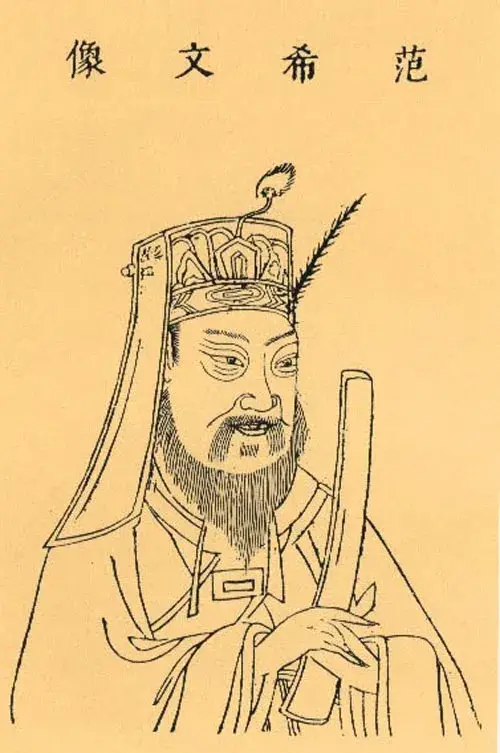
Fan Zhongyan's Border Defense (范仲淹守边) was a pivotal strategic defense and military reform campaign carried out between 1040 and 1043 CE during the reign of Emperor Renzong of Northern Song. Following the Tangut declaration of independence under Li Yuanhao in 1038 CE and the crushing defeat of Song forces at Sanchuankou in 1040 CE, the vital frontier of Shaanxi was imperiled. Emperor Renzong appointed Fan Zhongyan as Vice Pacification Commissioner of Shaanxi and Governor of Yanzhou alongside Han Qi to stabilize the northwestern marches. Rejecting reckless counter-offensives, Fan instituted a disciplined defensive posture: reorganizing Yanzhou's garrison into six coordinated divisions (fenbu liujiang); identifying and promoting military talents from the common ranks, such as Di Qing and Chong Shiheng; constructing formidable border fortresses like Qingjian and Dashun to anchor frontier defense; and wining the loyalty of indigenous Qiang and Tibetan tribes to serve as auxiliary border shields. Confronted by Fan's impregnable fortress network, Tangut armies exhausted their resources in fruitless campaigns, giving rise to the popular ditty: "With a Fan in the army, the western bandits tremble in terror." Fan's border administration compelled Western Xia to conclude the Qingli Peace Agreement in 1044 CE and inspired his subsequent leadership of the Qingli Reforms at court.
Tangut leader Li Yuanhao proclaimed himself Emperor, severing tributary ties with Northern Song
Li Yuanhao defeated Liu Ping at Sanchuankou; Emperor Renzong recalled Fan Zhongyan to Shaanxi
Fan reorganized Yanzhou's garrison into six divisions and promoted Di Qing and Chong Shiheng
Chong Shiheng excavated a deep well and fortified Qingjian City, inaugurating agricultural frontier colonies
Han Qi's aggressive offensive met disaster at Haoshuichuan; Ren Fu and 10,000 Song soldiers were slain
Impeached for corresponding with Yuanhao, Fan was demoted to Yaozhou, then transferred to govern Qingzhou
Fan erected Dashun Fortress in ten days, repelling 30,000 Xia cavalry and pacifying frontier Qiang tribes
Ge Huaimin perished at Dingchuanzhai; Fan marched 6,000 veterans to Weizhou, forcing Yuanhao to withdraw
Fan and Han were appointed joint commanders of Shaanxi's Four Circuits, establishing an integrated defense line
Western Xia sued for peace; Fan was recalled to Kaifeng as Vice Chancellor, initiating the Qingli Reforms
Under the Tangut leaders Li Jiqian and Li Deming, the Western Xia state had steadily expanded across the Ordos Loop and the Hexi Corridor while paying nominal vassal tribute to Northern Song. In October 1038 CE (1st year of Baoyuan), Tangut ruler Li Yuanhao proclaimed himself Emperor of Great Xia (Da Xia) at Xingqing (modern Yinchuan, Ningxia), formally renouncing Song imperial suzerainty. In 1039 CE, Yuanhao dispatched envoys demanding imperial recognition. Enraged, Emperor Renzong stripped Yuanhao of his imperial surnames and court offices, suspended border trade markets (quechang), and declared war, triggering the first major Song-Xia military conflict.
Decades of peace had eroded Song military readiness along the northern marches; garrison units were undertrained, unaccustomed to regional terrain, and alienated from their rotating commanders. In January 1040 CE, Li Yuanhao invaded Shaanxi with 100,000 cavalry, besieging the prefecture seat of Yanzhou. When Song commanders Liu Ping and Shi Yuansun marched 9,000 troops to relieve Yanzhou, they were encircled in a blinding snowstorm at Sanchuankou. Betrayed by fleeing subordinate Huang Dehe, Liu Ping and Shi Yuansun were captured, and over 10,000 Song soldiers were killed or captured. The disaster left Yanzhou's defenses shattered and sent panic rippling across Shaanxi. Confronting the crisis, Emperor Renzong recalled the outspoken statesman Fan Zhongyan from provincial exile, appointing him and Han Qi as Vice Pacification Commissioners of Shaanxi to restore imperial defenses.
In July 1040 CE, Fan Zhongyan arrived on the Shaanxi frontier. Yanzhou was in ruins, its thirty-six perimeter outposts demolished, its storehouses empty, and its population displaced. Fan petitioned Emperor Renzong to concurrently appoint him Governor of Yanzhou, personally stationing himself on the dangerous frontline.
Recognizing that past defeats stemmed from structural disorganization and commander unfamiliarity, Fan reorganized Yanzhou's 18,000 troops into six disciplined divisions (fenbu liujiang). Each division of 3,000 men was placed under a dedicated general, subjected to rigorous daily drills in archery, formation maneuvers, and coordinated terrain defense. Rather than throwing disorganized mobs against swift Tangut cavalry, the six divisions rotated in disciplined operational shifts. Simultaneously, Fan shattered bureaucratic protocol by identifying martial talent irrespective of background. He discovered Di Qing, then a low-ranking tattooed infantry officer, presenting him with the Zuo Commentary on the Spring and Autumn Annals and encouraging him to study classical military science. Di Qing blossomed into Song's premier general, while veteran tacticians like Chong Shiheng and Zhou Mei were entrusted with independent commands.
To seize operational initiative without risking disastrous field engagements, Fan formulated his strategic doctrine: "Erect fortified strongholds, clear the fields, cultivate border colonies, and advance step by step." Adopting Chong Shiheng's advice in September 1040 CE, Fan ordered the reconstruction of Kuanzhou, a ruined Han fortress 200 li northeast of Yanzhou. Chong Shiheng excavated a 150-foot well through solid rock to secure water, completing the stronghold within months; Emperor Renzong named it Qingjian City. Fan established military agricultural colonies (tuntian) surrounding Qingjian, enabling garrisons to produce their own rations and relieving the logistical burden on the Guanzhong peasantry.
In early 1041 CE, Emperor Renzong urged an all-out five-column offensive into Xia territory. Han Qi supported an aggressive thrust, while Fan adamantly opposed it. Fan argued that the Tanguts thrived on deceptive desert ambushes; marching deep into arid sands would overstretch Song supply lines and lead to catastrophe. He insisted on a patient war of attrition, maintaining vigilant outposts while leaving open diplomatic avenues to divide the Tangut leadership.
Disagreements between Han Qi and Fan Zhongyan prevented unified strategic coordination. In February 1041 CE, Li Yuanhao struck southward with 100,000 cavalry toward Weizhou, staging a feint at Huaiyuan while concealing his main army in the narrow ravines of Haoshuichuan. Ignoring Fan's warnings, Han Qi dispatched Ren Fu with over 50,000 troops from Zhenrong to intercept the enemy. Ren Fu fell into the trap, pursuing a fleeing vanguard until encircled at Haoshuichuan. Cut off from water and provisions, the Song legions were wiped out, and Ren Fu died wielding his iron club.
Amidst the fallout, Tangut general Gao Yande arrived at Yanzhou with overtures of peace from Li Yuanhao. Seeking to sow discord and buy time, Fan penned his celebrated Letter in Reply to Zhao Yuanhao, admonishing Yuanhao to renounce his imperial pretensions and return to the tributary fold. However, Yuanhao replied arrogantly, and court censors impeached Fan for communicating with a rebel without prior imperial approval. In April 1041 CE, Fan was demoted to govern Yaozhou, before being transferred in May to govern Qingzhou as commander of the Huanqing Circuit.
In Huanqing, Fan confronted a severe crisis of ethnic instability. Disaffected Tangut and Tibetan tribes (shuhu) along the frontier had suffered extortion from previous Song bureaucrats, prompting many to act as scouts for Xia invaders. Fan visited tribal settlements, conducted solemn blood-oath ceremonies, redressed past injustices, and treated tribal chiefs with unwavering trust. Deeply moved, the indigenous tribes referred to Fan as the "Venerable Elder of the Longtu Pavilion," pledging their spears to Song defense.
In March 1042 CE, to seal the strategic corridor running between the Xia-held fortresses of Baibao and Jintang, Fan devised a covert plan to build a major fortress at Mapuzhai. Knowing that Xia cavalry would attack if warned, Fan prefabricated timber, stone, and earthworking tools. He marched elite regiments to the site under cover of darkness, working around the clock to construct high ramparts and deep moats in ten days. When 30,000 Xia cavalry arrived to contest the construction, they found an impregnable citadel bristling with archers. The enemy retreated, and Emperor Renzong bestowed the name Dashun Fortress (Dashun Cheng). Dashun drove a strategic wedge into Xia territory, permanently securing Huanqing Circuit against invasion.
Frustrated by Fan's layered defenses, Tangut strategist Zhang Yuan advised Li Yuanhao to bypass the central frontier and strike the vulnerable Jingyuan Circuit to march on Chang'an. In the intercalary ninth month of 1042 CE, Yuanhao surrounded Song commander Ge Huaimin at Dingchuanzhai. Ge's army was annihilated, and fifteen senior commanders perished, leaving the road to Weizhou and Guanzhong wide open.
In this supreme crisis, Fan Zhongyan mobilized 6,000 elite Huanqing troops, marching by night across the mountains to relieve Weizhou and block the mountain passes. Learning of Fan's rapid deployment, Li Yuanhao withdrew his forces. In November 1042 CE, Emperor Renzong unified the northwestern theater, promoting Fan Zhongyan, Han Qi, and Pang Ji to Hanlin Academician Rank and naming Fan and Han joint Pacification and Suppression Commissioners of the Four Shaanxi Circuits, stationed at Binzhou.
At Binzhou, Fan and Han harmonized frontier administration, extending fortress cultivation across all four circuits. The border troops chanted: "With a Han in the army, the western bandits freeze with dread; with a Fan in the army, the western bandits tremble in terror!" Confronted by Fan's fortress lines and cut off from salt and tea markets, Western Xia suffered devastating economic exhaustion. In early 1043 CE, Li Yuanhao sued for peace. In April 1043 CE, with the northwestern frontier secured, Emperor Renzong summoned Fan Zhongyan to the capital as Vice Commissioner of Military Affairs, culminating in the formal signing of the Qingli Peace Agreement in 1044 CE.
Fan Zhongyan's four-year tenure transformed the military balance between Northern Song and Western Xia. By creating the six-division system, erecting fortified outposts like Qingjian and Dashun, establishing self-supporting agricultural colonies, and winning the loyalty of tribal auxiliary units, Fan erected a layered defensive barrier. Unable to break through or capture provisions, Western Xia suffered severe commercial disruption, lost vital tea and silk supplies, and faced domestic unrest. In 1044 CE, Li Yuanhao concluded the Qingli Peace Agreement: Western Xia canceled its imperial title, acknowledged Song suzerainty as the "Lord of Xia," and received annual gifts of 70,000 ounces of silver, 150,000 bolts of silk, and 30,000 pounds of tea, ushering in two decades of frontier stability.
Strategically, Fan's doctrine of "advancing through fortresses and wearing down the enemy" became the standard handbook for Song border governance, guiding the later campaigns of Wang Shao and Zhang Jie during the reigns of Shenzong and Zhezong. Institutionally, Fan's division of Yanzhou's garrison into regular training units provided the structural blueprint for Wang Anshi's "Commanded Troops System" (zhijiang fa). Politically, his frontline experience witnessing bureaucratic incompetence, fiscal waste, and military weakness inspired his submission of the Ten Proposals in 1043 CE, inaugurating the famous Qingli Reforms. Culturally, Fan's reflections along the border produced the immortal lyric Yujia'ao: Autumn Thoughts ("The frontier scenery changes with autumn... A cup of cloudy wine, ten thousand miles from home"), pioneering the heroic and realistic frontier style of Song poetry and articulating the noble civic ideal: "Be the first to worry about the world's troubles, and the last to enjoy its pleasures."