Accession of Kublai Khan and Creation of the Central Secretariat
Kublai implements Confucian administrative structures at Kaiping, founding the Central Secretariat and establishing mobile commissions.
Yuan Dynasty (元朝) · HISTORICAL EVENT
行省
Establishment of the Provincial System (行省) was a transformative administrative reform during the Yuan Dynasty spanning the Zhongtong to Dade eras (1260–1307), wherein imperial rulers institutionalized field detachments of the central Secretariat into permanent, supreme provincial administrative units to govern a multi-ethnic empire. During the military conquests of the Jin and Southern Song dynasties, the court dispatched chancellors from the Central…
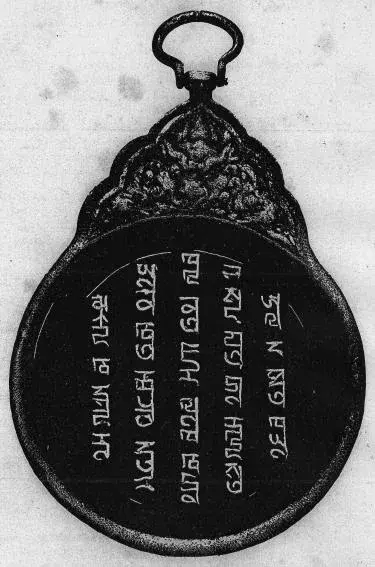
Establishment of the Provincial System (行省) was a transformative administrative reform during the Yuan Dynasty spanning the Zhongtong to Dade eras (1260–1307), wherein imperial rulers institutionalized field detachments of the central Secretariat into permanent, supreme provincial administrative units to govern a multi-ethnic empire. During the military conquests of the Jin and Southern Song dynasties, the court dispatched chancellors from the Central Secretariat to establish temporary branch bureaus coordinating wartime logistics, troop deployments, and civil supplies across vast theaters. Following national unification, Kublai Khan and his successor Temur Khan transformed these mobile wartime organs into institutionalized provincial governments, establishing an administrative framework consisting of the Metropolitan Area governed directly by the Central Secretariat, ten expansive branch secretariats across the empire, and the Bureau of Buddhist and Tibetan Affairs overseeing Tibet. Provincial governors exercised broad administrative, military, and fiscal powers under strict central constraints, while provincial borders deliberately dismantled natural geographic bastions through interlocking territorial demarcation. This institutional creation represented a milestone in Chinese political geography, creating the structural template for modern Chinese provincial governance.
Kublai implements Confucian administrative structures at Kaiping, founding the Central Secretariat and establishing mobile commissions.
In response to Li Tan's revolt, the court establishes the Shandong Branch Secretariat to coordinate regional forces.
Sayyid Ajjal Shams al-Din Omar is appointed Chief Minister of Yunnan Province, integrating the former Dali Kingdom into the provincial system.
Bayan leads 200,000 troops south under the authority of the Jinghu Branch Secretariat, driving toward Lin'an.
Lin'an capitulates; the Yuan administration creates branch secretariats across southern territories to secure civilian administration.
Following complete national unification, the court transitions mobile military secretariats into permanent regional administrations.
The imperial court codifies official ranks, staffing quotas, and council procedures for branch secretariats, completing their institutionalization.
Emperor Chengzong establishes the Lingbei Province at Karakorum, securing direct governance over the Mongolian heartland.
Following comprehensive boundary adjustments, the administrative structure of the Metropolitan Area and the Ten Provinces is firmly established.
Following the rise of the Mongol Empire in the thirteenth century, Mongol horsemen subdued the Western Xia, Jin, Dali, and various Tibetan polities, founding the most expansive contiguous land empire in human history. However, governing territories characterized by diverse ethnicities, vast geographical distances, and disparate economies presented unprecedented structural challenges to the Mongol leadership.
Traditional Chinese systems, such as the commandery-county framework of the Qin and Han, were designed for moderate geographic extents and agrarian heartlands. Although the Sui, Tang, and Song dynasties created circuits and routes, these were largely supervisory or fiscal coordination circuits without unified, executive regional governance. Furthermore, the Southern Song Dynasty had enforced extreme civilian centralization, stripping local governments of military and fiscal resources to prevent warlordism. While this eliminated domestic rebellion, it rendered local authorities defenseless when confronted with external Mongol invasion.
The concept of the branch secretariat was not an unprecedented invention of the Yuan Dynasty, but evolved from administrative precedents. During the Southern and Northern Dynasties and the Sui and Tang periods, when launching major military campaigns, the imperial throne frequently dispatched executive ministers to establish mobile executive bureaus, which were dissolved upon the conclusion of military operations.
During the late Jin Dynasty, facing sustained Mongol pressure from the north, the Jurchen court established branch ministries, dispatching senior chancellors to fortify regional theaters and direct defense, troop conscription, and local governance. The Mongols incorporated this Jurchen institutional legacy during their conquest of northern China, while northern Han hereditary warlords who submitted to the Mongols maintained military commands titled as branch secretariats.
Prior to the reign of Kublai Khan, the Mongol Empire lacked a bureaucratic apparatus modeled on traditional Chinese imperial institutions. Instead, governance relied on imperial judges and regional overseers who directed judicial arbitration, population registration, and taxation. As Mongol conquest expanded across northern China, Chinggis Khan and Ogodei Khan established administrative branch directorates in Yanjing, Bishbalik, and along the Amu Darya to oversee northern China, the Uighur realm, and Central Asia.
The Yanjing directorate integrated Mongol keshik nobility with surrendered Chinese scholar-administrators to represent the Khagan across northern China. This convergence of nomadic steppe supervision with bureaucratic administration laid the practical groundwork for Kublai Khan's eventual creation of institutionalized branch secretariats following his dynastic reforms.
In 1260, Kublai Khan acceded to the imperial throne at Kaiping, initiating governmental reforms based on traditional Chinese administrative models with the assistance of Confucian advisors like Liu Bingzhong and Xu Heng. Kublai created the Central Secretariat as the supreme administrative cabinet directing the Six Ministries. At that time, Ariq Boke contested the throne in Karakorum, northern Chinese warlords held local bastions, and the Southern Song maintained defensive armies along the Huai and Yangtze rivers.
To centralize military command and suppress rebellions, Kublai adapted mobile commissions under the Central Secretariat, termed Branch Secretariats. In 1262, when the Shandong warlord Li Tan rebelled, Kublai founded the Shandong Branch Secretariat, dispatching Chief Minister Zhao Bi with cabinet rank to coordinate Mongolian and Han forces and crush the insurrection. Following victory, the bureau was disbanded.
During the early Zhiyuan era, Kublai established similar mobile organs across military theaters in Shaanxi and Henan. At this stage, leaders of branch secretariats held cabinet titles from the Central Secretariat, acting as special imperial commissioners supervising wartime logistics and mobilization. Their jurisdictions shifted constantly, and they functioned strictly as ad-hoc military headquarters rather than permanent local governments.
In 1268, the Yuan Empire launched the decisive siege of Xiangyang. To command diverse Mongolian, Central Asian, and Han divisions spanning frontier theaters, and to coordinate logistics from the north, Kublai established the Henan and Shaanxi-Sichuan branch secretariats, appointing senior marshals to manage engineering weapons, grain shipments, and siege lines.
Following the fall of Xiangyang in 1273, Kublai prepared the final offensive against the Southern Song. In 1274, the court founded the Jinghu Branch Secretariat, appointing supreme commander Bayan as Chief Councillor of the branch bureau to direct a combined force of 200,000 soldiers down the Han River toward the Yangtze. Acting with plenipotentiary cabinet authority, Bayan commanded brigade commanders, issued battlefield decrees, and integrated surrendered naval flotillas, rapidly breaking Song river defenses.
In 1276, Bayan's vanguard reached the Song capital of Lin'an, securing the surrender of the child emperor Zhao Xian. To administer the vast surrendered territories, the Yuan court instituted the Liangzhe, Jianghuai, and Jiangxi branch secretariats. These regional organs took custody of Song administrative archives, pacified local populations, registered census rolls, and eliminated southern resistance, proving their administrative efficacy during wartime.
In 1279, the naval victory at Yamen extinguished the Southern Song, completing the reunification of China. This conquest forced the Yuan leadership to make a structural decision: should branch secretariats be abolished like classical temporary bureaus, or retained as permanent regional governments?
Kublai Khan and his ministers realized that governing the vast southern territories from Dadu through hundreds of dispersed local prefectures was practically impossible. Furthermore, non-Han tribal chieftains in Yunnan and steppe princes in the northern marches held autonomous military forces, requiring high-ranking administrative bodies capable of coordinating defense and governance across immense regions.
Beginning in 1280, Kublai consolidated and reformed the branch secretariats. The organs shifted from temporary military headquarters to permanent regional administrations. While provincial leaders retained central cabinet titles, they occupied fixed headquarters, commanded dedicated secretariats, and governed defined networks of routes and prefectures. In 1286, the court codified statutory personnel quotas, bureaucratic ranks, and official documentation procedures, marking the institutional transformation of the branch secretariat into a permanent provincial government.
From the late Zhiyuan reign through the Dade reign of Emperor Chengzong (Temur Khan), decades of administrative adjustments culminated in the statutory framework comprising the Metropolitan Area and the Ten Branch Secretariats.
The Metropolitan Area was administered directly by the Central Secretariat, covering modern Beijing, Tianjin, Hebei, Shanxi, Shandong, and portions of Inner Mongolia, providing the agrarian and economic anchor of the imperial court. Beyond the Metropolitan Area, ten expansive provincial commands were codified:
Shaanxi Province, based at Jingzhao (modern Xi'an), commanded the northwestern passes; Sichuan Province, based at Chengdu, governed the Upper Yangtze; Gansu Province, based at Zhangye, secured the Hexi Corridor and Silk Road routes; Yunnan Province, based at Zhongqing (modern Kunming), established after Sayyid Ajjal Shams al-Din Omar pacified the former Dali Kingdom in 1273, incorporated southwestern tribal territories into the imperial fold; Henan-Jiangbei Province, based at Bianliang (modern Kaifeng), anchored the Central Plains; Jiangzhe Province, based at Hangzhou, governed the wealthy southeastern coastal circuits; Jiangxi Province, based at Longxing (modern Nanchang), extended across the Nanling Mountains to include Guangdong; Huguang Province, based at Wuchang, spanned thousands of miles south to Guangxi and Hainan Island; Liaoyang Province, based at Liaoyang, administered Manchuria and the Amur River basin; and Lingbei Province, formally established at Karakorum in 1297, oversaw the ancestral Mongolian steppes and royal appanages.
Additionally, for the Tibetan plateau, the Yuan Dynasty established the Bureau of Buddhist and Tibetan Affairs at the capital, directing Pacification Commission Military Commands across Tibet and integrating the region into China's unified administrative system for the first time in history.
In demarcating provincial borders, the Yuan Dynasty enacted a profound geographical break with tradition. Dynasties since the Qin had delineated boundaries along natural topography such as mountain ranges and rivers. While facilitating economic transport, this convention permitted local regimes to leverage geographic barriers to foster autonomous military separatism.
To prevent regional warlordism, the Yuan implemented the policy of interlocking territorial demarcation. Provincial borders deliberately severed natural geographic obstacles like the Qinling, Taihang, and Nanling ranges, distributing strategic passes among neighboring provinces. For example, the Hanzhong Basin south of the Qinling Mountains was placed under Shaanxi rather than Sichuan, depriving Sichuan of its northern defensive ramparts; the Nanling Mountains were bisected, giving Jiangxi territory beyond the Dayu Pass into Guangdong, while Huguang extended over the Yuecheng Pass into Guangxi. By denying any province exclusive control over natural bastions, the court eliminated the geographical viability of regional insurrection.
Concurrently, the court established institutional checks ensuring that provincial governors possessed broad administrative reach without unchecked autonomy. While provincial secretariats managed regional civil affairs, taxation, and judicial reviews, core military and personnel authorities remained firmly centralized.
Military troop movements were controlled directly by the central Bureau of Military Affairs in Dadu; officers ranked above the fifth grade were commissioned directly by the emperor, preventing provincial ministers from commanding unauthorized garrisons. Civil appointments above the sixth grade were processed by the Ministry of Personnel, and top provincial councillors were dispatched directly from the capital. Financially, although southeastern provinces collected over seventy percent of empire-wide taxes, revenues were shipped to Dadu after deducting operating funds.
Internally, provincial business was decided collectively in open council chambers by secretarial colleagues, preventing dictatorial governance by individual leaders. Furthermore, regional branches of the Censorate stationed in the south and northwest provided independent oversight over provincial mandarins. Consequently, throughout the century of Yuan rule, not a single provincial governor launched an autonomous regional rebellion.
The establishment of the provincial system resolved the structural dilemma that had confronted Chinese dynasties since the Qin: how to exercise effective, sustained governance over peripheral lands thousands of miles from the imperial capital. From Lake Baikal in Siberia (Lingbei Province) to the South China Sea (Huguang Province), and from Manchuria (Liaoyang Province) to the Tibetan plateau (Bureau of Buddhist and Tibetan Affairs), the provincial system bound diverse geographies and ethnic groups into an integrated administrative network, elevating the geographic scale of Chinese imperial governance to an unprecedented peak.
The provincial system corrected the structural defects of early commanderies, which lacked executive reach, while avoiding the extreme administrative castration of local officials seen during the Song Dynasty. As regional extensions of the imperial cabinet, provinces concentrated executive authority to direct canal transport, maintain granaries, construct waterworks, and conduct disaster relief across thousands of square miles. This governance model achieved an organic equilibrium between imperial sovereign control and regional administrative efficiency.
The policy of interlocking territorial demarcation became an enduring political principle for preventing regional fragmentation. By dividing natural geographic defenses among multiple provinces, the central court eliminated self-contained geographic fortresses. This arrangement undermined historic regional centrifugal tendencies in Bashu, Chu, and the Central Plains, reinforcing the political and economic indivisibility of the nation.
The provincial system represents a watershed in the history of Chinese political institutions. When the Ming Dynasty replaced the Yuan, it transformed the branch secretariats into Provincial Administration Commissions, while popular and official discourse continued to refer to these jurisdictions as provinces. The Qing Dynasty inherited and expanded this structure into the Eighteen Interior Provinces. The jurisdictional boundaries, administrative nomenclature, and demographic cores of modern Chinese provinces and autonomous regions derive directly from the territorial frameworks established during the Yuan Dynasty.