Battle of Ningling
Zhang Xun withdraws from Yongqiu to join Xu Yuan; loyalist cavalry routs Yang Chaozong north of Ningling.
Tang Dynasty (唐朝) · HISTORICAL EVENT
睢阳之战
The Battle of Suiyang (睢阳之战) was a pivotal siege operation during the An Lushan Rebellion in 757 (the second year of the Zhide era) of the Tang Dynasty. General Yin Ziqi led an army of over 130,000 rebel troops to capture Suiyang, a vital strategic choke point commanding the Grand Canal and the gateway to the Jianghuai granaries. Tang commanders Zhang Xun and Xu Yuan united their modest forces of under 7,000 men to defend the isolated stronghold. Over ten…
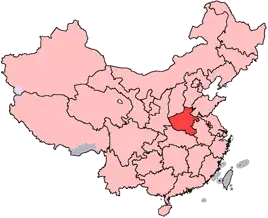
The Battle of Suiyang (睢阳之战) was a pivotal siege operation during the An Lushan Rebellion in 757 (the second year of the Zhide era) of the Tang Dynasty. General Yin Ziqi led an army of over 130,000 rebel troops to capture Suiyang, a vital strategic choke point commanding the Grand Canal and the gateway to the Jianghuai granaries. Tang commanders Zhang Xun and Xu Yuan united their modest forces of under 7,000 men to defend the isolated stronghold. Over ten months and more than four hundred engagements, Zhang Xun employed inventive tactics—including nighttime sorties, using straw mannequins to harvest enemy arrows, and blinding the rebel commander with a targeted arrow shot—slaying over 120,000 enemy troops. Although the fortress eventually fell to starvation and thirty-six loyalist commanders were executed, imperial forces retook the city three days later. The defense protected the Jianghuai tax base, providing essential material support that allowed Tang armies to liberate Chang'an and Luoyang.
Zhang Xun withdraws from Yongqiu to join Xu Yuan; loyalist cavalry routs Yang Chaozong north of Ningling.
Yin Ziqi arrives with 130,000 troops, encircling Suiyang; Zhang Xun executes night sorties to disrupt enemy camps.
Zhang Xun uses straw dummies to capture arrows; Nan Jiyun shoots an arrow into Yin Ziqi's left eye, repelling the assault.
Yin Ziqi constructs concentric trenches and earthworks; garrison provisions are exhausted, forcing soldiers to eat tree bark.
Nan Jiyun breaks through lines to seek aid in Linhuai; Helan Jinming refuses, and Nan Jiyun severs his finger in protest.
Starving garrison is overrun; Zhang Xun, Nan Jiyun, and thirty-six loyalist commanders are martyred.
Tang relief armies under Zhang Hao arrive three days later, routing Yin Ziqi and reclaiming Suiyang.
In the winter of 755 (the fourteenth year of the Tianbao era), An Lushan revolted in Fanyang, precipitating the devastating An Lushan Rebellion. Rebel forces captured the eastern capital of Luoyang and the western capital of Chang'an, forcing Emperor Xuanzong to flee to Shu while Crown Prince Li Heng ascended the throne as Emperor Suzong in Lingwu. Having occupied the northern heartland, the rebel leadership realized that the southern Jianghuai basin remained the primary source of grain, silk, and tax revenues sustaining the Tang court. Cutting off the Grand Canal and seizing Jianghuai became the rebels' paramount strategic objective.
In January 757, following the assassination of An Lushan by his son An Qingxu, rebel commander Yin Ziqi assembled an elite combined army of 130,000 troops drawn from Tongluo, Turkic, and Xi nomadic auxiliaries alongside surrendered Tang units. He marched southward into the Henan Circuit to force the gateway into Jianghuai. Suiyang (modern Shangqiu, Henan), situated along the junction of the Tongji Canal and the Bian River, guarded the northern entrance to the canal network. If Suiyang capitulated, southern defenses would dissolve immediately; if it held, rebel forces could not safely advance past its formidable defenses.
Prior to the siege, Magistrate Zhang Xun of Zhenyuan had successfully defended the small fortress of Yongqiu against heavy odds. In January 757, rebel commander Yang Chaozong captured Ningling, severing Zhang Xun's rear supply lines. Recognizing that Yongqiu was untenable, Zhang Xun led his three thousand veterans and three hundred warhorses southward to link up with Governor Xu Yuan and Magistrate Yao Yin at Suiyang.
Upon their union, the combined loyalist garrison numbered under seven thousand men. Demonstrating remarkable humility, Xu Yuan deferred tactical leadership to Zhang Xun, remarking that Zhang possessed superior military acumen while he would manage grain supplies, logistical administration, and city repair. United in purpose, the two commanders prepared the defenses for an impending assault.
In February 757, with rebel general Yang Chaozong menacing the northern approaches to Ningling, Zhang Xun and Xu Yuan resolved to neutralize this threat before the main rebel body arrived. Zhang Xun dispatched strike commanders Lei Wanchun and Nan Jiyun with shock cavalry to launch a pre-emptive assault north of Ningling.
Tang cavalry executed a double envelopment, throwing the rebel formations into disarray. Tang soldiers routed Yang Chaozong's army, killing over twenty enemy commanders and annihilating ten thousand rebel soldiers. Hundreds of fleeing rebels drowned in the Suiyang Canal, temporarily choking its flow with corpses. Yang Chaozong barely escaped in the night. Following this initial triumph, Emperor Suzong promoted Zhang Xun to Vice Military Commissioner of Henan.
On February 25, 757, Yin Ziqi arrived before Suiyang with 130,000 veteran troops, establishing fortified encampments encircling the city walls. Relying on overwhelming numeric superiority, Yin Ziqi ordered uninterrupted day-and-night assaults against the parapets.
Zhang Xun remained composed, mounting the battlements to direct defensive fire. He used psychological warfare, ordering his troops to lower banners and remain silent by day, leading rebel troops to assume the garrison was terrified. At night, the garrison beat war drums furiously, forcing rebel troops to stand to arms repeatedly until exhausted. Once enemy camps settled into deep slumber, Zhang Xun dispatched Nan Jiyun and Lei Wanchun with dozens of elite raiders scaling down the walls. These shock troops infiltrated the rebel lines, setting fire to command tents and inciting panic. Zhang Xun then launched a general sortie through the gates, killing twenty enemy commanders and ten thousand soldiers, forcing Yin Ziqi to withdraw his siege lines.
In May 757, Yin Ziqi received ten divisions of reinforcements equipped with towering siege ladders, catapults, and battering rams. The rebels launched round-the-clock assaults. Zhang Xun countered by boring hidden apertures through the parapets; whenever rebel assault ladders touched the walls, loyalist soldiers thrust massive iron grappling hooks through the apertures to overturn the ladders while dropping wooden casks of burning oil to destroy siege machinery.
As the siege dragged on, the garrison depleted its stockpile of arrows. Zhang Xun ordered his men to construct more than a thousand straw dummies, dress them in black tunics, and lower them on ropes from the ramparts under cover of midnight darkness. Rebel sentries assumed an amphibious night raid was underway and discharged volleys of arrows. At dawn, Zhang Xun hauled the straw mannequins back up, securing several hundred thousand rebel arrows. Several nights later, real shock raiders were lowered. Thinking it was another trick, rebel pickets ignored them. Nan Jiyun's commando unit struck like thunder, burning dozens of enemy stockades and slaughtering enemy outposts.
To break the siege, Zhang Xun planned to assassinate Yin Ziqi, but none of the defenders knew the rebel general's face. Zhang Xun ordered soldiers to shave wild mugwort stems into headless arrows and shoot them into enemy lines. Rebel soldiers recovered the headless shafts and gleefully rushed to the central pavilion to inform Yin Ziqi that the defenders had exhausted their munitions. Observing from the tower, Zhang Xun identified the recipient of the report as the enemy supreme commander. He immediately ordered master archer Nan Jiyun to draw his iron-backed recurve bow. A heavy arrow sliced through the air and struck Yin Ziqi squarely in the left eye. Howling in agony, Yin Ziqi fell from his horse, throwing the rebel command into chaos and compelling an emergency retreat.
In July 757, having partially recovered from his wound, Yin Ziqi returned with reinforced nomadic cavalry. Abandoning direct frontal assaults, he ordered double ditches dug and concentric earthen ramparts erected around Suiyang, sealing all avenues of egress.
By late summer, food, grain, and fodder inside the city were totally exhausted. The defenders slaughtered their warhorses for meat; when horses were gone, they boiled tree bark, pounded tea leaves and official paper for food, and dug up ground to catch sparrows and rodents. Soldiers suffered severe edema and bodily weakness, yet inspired by Zhang Xun and Xu Yuan's steadfast devotion, not a single defender defected.
Faced with total starvation, Zhang Xun directed Nan Jiyun to lead thirty elite cavalry in a breakout mission. Nan Jiyun cut a swath through concentric rebel cordons and galloped to Linhuai to appeal for relief troops from Regional Governor Helan Jinming.
Helan Jinming, envious of Zhang Xun's renown and keen to preserve his private army, refused to commit relief forces. Instead, he organized an elaborate banquet to persuade Nan Jiyun to join his command.
Nan Jiyun wept openly at the feast, declaiming before all assembled officers: "When I broke out from Suiyang, our soldiers had eaten nothing for months! While I am offered these delicacies, how could I swallow them while my comrades perish? You watch loyal defenders die without lifting a hand!" Drawing his dagger, Nan Jiyun severed his own middle finger and cast it upon the floor, declaring: "This severed finger answers your banquet! Though I leave without a single soldier, I shall return to die beside my general!" Nan Jiyun rode back into Suiyang with only a handful of surviving riders, where the weeping defenders pledged to fight to the end.
By late October 757, all vitality inside the walls had been extinguished. Only about four hundred emaciated defenders remained alive, too feeble even to draw their bows. Zhang Xun and Xu Yuan bowed toward the imperial court in the west: "Our strength is spent; we cannot preserve the city. Unable to repay Your Majesty in life, we shall become fierce spirits to slay rebels in death!"
On October 29, 757, Yin Ziqi directed tens of thousands of rebel troops over the collapsed ramparts. Suiyang fell, and thirty-six loyalist officers, including Zhang Xun, Xu Yuan, Lei Wanchun, Nan Jiyun, and Yao Yin, were captured.
Yin Ziqi interrogated Zhang Xun, who had shouted orders during battle so fiercely that his eye sockets bled and teeth splintered. Forcing open Zhang Xun's jaw, Yin Ziqi found only three or four teeth remaining. Awed yet fearful, Yin Ziqi attempted to coax him into surrender. Zhang Xun denounced him fiercely: "I have received immense favor from my sovereign and will never serve treacherous outlaws! Dying today is my honor; heaven's retribution will soon crush you rebels!" Nan Jiyun cried out beside him: "A true man's heart remains iron until death; how could I submit to rebels!" Zhang Xun and thirty-five comrades were executed, refusing submission to the end. Xu Yuan was transported toward Luoyang and murdered at Yanshi.
Only three days after the city fell, imperial relief forces led by Military Commissioner Zhang Hao arrived at Suiyang, smashing Yin Ziqi's forces and reclaiming the ruined citadel.
The siege ended in catastrophic losses for the garrison, with nearly all defenders perishing as martyrs, while rebel forces suffered over 120,000 casualties. Three days later, Zhang Hao's relief forces retook the city, ending the rebel southward offensive. Emperor Suzong posthumously bestowed titles of Grand Area Commander and Duke of Deng upon Zhang Xun, creating the Shrine of Two Loyalists in Suiyang.
The defense of Suiyang was arguably the most consequential defensive battle of the Tang Dynasty. By holding back the entire southern strike force of the Yan rebels for ten months, Zhang Xun prevented the rebellion from overrunning the wealthy Yangtze and Huai river valleys. This preserved the agrarian revenues and transport routes that allowed generals Guo Ziyi and Li Guangbi to assemble imperial counteroffensives, leading directly to the recapture of Chang'an and Luoyang later that year.
In A Postscript to the Biography of Vice Commissioner Zhang, Han Yu wrote: "Defending a single city, he shielded the entire realm, buffering Jianghuai and thwarting enemy momentum. If the realm did not fall, whose achievement was it?"
In the Zizhi Tongjian, Sima Guang evaluated: "Zhang Xun defended an isolated, depleted stronghold with a handful of troops against hundreds of thousands. Across more than four hundred battles, he killed 120,000 enemies and held firm for ten months, safeguarding Jianghuai and half the realm. His heroic loyalty matches that of any ancient hero."
Philosopher Wang Fuzi remarked in On the Comprehensive Mirror: "Zhang Xun's defense of Suiyang covered the realm with glory; yielding his life to fulfill his duty, his loyalty reverberates through eternity."