Witchcraft Disaster in Chang'an
False accusations by Jiang Chong led to violent rebellion in Chang'an, causing the suicide of Crown Prince Liu Ju and deeply shaking Emperor Wu.
Western Han (西汉) · HISTORICAL EVENT
轮台罪己诏
The Edict of Self-Reproach at Luntai (轮台罪己诏) was a momentous imperial decree issued in 89 BCE by Emperor Wu of Han (Liu Che), marking a profound reassessment of state policy. In his later reign, over four decades of incessant foreign campaigns had exhausted the imperial treasury, severely depleted the population, and provoked widespread peasant unrest. Compounded by General Li Guangli's catastrophic surrender in the north and the bloody purge of the…
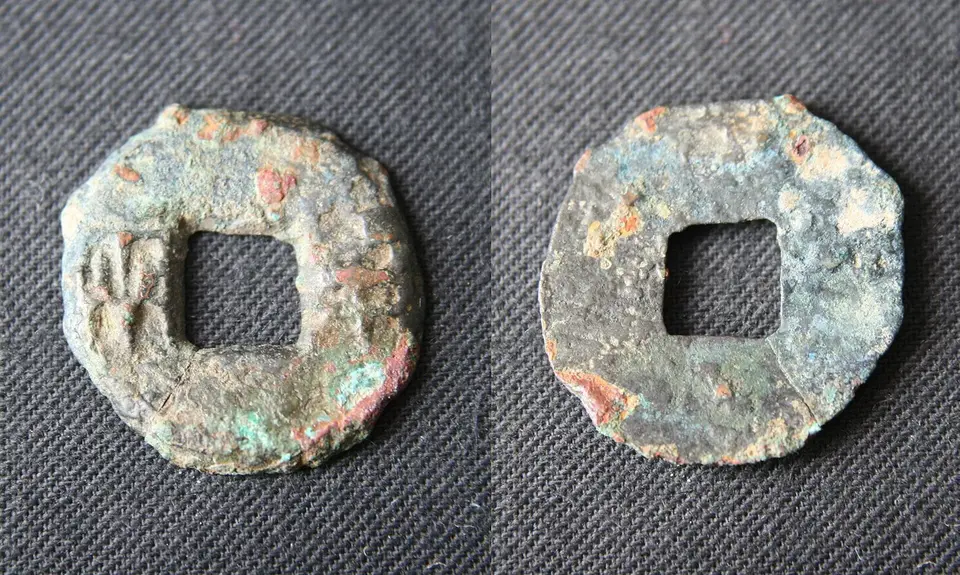
The Edict of Self-Reproach at Luntai (轮台罪己诏) was a momentous imperial decree issued in 89 BCE by Emperor Wu of Han (Liu Che), marking a profound reassessment of state policy. In his later reign, over four decades of incessant foreign campaigns had exhausted the imperial treasury, severely depleted the population, and provoked widespread peasant unrest. Compounded by General Li Guangli's catastrophic surrender in the north and the bloody purge of the Witchcraft Disaster in Chang'an, the Western Han dynasty faced grave sociopolitical turmoil. When Superintendent of Agriculture Sang Hongyang petitioned to deploy military agricultural colonies at Luntai in the Western Regions, the aging emperor decisively rejected the proposal and promulgated the Luntai Edict. The proclamation candidly acknowledged past strategic errors, condemned the heavy burdens inflicted upon commoners, banned unauthorized tax increases, and reoriented state priorities toward agricultural production and public welfare under the slogan of enriching the people. As China's earliest formal penitential edict signaling an imperial policy reversal, it saved the Han Empire from following the destructive trajectory of the Qin Dynasty and fostered the subsequent Zhao-Xuan Renaissance.
False accusations by Jiang Chong led to violent rebellion in Chang'an, causing the suicide of Crown Prince Liu Ju and deeply shaking Emperor Wu.
A seventy-thousand-strong Han army was destroyed at Mount Yanran, and Li Guangli surrendered to the Xiongnu, depleting imperial military forces.
Emperor Wu ascended Mount Tai, rejected proposals for new religious taxes, and resolved to prioritize the relief of civilian hardships.
Superintendent of Agriculture Sang Hongyang memorialized to deploy military colonies at Luntai; Emperor Wu decisively rejected the aggressive plan.
Emperor Wu formally issued the Luntai Edict repenting military excesses, halting expansion, and appointing Tian Qianqiu as Chancellor and Marquis of Enriching the People.
Emperor Wu passed away, leaving regent Huo Guang to maintain the recuperation policies that inaugurated the prosperous Zhao-Xuan Renaissance.
Beginning with the Mayi Ambush in 133 BCE, Emperor Wu waged aggressive wars against the Xiongnu, as well as expansionist expeditions across southwestern tribes, Nanyue, ancient Korea, and Dayuan. While these campaigns eliminated nomadic threats and doubled imperial territory, the staggering military expenditure drained the enormous surpluses accumulated during the earlier Wen-Jing period.
To finance ongoing campaigns, the imperial court implemented state monopolies over salt, iron, and liquor, established equitable transport and price stabilization bureaus, and levied punitive asset taxes. Although these fiscal measures temporarily sustained the war effort, they stifled commerce and impoverished the agrarian populace. Extreme tax burdens and forced corvee labor forced over two million peasants in eastern China to flee their ancestral farmlands, sparking frequent rural uprisings.
In 90 BCE, Emperor Wu dispatched General Li Guangli with seventy thousand troops deep into northern Mongolia. The Han expeditionary force was surrounded and annihilated at Mount Yanran, and Li Guangli defected to the Xiongnu to escape domestic political intrigue. This military catastrophe eradicated the cream of the imperial cavalry.
Simultaneously, the devastating Witchcraft Disaster of 91 BCE engulfed the capital of Chang'an. Corrupt court factions led by Jiang Chong falsely implicated Crown Prince Liu Ju, provoking armed resistance that ended with the deaths of tens of thousands, the suicide of the Crown Prince, and the self-inflicted death of Empress Wei. Shattered by filial grief and military humiliation, Emperor Wu profoundly questioned his aggressive state policies.
In the spring of 89 BCE, Emperor Wu concluded the Fengshan sacrifices at Mount Tai and returned to Chang'an. Superintendent of Agriculture Sang Hongyang, joined by the Chancellor and the Imperial Censor, submitted an ambitious memorial urging the court to fortify the Western Regions. The memorial argued that supplying remote campaigns to Dayuan had proven excessively costly and that the Han should establish permanent military agricultural colonies in fertile districts around Luntai and Quli.
Sang Hongyang advocated dispatching several thousand military colonists to cultivate irrigated fields, construct fortified relay towers and beacon stations, and stockpile vast reserves of grain. This plan aimed to project imperial power across the Tarim Basin kingdoms while containing the right wing of the Xiongnu confederation. Within the traditional framework of military expansion, the memorial received enthusiastic backing from outer-court officials.
Confronted with the ambitious memorial, the aged emperor did not grant the customary imperial endorsement. Emperor Wu understood that state finances were depleted and the peasant population was severely thinned. Mobilizing thousands of conscripts to march thousands of miles across arid deserts to garrison distant oases would impose unbearable hardships on an already exhausted society.
In the sixth lunar month of 89 BCE, Emperor Wu formally issued an imperial edict dismissing the Luntai proposal. The emperor noted that during his recent sacrificial journey to Mount Tai, sycophantic ministers had proposed increasing poll taxes to cover ritual costs, an idea that had filled him with sorrow. Committing fresh armies to remote frontier outposts would aggravate the grievances of the empire, running contrary to the core tenets of benevolent governance.
In the Luntai Edict, Emperor Wu conducted a candid self-examination of his four decades on the throne. He acknowledged that he had misguidedly trusted aggressive military adventurers like Li Guangli, squandering national resources and causing the deaths of countless loyal soldiers whose surviving widows and orphans suffered destitution.
The edict declared an immediate cessation of costly expansionist ventures. Emperor Wu proclaimed a decisive policy command: "The urgent task of the present day lies in suppressing cruel and tyrannical governance, terminating unauthorized levies, vigorously encouraging fundamental agriculture, and restoring horse-breeding tax exemptions, without neglecting necessary military defense." Local magistrates were sternly instructed to ban arbitrary levies and focus entirely on reviving domestic farming.
To guarantee the execution of the new policy, Emperor Wu restructured the imperial administration. Tian Qianqiu, a principled official who had bravely submitted a memorial vindicating the late Crown Prince Liu Ju during the Witchcraft Disaster, was abruptly elevated to Chancellor. Emperor Wu conferred upon Tian Qianqiu the meaningful noble title of "Marquis of Enriching the People" (Fu Min Hou), declaring to all subjects that the primary goal of the state was public well-being.
The court also tasked agricultural experts like Zhao Guo with propagating advanced agrarian techniques nationwide, including alternating furrow farming and multi-tube seed drills drawn by oxen. Agricultural officers were sent to diverse commanderies to supervise irrigation improvements and intensive farming. These practical measures revived rural production, shifting imperial governance from conquest toward domestic rehabilitation.
The seventh emperor of the Western Han Dynasty. After decades of imperial expansion that shaped the frontiers of China, he exhibited remarkable political introspection when faced with systemic domestic crises. By rejecting the Luntai campaign and issuing the penitential decree, he successfully averted the imminent collapse of the empire.
A prominent Han fiscal strategist who served as Superintendent of Agriculture and Imperial Censor. He devised state monopolies and price stabilization systems to fund external wars. In 89 BCE, he proposed establishing agricultural outposts at Luntai, a plan that Emperor Wu prudently rejected in favor of domestic recuperation.
A Han official who achieved prominence by submitting a courageous memorial defending the innocence of Crown Prince Liu Ju. Emperor Wu rewarded his integrity by appointing him Chancellor and granting him the title Marquis of Enriching the People, positioning him as the primary administrator of the post-Luntai economic revival.
A Western Han general who led costly expeditions against Dayuan and the Xiongnu. In 90 BCE, fear of court intrigue during the Witchcraft Disaster led to his reckless advance, total defeat at Mount Yanran, and surrender to the Xiongnu, serving as the immediate catalyst for Emperor Wu's strategic repentance.
At the close of Emperor Wu's reign, peasant unrest and economic exhaustion mirrored the systemic instability that had doomed the Qin Dynasty. The promulgation of the Luntai Edict marked the definitive termination of aggressive outward campaigns. By canceling burdensome emergency levies and halting forced labor, the court diffused acute social conflicts and stabilized the dynasty.
The core principles affirmed in the Luntai Edict—prioritizing agriculture, curbing harsh administration, and relieving the populace—became the guiding political consensus of the regency of Huo Guang and the reigns of Emperor Zhao and Emperor Xuan. Taxes on grain and salt were reduced, and administrative corruption was curtailed, ushering in an era of demographic recovery and cultural flowering known as the Zhao-Xuan Renaissance.