Treason at Mayi
Modu besieged Mayi; Han Wang Xin defected and guided Xiongnu cavalry into Taiyuan
Western Han (西汉) · HISTORICAL EVENT
白登之围
The Siege of Baideng (白登之围) was a monumental military encirclement in the winter of 200 BCE (the 7th year of Emperor Gaozu) in which Han Emperor Gaozu Liu Bang was besieged on Mount Baideng near Pingcheng (modern Datong, Shanxi) by 400,000 elite Xiongnu cavalry under Modu Chanyu for seven days and nights. Following the unification of the steppe tribes by Modu Chanyu, the Xiongnu exploited China's post-Qin turmoil to raid southwards. In 201 BCE, Han Wang…
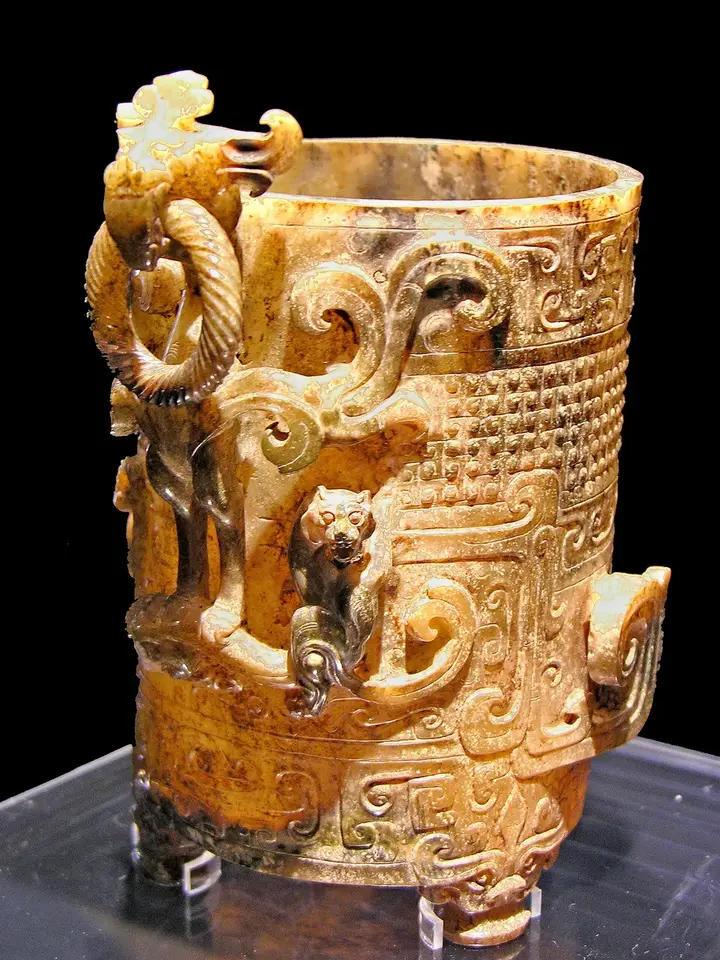
The Siege of Baideng (白登之围) was a monumental military encirclement in the winter of 200 BCE (the 7th year of Emperor Gaozu) in which Han Emperor Gaozu Liu Bang was besieged on Mount Baideng near Pingcheng (modern Datong, Shanxi) by 400,000 elite Xiongnu cavalry under Modu Chanyu for seven days and nights. Following the unification of the steppe tribes by Modu Chanyu, the Xiongnu exploited China's post-Qin turmoil to raid southwards. In 201 BCE, Han Wang Xin surrendered Mayi to the Xiongnu and guided their cavalry to invade Taiyuan. Leading 320,000 troops on an imperial expedition, Liu Bang scored initial victories at Tongdi, Jinyang, and Guangwu. Modu feigned weakness by concealing his finest cavalry and parading infirm soldiers to lure Han forces forward. Dismissing wise warnings from Lou Jing, Liu Bang advanced with vanguard cavalry and was surrounded on Mount Baideng. Besieged in freezing blizzards without provisions for seven days, Han soldiers suffered severe frostbite. Strategist Chen Ping formulated a secret scheme, bribing Modu's favorite consort with treasures to convince the Chanyu to relent. Suspecting collusion among his allies, Modu opened a gap in his lines, allowing Han forces to execute a disciplined breakout. The crisis forced the Han to adopt the heqin marriage alliance, purchasing decades of vital peace that fostered the Rule of Wen and Jing.
Modu besieged Mayi; Han Wang Xin defected and guided Xiongnu cavalry into Taiyuan
Liu Bang led 320,000 troops north, defeating rebel armies at Tongdi and Jinyang
Modu feigned weakness; Lou Jing detected the ruse but was imprisoned by Liu Bang
Liu Bang's vanguard reached Pingcheng; 400,000 Xiongnu cavalry encircled Mount Baideng
Besieged for seven days without food, 20-30% of Han troops suffered severe frostbite
Han envoys bribed Consort Yanzhi with treasures and portraits of Han beauties
Yanzhi urged retreat; Modu suspected his allies and opened the southwestern corner
Han forces marched out with drawn bows and reconnected with the main army; Xiongnu withdrew
Liu Bang pardoned Lou Jing, made him Marquis of Jianxin, and executed deceptive scouts
Adopting Lou Jing's proposal, Han established marriage alliances and border markets with the Xiongnu
During the chaotic interregnum between Qin and Han, Chinese warlords fought for supremacy in the Central Plains, leaving northern frontier defenses neglected. Across the northern steppe, Prince Modu assassinated his father Touman Chanyu using whistling arrows, seizing supreme authority over the Xiongnu confederation. Modu swiftly subjected neighboring nomadic peoples, vanquishing the Donghu in the east, driving the Yuezhi west, and subjugating the Loufan and Baiyang kings in the south.
Modu reclaimed the Ordos Loop territory previously seized by Qin General Meng Tian, consolidating a steppe empire boasting over 400,000 mounted archers. Operating from the northern plateaus, Xiongnu cavalry repeatedly breached the Great Wall, raiding commanderies including Chaona, Fushi, and Yanmen, posing an existential threat to the northern frontier and the Guanzhong heartland of the nascent Han dynasty.
In 202 BCE (the 5th year of Gaozu), Liu Bang established the Han Dynasty and enfeoffed seven regional kings. Han Wang Xin was initially enfeoffed in Yingchuan with his capital at Yangzhai. Recognizing Yingchuan's central strategic importance and seeking to buffer against nomadic raids, Liu Bang relocated Han Wang Xin to Taiyuan Commandery, basing him at Jinyang. Han Wang Xin subsequently petitioned to shift his seat further north to Mayi (modern Shuozhou), which Liu Bang approved.
In autumn 201 BCE (the 6th year of Gaozu), Modu Chanyu led 100,000 cavalry in a massive siege of Mayi. Outmatched, Han Wang Xin repeatedly sent secret emissaries to sue for peace. Suspecting his loyalty, Liu Bang dispatched reprimands. Terrified of execution, Han Wang Xin surrendered Mayi to the Xiongnu and guided nomadic armies south across the Juezhu Mountains, capturing Taiyuan and advancing upon Jinyang.
In the winter of 200 BCE (the 7th year of Gaozu), Emperor Gaozu mobilized an imperial expeditionary force of 320,000 infantry, cavalry, and war chariots from Guanzhong and eastern commanderies. Assisted by strategists Chen Ping and Lou Jing, with veteran commanders Fan Kuai, Zhou Bo, and Xiahou Ying leading the advance, Liu Bang marched north into Taiyuan.
The Han army achieved swift victories. At Tongdi, Han forces routed rebel armies and slew general Wang Xi, forcing Han Wang Xin to flee to the Xiongnu. Rebel commanders Manqiuchen and Wang Huang gathered remnants, elevating former Zhao royal descendant Zhao Li as a puppet king to coordinate with Modu.
Modu dispatched the Worthy Princes of the Left and Right with 10,000 cavalry each to hold Guangwu. Han forces crushed the allied forces before Jinyang, pursued them to Lishi, and defeated them again. Further nomadic concentrations northwest of Loufan were dispersed, clearing the territory north of the Juezhu Mountains.
Rapid victories bred overconfidence within the Han command, convincing commanders that the Xiongnu were easily vanquished. Arriving at Jinyang, Liu Bang learned that Xiongnu forces were positioned at Daigu. He dispatched more than ten reconnaissance missions beyond the frontier.
The astute Modu Chanyu orchestrated an elaborate deception, concealing prime mounts and elite cavalry in secluded valleys while deploying aged soldiers and emaciated livestock outside his encampments. Returning Han envoys unanimously reported: "The Xiongnu field only frail troops and starving cattle; they can be utterly destroyed!"
Seeking verification, Liu Bang sent Lou Jing to scout the front. Detecting the deception, Lou Jing urged caution upon his return: "When opposing armies confront each other, they invariably parade their strength to intimidate the foe. The Xiongnu display only infirm soldiers and lean animals. This is a deliberate ruse to lure our army forward! I submit that the Xiongnu must not be attacked!"
By then, Han vanguard units had crossed the Juezhu Pass. Enraged by what he perceived as defeatism, Liu Bang cursed Lou Jing: "You cowardly rogue from Qi! You owe your post to sweet rhetoric, and now you dare slander my grand army!" Liu Bang ordered Lou Jing bound in iron shackles and imprisoned in Guangwu, vowing to execute him after the victory.
Liu Bang pressed forward with his elite light cavalry, reaching Pingcheng ahead of the main infantry columns struggling through severe snowstorms miles behind. Recognizing that the Han emperor had taken the bait, Modu unleashed 400,000 concealed elite cavalry, sweeping across the hills to encircle Liu Bang on Mount Baideng.
Modu deployed his cavalry by horse coloration: white chargers in the west, dapple-greys in the east, pure black steeds in the north, and bays in the south. The massive host encircled the heights, severing all communication between Liu Bang's vanguard and the main Han army.
Liu Bang launched multiple breakout assaults, but each was repulsed by intense archery barrages. The winter climate was brutal; blizzards raged, and Han troops lacked winter gear. Two to three out of every ten soldiers suffered frostbitten fingers. With rations dwindling and arrows depleted over seven days of siege, while the main army remained stalled in snowdrifts, the Han monarch faced annihilation.
In this desperate hour, Master of the Guard Chen Ping devised an ingenious plan. Observing that Modu Chanyu doted upon his favorite consort, Yanzhi, sharing her company daily, Chen Ping suggested exploiting her influence.
Liu Bang approved the scheme. Under cover of nocturnal mist and snow, agile envoys descended the cliffs of Baideng with gold, jade, and a portrait of an exquisite Han beauty. Reaching the Xiongnu camp, the envoys secured an audience with Yanzhi.
Presenting the treasures, the envoy argued: "The Han Emperor is besieged, but possesses millions of warriors in the south. The Han court intends to present the empire's most beautiful maiden to the Chanyu to negotiate peace. If the Emperor escapes, this beauty will remain in Han lands; but if the Chanyu slays the Emperor, the court will deliver her immediately. When she enters the Chanyu's tent, how will your highness retain your supreme favor?"
Terrified of a rival concubine, dazzled by the gifts, and aware that vast Han armies were approaching, Yanzhi appealed to Modu: "Our scouts report that massive Han reinforcements will arrive by dawn. Two monarchs should not drive each other to extremities. Even if the Chanyu takes Han lands, nomadic tribes cannot dwell in Chinese cities. If the Han Emperor perishes, his people will fight to the death. Furthermore, that the Han sovereign has endured seven days without panic indicates ancestral protection. Why defy Heaven? It is better to grant him an exit."
Simultaneously, rebel commanders Wang Huang and Zhao Li failed to arrive at the agreed time. Modu suspected they were plotting betrayal with the Han. Persuaded by Yanzhi and wary of a two-front battle, Modu withdrew his forces from the southwestern corner of Mount Baideng.
Chen Ping cautioned Liu Bang against a chaotic rush. The emperor commanded every soldier to face outward with bows drawn and arrows nocked. Grand Coachman Xiahou Ying personally took the reins of the imperial carriage, enforcing a steady, deliberate march through the opening. Intimidated by the disciplined formation, Modu declined to pursue, withdrawing north into the steppe.
Upon reaching Guangwu, Liu Bang's first act was to personally release Lou Jing from prison, apologizing: "I neglected your wise counsel and was nearly destroyed at Pingcheng!" He enfeoffed Lou Jing as Marquis of Jianxin with 2,000 households, executed the deceptive scout envoys, and marched his army back to Chang'an.
The Siege of Baideng ended with Modu Chanyu opening an escape corridor, allowing Emperor Gaozu and his vanguard to withdraw safely and rejoin the main army. While Han forces pacified Taiyuan, the tactical encirclement on Mount Baideng demonstrated the devastating mobility and operational superiority of nomadic cavalry. Severe casualties from extreme winter conditions convinced the Han court that eradicating the Xiongnu through offensive warfare was militarily unviable at that time.
The battle transformed Han-Xiongnu relations for nearly two centuries. First, it forced the early Han court to abandon offensive military adventurism. Adopting Lou Jing's advice, Liu Bang instituted the heqin policy, marrying Han princesses to the Chanyu, dispatching annual gifts of silk, grain, and liquor, and opening border markets; second, although perceived as humiliating, this policy secured over sixty years of northern peace, allowing the early Han to pursue Daoist non-interference (Huang-Lao) policies that generated the agricultural prosperity of the Rule of Wen and Jing; third, the vulnerabilities exposed at Baideng spurred Emperors Wen and Jing to prioritize state horse-breeding programs and cavalry training, laying the military foundation for Emperor Wu's decisive northern offensives under Generals Wei Qing and Huo Qubing.