Pungdo Provocation
The Japanese Navy ambushes Chinese transports off Pungdo, launching the First Sino-Japanese War; Qing forces suffer defeats at Pyongyang and the Yalu River.
Qing Dynasty (清朝) · HISTORICAL EVENT
《马关条约》签订
The signing of the Treaty of Shimonoseki (《马关条约》签订) refers to the historic diplomatic event between March 20 and April 17, 1895 (the twenty-first year of the Guangxu era of the Qing Dynasty) in which Qing Plenipotentiary Ambassador Li Hongzhang and Japanese Prime Minister Ito Hirobumi and Foreign Minister Mutsu Munemitsu negotiated and concluded the unequal peace treaty officially titled the Treaty of Peace between Japan and China at the Shunpanro…
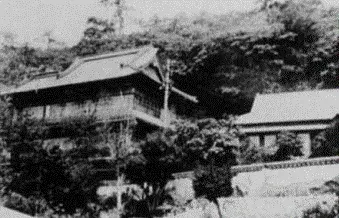
The signing of the Treaty of Shimonoseki (《马关条约》签订) refers to the historic diplomatic event between March 20 and April 17, 1895 (the twenty-first year of the Guangxu era of the Qing Dynasty) in which Qing Plenipotentiary Ambassador Li Hongzhang and Japanese Prime Minister Ito Hirobumi and Foreign Minister Mutsu Munemitsu negotiated and concluded the unequal peace treaty officially titled the Treaty of Peace between Japan and China at the Shunpanro Hall in Shimonoseki (Bakan), Japan. The treaty consisted of eleven primary articles alongside separate secret articles, an armistice convention, and procedural protocols. Following China's disastrous defeat in the First Sino-Japanese War (1894–1895), marked by the fall of Pyongyang, naval disaster at the Yalu River, the massacre at Port Arthur, and the annihilation of the Beiyang Fleet at Weihaiwei, the Qing government was coerced into suing for peace. During the negotiations, an assassination attempt on Li Hongzhang prompted an unconditional partial armistice, yet Japan imposed an ultimatum demanding staggering concessions. The treaty recognized the nominal "complete independence" of Korea, severed the Liaodong Peninsula (later retroceded following the Triple Intervention for thirty million taels), ceded Taiwan and the Penghu Islands, imposed a 200-million-tael silver war indemnity, opened Shashi, Chongqing, Suzhou, and Hangzhou as treaty ports, and permitted Japanese industrial manufacturing within Chinese ports, precipitating the scramble for foreign concessions and the modern Chinese national awakening.
The Japanese Navy ambushes Chinese transports off Pungdo, launching the First Sino-Japanese War; Qing forces suffer defeats at Pyongyang and the Yalu River.
Weihaiwei falls, the Beiyang Fleet is annihilated, and Japanese armies advance toward Shanhaiguan, forcing the Qing court to sue for peace.
Emperor Guangxu appoints Li Hongzhang as Plenipotentiary Ambassador; Li departs Daku for Shimonoseki accompanied by Li Jingfang.
Plenary negotiations open at the Shunpanro; Japan presents extortionate armistice terms demanding the surrender of Dagu, Tianjin, and Shanhaiguan.
Following the third session, a Japanese extremist shoots Li Hongzhang in the left cheek; international outrage erupts against Japan.
Japan concedes an unconditional northern ceasefire, but deliberately excludes Taiwan and the Penghu Islands to pursue territorial conquest.
Ito Hirobumi delivers Japan's final draft accompanied by a three-day ultimatum, threatening an immediate march on Beijing if rejected.
Li Hongzhang signs the Treaty of Shimonoseki at the Shunpanro, ceding Liaodong, Taiwan, and Penghu, and agreeing to a 200-million-tael indemnity.
Ratifications are exchanged at Chefoo (Yantai), bringing the Treaty of Shimonoseki into formal legal effect.
Following the Triple Intervention by Russia, Germany, and France, China signs the Liaodong Convention, paying thirty million taels to recover the peninsula.
In the late nineteenth century, global capitalist powers transitioned into monopoly imperialism, intensifying their colonial competition across East Asia. Following the Meiji Restoration, Imperial Japan pursued an aggressive "Continental Policy" aimed at dominating Korea and subduing China to secure raw materials and overseas markets. In the spring of 1894, the Donghak Peasant Rebellion erupted in Korea, prompting the Joseon royal court to request military aid from its suzerain, the Qing Empire. Seizing this pretext, Japan deployed modernized armed forces into Seoul, seized control of the Korean royal palace, and actively provoked war.
On July 25, 1894, Japanese warships launched a surprise attack on Chinese troop transports off Pungdo, sinking the British-chartered transport Kowshing and initiating the First Sino-Japanese War. On August 1, both nations formally declared war. Within the Qing court, Empress Dowager Cixi and Beiyang Minister Li Hongzhang adopted a defensive, appeasement posture, naively relying on Western diplomatic mediation, while Emperor Guangxu and the war faction advocated active resistance, hamstrung by corrupt logistical systems and fragmented regional commands.
The outbreak of hostilities revealed the profound institutional decay of the late Qing military. At the Battle of Pyongyang in September 1894, Commander Ye Zhichao fled southward, abandoning the city and retreating across the Yalu River, leading to the complete loss of Korea. On September 17, the Battle of the Yalu River erupted between the Beiyang Fleet and the Japanese Combined Fleet; despite heroic sacrifices by Captain Deng Shichang of the cruiser Zhiyuan, Li Hongzhang ordered the fleet to seek shelter within the fortified naval base of Weihaiwei, surrendering control of the Yellow Sea.
Capitalizing on naval superiority, the Japanese First Army crossed the Yalu River into Manchuria, while the Second Army landed on the Liaodong Peninsula, capturing the naval base of Port Arthur in November 1894 and carrying out a four-day massacre of over 20,000 Chinese civilians. In early 1895, Japanese forces mounted a coordinated land-sea assault on Weihaiwei; Admiral Ding Ruchang committed suicide rather than surrender, and the Beiyang Fleet was completely annihilated, leaving the seaward approaches to Beijing undefended.
Following the fall of Weihaiwei, Japanese armies pushed into the Liaodong interior, capturing Niuzhuang, Haicheng, and Yingkou, and massing forces to breach Shanhaiguan. In Beijing, the imperial court was seized with panic. To protect the capital and celebrate her upcoming sixtieth birthday, Empress Dowager Cixi resolved to sue for peace at any cost.
The Qing court initially dispatched Vice Minister of Revenue Zhang Yinhuan and Acting Governor Shao Youlian to Hiroshima. However, Japanese leaders Ito Hirobumi and Mutsu Munemitsu, intent on maximizing military gains, rejected their credentials as lacking "full plenipotentiary powers" and expelled the mission with deliberate humiliation. The Japanese cabinet made it known that only Prince Gong or Viceroy Li Hongzhang would be accepted as worthy plenipotentiaries. Facing military disaster, Emperor Guangxu issued an imperial edict in February 1895 appointing the seventy-three-year-old Li Hongzhang as Plenipotentiary Ambassador to Japan.
By February 1895, the complete destruction of the Beiyang Fleet at Liugong Island shattered thirty years of Self-Strengthening modernization efforts. With Japanese field armies occupying southern Liaodong and advancing toward Shanhaiguan, the imperial court in Beijing was gripped by panic. While Emperor Guangxu and imperial tutors wept over the humiliation, Empress Dowager Cixi commanded Prince Gong, the Grand Secretariat, and the Grand Council to achieve peace at all costs to preserve dynastic rule.
Following the humiliating rejection of the Zhang Yinhuan-Shao Youlian mission in Hiroshima, Japanese Prime Minister Ito Hirobumi demanded a grand councillor of unassailable prestige. Reluctantly, the Qing court turned to Li Hongzhang, the architect of northern naval defense and seasoned diplomat. On March 13, 1895 (the eighteenth day of the second month of the Guangxu era), Emperor Guangxu formally granted Li Hongzhang full plenipotentiary credentials, appointing his adopted son Li Jingfang as deputy plenipotentiary and engaging former U.S. Secretary of State John W. Foster as senior international legal counsel.
Conscious of the public disgrace awaiting him, Li Hongzhang lamented to intimate colleagues that he was merely a "plasterer patching an ancient, collapsing mansion," now forced to bear historical opprobrium on behalf of a shattered empire. On March 13, Li Hongzhang and his entourage boarded the merchant steamers Feima and Guangji at Daku, sailing across the stormy waters of the Bohai Sea and Yellow Sea toward Shimonoseki.
On the morning of March 19, 1895, amid cold spring rain, the Chinese delegation's steamers dropped anchor in the Kanmon Straits off Shimonoseki. Japan had deliberately selected this remote southwestern port rather than Tokyo to isolate the Qing delegation from foreign legations, preventing Western diplomats from observing or intervening, while staging menacing naval maneuvers outside the port to intimidate the Chinese envoys.
The Chinese delegation was housed at the Injoji temple, while formal negotiations were scheduled at the nearby Shunpanro, a private seafood inn and bathhouse overlooking the straits. Japanese police established armed cordons along the route, while crowds of nationalist onlookers gathered to jeer the defeated Chinese representatives.
On the afternoon of March 20, the first plenary session convened on the second floor of the Shunpanro. The Japanese delegation was headed by Prime Minister Ito Hirobumi and Foreign Minister Mutsu Munemitsu, facing Li Hongzhang and Li Jingfang. Ito, triumphant and aggressive, contrasted sharply with the haggard, seventy-three-year-old Chinese viceroy. After verifying credentials, Li Hongzhang attempted to appeal to Pan-Asian solidarity, arguing that China and Japan were neighboring nations of common script and culture, and that exhausting themselves in war would only invite Western imperialist subjugation.
Ito Hirobumi cut off Li Hongzhang's moral appeal with icy disdain, retorting: "A decade ago in Tianjin, Your Excellency spoke with great authority; today at Shimonoseki, we meet as victor and vanquished, not as philosophical conversationalists! The war is decided; let us speak only of specific terms!" Ito demanded an immediate statement on whether China requested an armistice, handing over a pre-formulated list of preconditions.
On March 21, during the second plenary session, Ito Hirobumi presented Japan's formal preconditions for an armistice: Japanese military occupation of the strategic fortresses of Shanhaiguan, Dagu, and Tianjin; the immediate withdrawal of all Chinese garrison forces, surrendering all armaments, artillery, and ammunition to Japanese custody; Japanese operational control over the Tianjin-Shanhaiguan Railway; and China's full payment of all Japanese occupation army expenses throughout the armistice.
These conditions amounted to demanding the unconditional surrender of the defenses of the capital. Had China conceded, Japanese assault divisions could have entered Beijing within hours by rail, turning peace talks into an unconditional surrender ceremony under Japanese bayonets. Li Hongzhang rejected the terms on the spot, declaring that China would rather endure continued warfare than commit political suicide. With the concurrence of John W. Foster, Li Hongzhang bypassed the armistice entirely, proposing to proceed directly to the permanent peace treaty.
On March 24, at the third plenary session, Ito Hirobumi demanded China's territorial concessions. When Li Hongzhang pressed for Japan's territorial ambitions, Ito dropped all diplomatic ambiguity, openly declaring that Japan demanded the independence of Korea, staggering indemnities, and permanent cession of Chinese territory. After three hours of bitter disputation, the session adjourned in deadlock.
During this clash, Li Hongzhang recognized the unyielding rapacity of the Japanese military, which had already drafted operational plans to storm Shanhaiguan and advance on Tongzhou, deliberately leveraging military panic to crush Chinese diplomatic resistance.
At 4:10 PM on March 24, following the contentious third session, Li Hongzhang departed the Shunpanro in a wicker palanquin carried by four Japanese porters, accompanied by aides and security officers along the narrow streets toward the Injoji temple. As the procession negotiated a sharp corner at Dotomachi, a fanatical twenty-six-year-old Japanese right-wing assassin, Koyama Toyotaro, suddenly broke through police lines.
Lunging toward the palanquin, Koyama drew a revolver and fired point-blank through the window glass into Li Hongzhang's face. The bullet struck Li Hongzhang in the left cheekbone beneath the left eye, fracturing the bone. Li Hongzhang collapsed in a pool of blood, his embroidered robes drenched. The assassin was tackled and arrested, while terrified attendants rushed the unconscious viceroy back to the temple.
Army Surgeon-General Sato Susumu and French physicians determined that the bullet was wedged deep within the cheekbone near the optic nerve; fear of fatal hemorrhaging precluded surgical extraction, forcing them to cleanse and stitch the wound. Regaining consciousness and gazing upon his blood-soaked garments, Li Hongzhang sighed: "This blood may yet serve my country! If this wound allows China to reduce territory and indemnities by tens of millions, I die content!"
The assassination attempt sparked a global diplomatic tempest. Western ministers in Tokyo lodged vehement protests, condemning Japan's barbaric security lapses and aggressive warmongering; major Western newspapers sympathized with the wounded Chinese envoy, and Russia, Germany, and France applied intense diplomatic pressure. Terrified that European powers might intervene militarily, Emperor Meiji dispatched royal physicians and bandages, while Ito Hirobumi cursed the assassin for jeopardizing Japan's battlefield gains.
To defuse international condemnation and preempt European intervention, Ito Hirobumi rushed to the Injoji temple on March 28, informing the bedridden Li Hongzhang that Emperor Meiji had decreed an immediate, unconditional armistice across northern fronts. On March 30, Li Jingfang signed the formal Sino-Japanese Armistice Convention on behalf of his wounded father.
However, the armistice concealed a calculated strategic maneuver. It applied exclusively to Fengtian, Zhili, and Shandong for twenty-one days, while deliberately excluding Taiwan and the Penghu Islands. Admiral Kabayama Sukenori's Combined Fleet took advantage of the northern ceasefire to assault Penghu, aiming to establish military control over Taiwan prior to the final treaty.
Realizing that European intervention was looming, Ito presented Japan's comprehensive eleven-article Draft Treaty of Peace on April 1. This predatory draft demanded: complete Korean independence; cession of the southern Liaodong Peninsula, the entire island of Taiwan, and the Penghu Islands; a silver indemnity of 300 million taels; the opening of Beijing, Shashi, Xiangtan, Chongqing, Suzhou, and Hangzhou as treaty ports; and full industrial manufacturing privileges for Japanese nationals in all open ports.
Reading the draft from his bed, Li Hongzhang felt devastated. As leader of the Self-Strengthening movement, he recognized that granting manufacturing rights would allow foreign capital to crush China's nascent domestic industries, while the loss of Liaodong and Taiwan would compromise national defense. He declared to his aides that these terms spelled imperial ruin, vowing to resist them to his last breath.
From his sickbed, Li Hongzhang mobilized his delegation to draft extensive counter-memorials, submitting a comprehensive rebuttal on April 5 that rejected the cession of Liaodong and Taiwan and sought to reduce the indemnity to under 100 million taels. On April 8, his face wrapped in bloodstained bandages, Li Hongzhang returned to the Shunpanro for the fourth plenary session.
Facing Ito Hirobumi across the table, Li Hongzhang pleaded desperately: "Three hundred million taels exceeds our entire treasury revenues! Taiwan was never conquered by Japanese arms, and Liaodong is the sacred ancestral homeland of our ruling dynasty!" Ito remained merciless, replying: "Cessions and indemnities are customary in international law; Liaodong is occupied, and Taiwan is within our grasp!" Ito reduced the indemnity by 100 million taels, but insisted upon 200 million, warning that if rejected, Japanese armies would advance on Beijing.
On April 10 and 11, during the fifth and sixth sessions, Li Hongzhang pleaded personally with Ito, asking: "Can we compromise between Taiwan and Penghu? Cede Penghu, but preserve Taiwan for China's dignity?" He even begged for a minor reduction of twenty million taels as traveling expenses for his homeward journey. Ito cut him off coldly: "Not a single copper can be reduced!"
On April 11, Mutsu Munemitsu delivered Japan's Final Revised Draft accompanied by an ultimatum. Japan demanded an unconditional "Yes" or "No" by April 14; any further debate would be treated as a breakdown of negotiations, instantly terminating the armistice and launching an all-out Japanese assault on Beijing.
Faced with this ultimatum, all diplomatic options were exhausted. John W. Foster informed Li Hongzhang that Western fleets could not arrive in time to save Beijing, and that continued refusal would result in the fall of the capital. Outside the Shunpanro, Japanese forces stood in menacing battle readiness.
Trapped by the ultimatum, Li Hongzhang dispatched urgent encrypted telegrams to the Grand Council in Beijing, reporting the military peril and imploring the throne to make the ultimate decision. In Beijing, Emperor Guangxu wept bitterly over the loss of territory, contemplating moving the capital to Xi'an to continue resistance.
However, Empress Dowager Cixi insisted upon capitulation, arguing that imperial preservation took precedence over territorial integrity. Under her pressure, Prince Gong and the Grand Council drafted the decree of submission. On April 14, Emperor Guangxu issued the secret imperial decree commanding Li Hongzhang to sign the Japanese revised terms without further delay.
Receiving the imperial order, Li Hongzhang wept at his desk, realizing that his lifetime reputation was extinguished. On the morning of April 17, 1895, the envoys assembled at the Shunpanro for the final session. In dead silence, Li Hongzhang, Li Jingfang, Ito Hirobumi, and Mutsu Munemitsu affixed their signatures and seals to the Chinese and Japanese texts of the Treaty of Shimonoseki.
As he signed the most humiliating treaty in modern Chinese history, Li Hongzhang's hands trembled with grief. When the ceremony concluded, he rose without a word, vowed never again to set foot on Japanese soil, and boarded the waiting steamer for China. Paralyzed with despair, his wound bleeding through fresh dressings, he sailed westward across the Yellow Sea toward an enraged nation.
The eleven articles of the Treaty of Shimonoseki imposed devastating terms: Article 1 recognized the nominal "independence" of Korea, severing traditional tributary ties; Article 2 ceded the southern Liaodong Peninsula, Taiwan, and the Penghu Islands to Japan in perpetuity; Article 4 imposed a war indemnity of 200 million taels of silver payable in eight installments with 5% interest; and Article 6 opened Shashi, Chongqing, Suzhou, and Hangzhou, granting Japan the right to establish manufacturing enterprises in all treaty ports.
News of the treaty triggered nationwide fury. Over 1,300 provincial scholars assembled in Beijing for imperial examinations, led by Kang Youwei and Liang Qichao, signed the historic "Gongche Shangshu" petition, begging the throne to reject the treaty, relocate the capital, and institute modern reforms. Under court pressure, Emperor Guangxu ratified the treaty on May 2, and formal ratifications were exchanged at Chefoo (Yantai) on May 8.
However, the cession of Liaodong directly threatened the strategic interests of Tsarist Russia, which sought exclusive dominance over Manchuria and an ice-free Pacific port. Joined by Germany and France, Russia launched the "Triple Intervention." On April 23, the ministers of the three powers delivered an ultimatum to Tokyo demanding the retrocession of Liaodong. Exhausted by the war, Japan submitted, signing the Liaodong Convention on November 8, 1895, returning the peninsula in exchange for an additional thirty million taels in "redemption fees." Japan funneled these indemnities into naval expansion, preparing for the Russo-Japanese War of 1904.
The Triple Intervention accelerated the imperialist scramble for China. Russia demanded the Chinese Eastern Railway concession and leased Port Arthur and Dalian; Germany seized Jiaozhou Bay; Britain leased Weihaiwei and the New Territories; and France leased Guangzhouwan, dismembering China's coastal sovereignty into competing spheres of influence.
The cession of Taiwan represented the deepest wound inflicted by the treaty. When the news reached Taipei, grief and fury overwhelmed the population: "The entire island trembled; weeping resounded day and night across the four quarters." Civic leaders shut down markets, massing before government offices and tearing down imperial proclamations in defiance of cession.
Governor Tang Jingsong and scholar Qiu Fengjia cabled desperate appeals to Beijing, declaring: "The subjects of Taiwan swear to defend our land to the death; we will live and die as citizens of the Qing, refusing to become foreign slaves!" Yet the court ordered all officials to evacuate to the mainland on pain of punishment, severing official ties.
Abandoned by the throne, the five million people of Taiwan mounted heroic resistance. On May 25, 1895, local gentry established the temporary "Republic of Formosa" under the reign title Yongqing ("Eternally Qing"), signaling their loyalty to China. On June 2, aboard the Japanese warship Yokohama off Keelung, Li Jingfang signed the formal transfer documents with Governor-General Kabayama Sukenori.
The Japanese Guards Division landed at Aodi, initiating a five-month war of conquest. Lacking support from the mainland, Taiwanese militia and Liu Yongfu's Black Flag Army fought fiercely from Keelung, Hsinchu, and Miaoli to the decisive Battle of Baguashan and Tainan. Armed with muskets and farming tools, tens of thousands of patriots laid down their lives before Japanese artillery. Although Taiwan fell under fifty years of Japanese colonial rule, the heroic resistance of its people forged an immortal legacy of Chinese patriotism that remained unbroken until Taiwan's restoration to China in 1945.
The Treaty of Shimonoseki stands as the most devastating unequal treaty imposed upon China since the Treaty of Nanjing. The Qing Empire was forced to cede Taiwan, the Penghu Islands, and the Liaodong Peninsula (later ransomed), while paying 230 million taels in combined indemnities, liquidating its tributary relationship with Korea.
The treaty opened Shashi, Chongqing, Suzhou, and Hangzhou to foreign shipping and granted Japan the right to establish manufacturing plants in all treaty ports. This provision transformed imperialist exploitation from commercial trade to direct capital export, crushing China's infant national industries and indebting the Qing treasury to foreign banking syndicates.
The treaty permanently altered the East Asian balance of power, propelling militarist Japan into the ranks of world imperialist powers. Japan used the indemnities to establish the gold standard and finance naval expansion, paving the way for the annexation of Korea and the invasion of China.
For China, the treaty exposed the total military impotence of the Qing regime. Beginning with the Triple Intervention, Western powers initiated the "Scramble for China," establishing leased territories and spheres of influence that brought the country to the verge of complete partition.
The humiliation of 1895 catalyzed a profound intellectual awakening across China. The "Gongche Shangshu" petition launched the political reform movement, while Yan Fu's translation of Evolution and Ethics introduced Social Darwinism to shock the nation into action, culminating in the Hundred Days' Reform of 1898.
Simultaneously, the conviction that the Qing dynasty was irredeemably corrupt spurred Sun Yat-sen to establish the Xingzhonghui in late 1894, igniting the revolutionary struggle that culminated in the 1911 Revolution and the overthrow of the imperial system.
Throughout modern Chinese and world historiography, the signing of the Treaty of Shimonoseki has been condemned as a dark nadir of imperialist aggression and national crisis.
Taiwanese patriot and poet Qiu Fengjia wept in his poem Spring Sorrow: "Spring sorrow is hard to bear as I gaze upon the hills; past events pierce my heart and tears stream down. Four million countrymen wept together; on this day last year, Taiwan was severed from our land."
Modern thinker Liang Qichao observed in The Coup of 1898: "The awakening of our nation from a four-thousand-year slumber truly began with the defeat of 1894, the cession of Taiwan, and the indemnity of two hundred million taels."
Dr. Sun Yat-sen wrote in The Fundamentals of National Reconstruction: "Before 1894, the Qing court was entrenched in conservative blindness. But with the defeat in the war, the humiliation of Shimonoseki, the loss of territory, and the cession of Taiwan, the state stood on the brink of ruin, convincing patriotic minds that the Manchus had to be overthrown, whence revolutionary ideology flourished."
Historian Fan Wenlan evaluated the event: "The Treaty of Shimonoseki was one of the heaviest chains imposed upon the Chinese people by imperialism. It deepened China's semi-colonial subjugation, yet this unprecedented catastrophe stimulated an unprecedented national awakening and resistance."