Outbreak of the An-Shi Rebellion
An Lushan rebels; the Tang court establishes military governors throughout the interior, expanding regional military powers.
Tang Dynasty (唐朝) · HISTORICAL EVENT
藩镇割据
Regional Military Fanzhen Separatism (藩镇割据) was a pivotal historical phenomenon spanning a century and a half from the mid-Tang Dynasty to the early Five Dynasties period (755–907), during which regional military governors leveraged extensive military commands, tax retention, and civil administrative authority to operate as semi-independent warlord states beyond the control of the imperial court. Following the outbreak of the An-Shi Rebellion, the Tang…
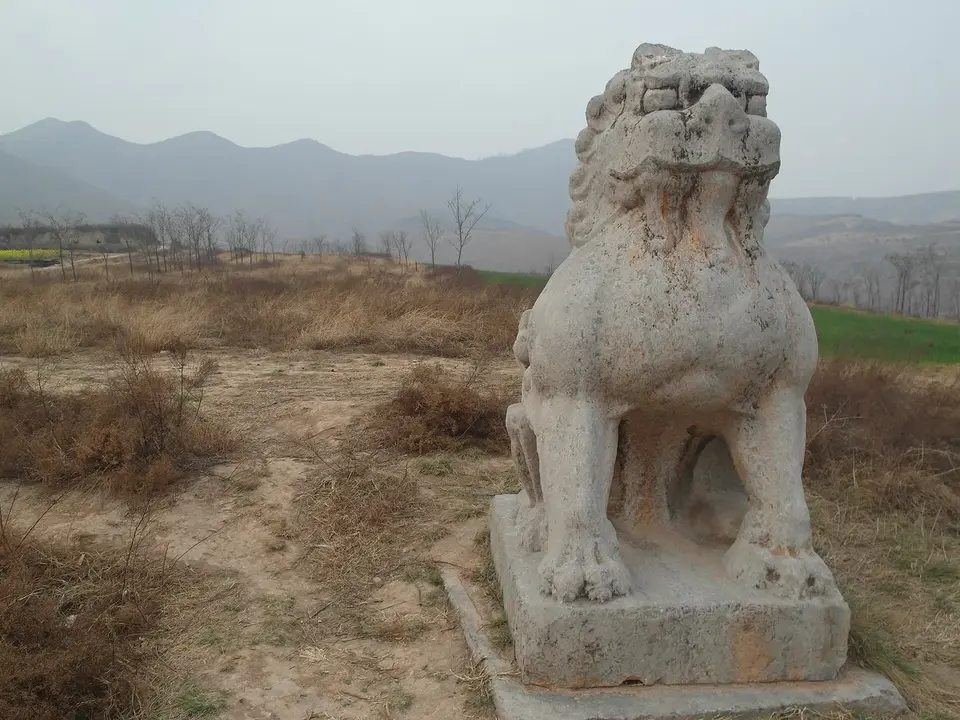
Regional Military Fanzhen Separatism (藩镇割据) was a pivotal historical phenomenon spanning a century and a half from the mid-Tang Dynasty to the early Five Dynasties period (755–907), during which regional military governors leveraged extensive military commands, tax retention, and civil administrative authority to operate as semi-independent warlord states beyond the control of the imperial court. Following the outbreak of the An-Shi Rebellion, the Tang court proliferated military commands throughout the interior to suppress the revolt; upon its conclusion, the imperial government appeased surrendering rebel generals by granting them hereditary governorships over circuits such as Weibo, Chengde, and Lulong, establishing the entrenched autonomy of the Three River Circuits of Hebei. During the mid-Tang period, Emperor Xianzong achieved a brief restoration of centralized authority through the Yuanhe suppression campaigns against Huaixi and Ziqing, yet the Hebei circuits swiftly rebelled anew following ill-conceived demobilization measures. In the late Tang era, the Huang Chao Rebellion shattered the delicate internal and external equilibrium, transforming regional commands into predatory warlords engaged in continuous warfare. Ultimately, Zhu Wen, the military governor of Xuanwu, deposed the Tang monarch and established Later Liang, plunging China into the five decades of fragmentation known as the Five Dynasties and Ten Kingdoms period.
An Lushan rebels; the Tang court establishes military governors throughout the interior, expanding regional military powers.
The court pardons surrendering rebel commanders, granting Tian Chengsi and others autonomous governorships in Hebei.
Dezong rejects hereditary succession upon Li Baochen's death, triggering open provincial rebellion.
En route to the front, poorly provisioned Jingyuan troops sack Chang'an, forcing Dezong into exile and prompting an edict of appease.
Emperor Xianzong and Pei Du execute methodical campaigns, subduing rebel regimes in Xichuan and Zhedong.
General Li Su captures Wu Yuanji during a blizzard, ending three decades of Huaixi military defiance.
Rebellious circuits submit, offering tribute and hostages, temporarily re-establishing imperial authority throughout the realm.
Flawed demobilization triggers mutinies led by Zhu Kerong and Wang Tingcou, plunging Hebei back into garrison separatism.
Nationwide peasant revolt sacks both imperial capitals, turning provincial governors into independent warlords.
Zhu Wen deposes Emperor Ai and founds the Later Liang Dynasty, ending the Tang and initiating the Five Dynasties era.
In early Tang times, the empire relied on the fubing militia system, which integrated military service with peasant agriculture. Soldiers farmed during peacetime and mobilized under the Twelve Armies with self-supplied weapons during wartime, giving the central court a dominant military advantage over local regions. However, after the reigns of Emperor Gaozong and Empress Wu Zetian, the disruption of the equal-field land distribution system and rampant land engrossment undermined the socioeconomic foundation of the militia. Bankrupt peasants fled, leaving militias understaffed and financially ruined.
To counter external threats from the Tibetan Empire, Turks, and Khitans, Emperor Xuanzong replaced the defunct militia with hired professional long-service garrison troops. In 742, Xuanzong formally established nine frontier military governorships and one expeditionary commission along the imperial borders, placing nearly 500,000 elite troops under regional commanders, while the imperial palace guard in Chang'an numbered fewer than 100,000. This created a perilous imbalance of internal weakness and external military preponderance.
In November 755, An Lushan, who held command over Fanyang, Pinglu, and Hedong with 150,000 frontier veterans, launched a massive rebellion against the Tang throne. Rebel forces swept through the central plains, capturing both Luoyang and Chang'an, forcing Emperor Xuanzong into Sichuan and prompting Emperor Suzong to establish a wartime administration at Lingwu.
Lacking central troops to defend the interior, the court transplanted the frontier governorship system into the imperial heartland. Regional military commands, defense commissions, and trainband commissions were established across Hebei, Henan, Shandong, Huainan, and the capital metropolitan areas. These internal commanders recruited private armies, withheld central taxes, and appointed their own subordinates, fostering a pervasive institutional base for post-war military fragmentation.
In the spring of 763, with decisive assistance from Uyghur cavalry, Tang forces recaptured Luoyang and most strongholds across Hebei. The rebel successor Shi Chaoyi committed suicide, ending the eight-year An-Shi Rebellion. However, the treasury of Emperor Daizong was completely exhausted, and the central court lacked the military strength to eradicate the entrenched rebel garrisons.
Facing heavily armed rebel contingents, Emperor Daizong adopted a policy of appeasement. The court pardoned surrendering generals and granted them formal imperial titles over the territories they held. Xue Song received Xiangwei, Tian Chengsi secured Weibo, Li Huaixian took Lulong, and Li Baochen obtained Chengde. Entrusting the rebel homeland north of the Yellow River to former insurgents transformed these frontier commands into self-governing military fiefdoms.
Between 763 and 779, the military governors of Hebei formed a defensive alliance to protect their autonomy. Among these, Weibo, Chengde, and Lulong became known as the Three River Circuits. These governors refused to accept civil officials sent by the imperial Department of Civil Appointments, installing their own military henchmen as prefects and county magistrates. Financially, they retained local land, salt, and transport taxes in private circuit treasuries, sending no revenue to the capital. Legally, they administered their own harsh penal codes, rendering Tang imperial law obsolete within their domains.
Furthermore, the Hebei governors established hereditary succession, appointing sons or trusted officers to command the circuits upon their deaths. When the imperial court resisted, circuit garrison troops laid siege to administrative headquarters or mutinied to force imperial confirmation. In 779, when Tian Chengsi died, he bequeathed Weibo to his nephew Tian Yue. Powerless to oppose him, Emperor Daizong was forced to bestow formal investiture, institutionalizing hereditary rule and setting a precedent of provincial defiance.
In May 779, Emperor Dezong ascended the throne determined to eliminate hereditary separatism and restore imperial centralization. In January 781, when Li Baochen of Chengde died, his son Li Weiyue petitioned to inherit the post. Dezong categorically rejected the request, prompting Li Weiyue to form an alliance with Tian Yue of Weibo, Li Zhengji of Ziqing, and Liang Chongyi of Shannan East Circuit in open rebellion, initiating the Rebellion of the Four Circuits. Dezong ordered loyalist commanders Ma Sui, Li Baozhen, and Zhu Tao to launch a combined punitive expedition.
Imperial forces scored initial victories: Liang Chongyi committed suicide, Wang Wujun killed Li Weiyue and submitted to the court, and Tian Yue was encircled in Weizhou. However, Dezong mishandled the distribution of spoils, refusing to reward Zhu Tao and Wang Wujun with requested territories. Feeling betrayed, both generals switched allegiance, rescued Tian Yue, and allied with Li Xilie of Huaixi, reversing imperial fortunes across northern China.
In October 783, imperial authorities ordered troops from Jingyuan Circuit to march east against Li Xilie. Arriving in freezing rain at Chang'an, the soldiers received no bonus payments or provisions, only coarse vegetable broth from municipal officials. Enraged troops mutinied, seized the capital, looted the state treasury, and acclaimed former governor Zhu Ci as emperor. Emperor Dezong fled in panic to Fengtian with only dozens of attendants.
Besieged for months at Fengtian and facing imminent destruction, Dezong lost the resolve to subdue the governors by force. On New Year's Day of 784, he issued an Imperial Edict of Self-Reproach at Liangzhou, blaming imperial administrative failings for provincial rebellions and officially recognizing the autonomous status of Tian Yue, Wang Wujun, and Zhu Tao. The early Tang attempt at armed centralization collapsed in unconditional concession.
In August 805, the resolute Emperor Xianzong took the throne, determined to achieve dynastic revitalization. Guided by reformist chancellors Li Jifu and Pei Du, Xianzong reorganized the imperial armies, stabilized finances through southern revenues, and devised a strategy of isolating and destroying rebellious circuits one by one.
In 806 and 807, imperial forces rapidly crushed rebellions led by Liu Pi in Xichuan and Li Qi in Zhedong, greatly bolstering court morale. Xianzong then focused on Huaixi, centered in Caizhou (modern Runan, Henan), which had severed vital canal transport for three decades. In 814, upon the death of governor Wu Shaoyang, his son Wu Yuanji launched an open insurrection. Imperial armies converged on Caizhou, but the conflict dragged on for three years amid military stalemates and defeatist agitation in the capital. To intimidate the court, Li Shidao of Ziqing hired assassins who murdered chancellor Wu Yuanheng and wounded Pei Du in the streets of Chang'an. Emperor Xianzong refused to yield, appointing the convalescent Pei Du as chief minister and sending him to the front as supreme commander.
In October 817, imperial general Li Su seized an opportunity while Caizhou's main garrison was deployed against Pei Du. In a blinding snowstorm, Li Su led 9,000 elite cavalry on a 130-li forced march through the night, using flocks of geese and ducks to mask the clatter of marching boots. At dawn, Li Su's vanguard scaled the walls, eliminated the guards, opened the gates, and captured Wu Yuanji inside his residence before the rebel garrison realized imperial troops were in the city. Wu Yuanji was executed in Chang'an, ending thirty years of Huaixi separatism.
The victory sent shockwaves across China. In 819, isolated Ziqing collapsed, and Li Shidao was beheaded by his own subordinate Liu Wu. Tian Hongzheng of Weibo surrendered his territory and sent his son as hostage to Chang'an, while Chengde and Lulong offered formal submission. For a fleeting decade known as the Yuanhe Restoration, imperial authority reigned supreme throughout the realm.
The centralization achieved by Emperor Xianzong was brittle, relying heavily on imperial personal resolve rather than deep institutional reform. Following Xianzong's sudden death in 820, the pleasure-seeking Emperor Muzong took power. His administration enacted a reckless demobilization policy, abruptly dismissing provincial soldiers without providing economic livelihoods, creating waves of destitute veterans prone to mutiny.
In 821, the court appointed the arrogant civil official Zhang Hongjing to command Lulong. His entourage embezzled military salaries and desecrated the tombs of former commanders, provoking garrison general Zhu Kerong to stage a mutiny, imprison Zhang, and seize Lulong. In Chengde, newly appointed governor Tian Hongzheng requested 2,000 Weibo guards for personal protection, but fiscal authorities dismissed them to save costs. As soon as the guards departed, officer Wang Tingcou mutinied and slaughtered Tian Hongzheng along with 300 members of his household.
Emperor Muzong failed to mount an effective counteroffensive and hastily conceded, confirming both mutineers as legitimate governors. Soon after, Shi Xiancheng seized Weibo. Within months, the hard-won achievements of the Yuanhe campaigns vanished. The Three River Circuits devolved into a permanent state of garrison tyranny, where governors were mere pawns installed, extorted, and murdered at the whim of unruly provincial garrisons.
During the late reigns of Yizong and Xizong, imperial governance succumbed to court corruption, eunuch domination, and catastrophic droughts across northern China. In 874, Wang Xianzhi and Huang Chao ignited a massive peasant revolt that swept through ten provinces, culminating in the capture of Luoyang and Chang'an in 881. Emperor Xizong fled to Chengdu, and imperial administrative machinery dissolved.
To combat the rebels, the court transferred military authority to regional commanders and non-Han tribal chieftains. The court allied with Shatuo chieftain Li Keyong, naming him Military Governor of Hedong and Prince of Jin, while incorporating rebel defector Zhu Wen, granting him the name Zhu Quanzhong and the military command of Xuanwu.
Although the rebellion was ultimately crushed, the Tang Dynasty remained an empty shell. Autonomous military commanders transformed into independent warlords, waging unending wars of conquest across China. In 901, chancellor Cui Yin invited Zhu Wen to purge court eunuchs in Chang'an. In 904, Zhu Wen forced Emperor Zhaozong to move the capital to Luoyang, where he murdered the emperor and placed the thirteen-year-old Emperor Ai on the throne. In 905, Zhu Wen executed thirty prominent Tang loyalist officials at Baimayi and threw their bodies into the Yellow River. In April 907, Zhu Wen forced Emperor Ai to abdicate, founding the Later Liang and inaugurating the Five Dynasties and Ten Kingdoms period.
Regional military separatism dismantled the centralized bureaucratic system that had characterized the Sui and early Tang dynasties. Regional military governors monopolized provincial administration, military forces, tax revenues, and personnel appointments, turning imperial territory into decentralized fiefdoms. The central court lost direct governance and fiscal control over the majority of the empire, creating an unprecedented historical period where a centralized dynasty remained nominal sovereign while regional warlords maintained de facto independence for over 150 years.
The phenomenon institutionalized an insidious culture of garrison supremacy where regional rulers depended entirely on the support of mercenary retainers. To maintain power, governors emptied provincial treasuries to distribute lavish bonuses to elite garrison troops. Whenever pay fell short or commanders attempted to impose discipline, garrisons mutinied, deposing or slaughtering their commanders. This destructive pattern endured into the Five Dynasties, popularizing the cynical proverb that monarchs were merely those with the strongest armies.
The loss of tax revenue from Hebei and the central plains forced the Tang court to rely almost entirely on the agrarian wealth of the Yangtze River valley and southern circuits. Through the Salt and Iron Commission and the Grand Canal transport system, the central government extracted massive grain, silk, and commodity taxes from the south to maintain the court at Chang'an. This fiscal reallocation accelerated the south's development as the primary economic center of China.
The prolonged disaster of military separatism provided profound lessons for the founders of the subsequent Song Dynasty. Emperor Taizu of Song (Zhao Kuangyin) implemented structural reforms to prevent military usurpation, systematically stripping military commanders of their administrative and fiscal powers. By instituting civilian administration over prefectures, rotating garrison deployments, and placing all military commands directly under central ministries, the Song Dynasty eliminated provincial military autonomy and established durable civilian bureaucratic dominance.