Abaoji Appointed Yilijin
Yelü Abaoji became the military chieftain of the Yila tribe, defeating northern border tribes and seizing supreme military command.
Liao Dynasty · HISTORICAL EVENT
辽国建立
The Founding of the Liao Dynasty (辽国建立) refers to the historical process from 907 to 916 in which the Khitan tribal leader Yelü Abaoji unified the eight Khitan tribes, abolished the traditional elective khaganate, and proclaimed himself emperor of the Khitan Empire. Amid the fragmentation of late Tang China, Abaoji leveraged the economic advantages of salt and iron production and mobilized Han refugees to build agricultural settlements and permanent…
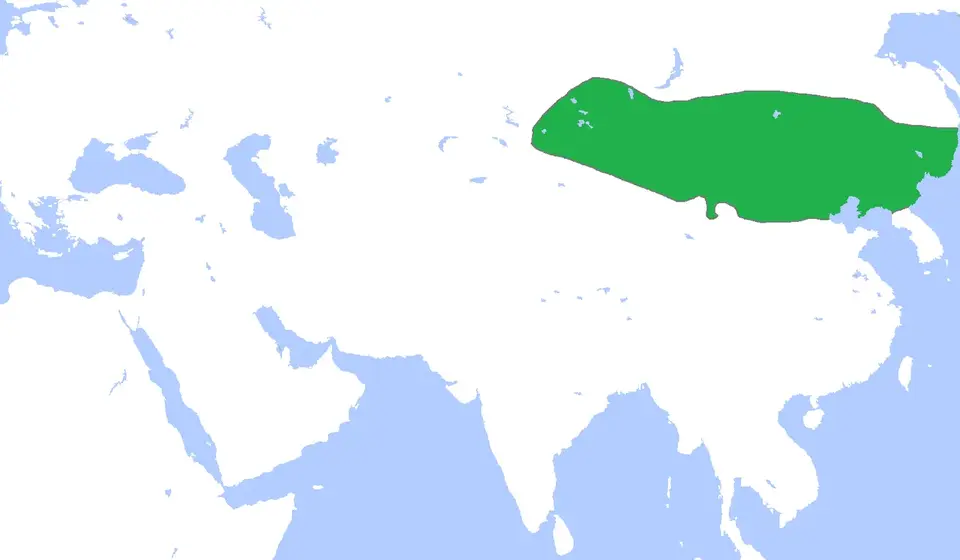
The Founding of the Liao Dynasty (辽国建立) refers to the historical process from 907 to 916 in which the Khitan tribal leader Yelü Abaoji unified the eight Khitan tribes, abolished the traditional elective khaganate, and proclaimed himself emperor of the Khitan Empire. Amid the fragmentation of late Tang China, Abaoji leveraged the economic advantages of salt and iron production and mobilized Han refugees to build agricultural settlements and permanent walled towns. After being elected khagan in 907, he rejected the traditional three-year rotation of leadership. Overcoming repeated armed revolts by his brothers and executing rival chieftains at the Salt Pond banquet, Abaoji unified all eight tribes under centralized rule. In the spring of 916, he erected an imperial altar at Longhuazhou, assumed the august title of Heaven-Emperor, adopted the reign title Shence, and established the Khitan State (subsequently renamed Great Liao). Emperor Taizu created the Khitan large script, instituted the dual Northern and Southern official system to govern pastoralists and agriculturalists separately, subdued the Mongolian plateau tribes, and conquered the Kingdom of Bohai. The founding of the Liao Dynasty marked the emergence of the first mature conquest dynasty in northern East Asia that successfully integrated nomadic cavalry power with bureaucratic imperial administration.
Yelü Abaoji became the military chieftain of the Yila tribe, defeating northern border tribes and seizing supreme military command.
Following the death of Khagan Hendejin, Abaoji was elected grand khagan of the Khitan confederation and refused to rotate power.
Abaoji crushed three consecutive insurrections led by his brothers, centralizing military command under the throne.
Abaoji lured and executed seven tribal chieftains at the Salt Pond banquet, dismantling the ancient tribal council system.
Abaoji ascended the imperial altar, adopted the reign title Shence, founded the Khitan State, and instituted the dual administrative system.
The throne officially promulgated the Khitan large script devised by Lubugu and Tülübu, establishing a standardized administrative orthography.
Emperor Taizu conquered Huhancheng, extinguished the kingdom of Bohai, and established the Dongdan Kingdom, securing imperial borders.
At the close of the ninth century, the Tang Dynasty crumbled into regional warlordism following the Huang Chao Rebellion. The northern frontier was destabilized by conflicts among Five Dynasties warlords such as Liu Rengong of Youzhou, driving hundreds of thousands of Han peasants northward across the Great Wall into the fertile basins of the Xilamulun and Laoha rivers. During this period, the Khitan people were organized as a confederation of eight tribes, including the Yila, Yishi, and Pinde, which jointly selected a supreme khagan to oversee warfare and seasonal rituals.
According to ancient Khitan tribal customs, the khagan was elected for a three-year term under the system of tribal rotation. However, the Yila tribe experienced rapid demographic and economic expansion. Abaoji's grandfather Yundeshi and father Saladi systematically absorbed Central Plains metallurgy and farming, transforming the Yila into the dominant power within the confederation.
Yelü Abaoji possessed commanding physical stature, astute political intelligence, and exceptional equestrian archery skills. In 901, he was elected military chieftain (Yilijin) of the Yila tribe, repeatedly defeating rival Shiwei and Yüewu tribes and capturing enormous numbers of horses, livestock, and captives. In 907, following the death of Khagan Hendejin of the Yaonian clan, tribal elders acclaimed Abaoji as supreme khagan.
Abaoji was determined to replace the ephemeral status of an elected chieftain with permanent hereditary imperial rule. Aided by Han Chinese counselor Han Yanhui, he established walled towns, settled displaced farmers, developed iron foundries, and monopolized the northern salt lakes. Supported by a private imperial guard (Ordo), Abaoji's power far exceeded that of the other seven tribal chieftains. When his three-year mandate expired, Abaoji refused to step down, provoking violent opposition from traditional clan oligarchs.
Between 911 and 913, Abaoji's younger brothers, including Lage, Diela, Yindishi, and Anduan, launched three successive armed insurrections to strip Abaoji of the khagan's standard and seal, an episode known as the Rebellion of the Brothers.
Confronted with grave family betrayal and internal civil war, Abaoji demonstrated exceptional strategic resolve. He drew the rebel forces into the interior steppe and ambushed them north of Chishui City, completely dismantling their armed resistance. After subduing the rebellion, Abaoji refrained from executing his brothers, extending imperial clemency while stripping them of their independent tribal units and concentrating military command exclusively under his personal staff.
Despite the suppression of the brothers' rebellion, the chieftains of the remaining seven tribes continued to demand Abaoji's abdication, compelling him to temporarily relocate his encampment. Guided by the strategic counsel of his empress, Shulü Ping, Abaoji executed a decisive plot to eliminate the tribal aristocracy.
Abaoji sent envoys inviting the seven chieftains to an elaborate feast at the southern salt lakes, promising to negotiate the division of salt revenues. Unsuspecting and unarmed, the chieftains attended the celebration. When the guests were incapacitated by alcohol, Abaoji's concealed soldiers attacked, killing every dissident chieftain. Abaoji absorbed their warrior retinues into his own guard, permanently eradicating the centuries-old elective tribal confederation.
On the first day of the third lunar month in 916, Yelü Abaoji conducted a monumental imperial accession ceremony at Longhuazhou. Ascending the altar before thousands of assembled tribal warriors and civil officials, Abaoji received the grand title of Great Holy Emperor, while Empress Shulü Ping was honored as Earth Empress. Abaoji proclaimed the reign era Shence and named his realm the Khitan State.
Following his coronation, Emperor Taizu implemented comprehensive state institutions. He ordered his brother Lubugu and scholar Tülübu to devise the Khitan large script based on Chinese character structures, freeing the Khitans from primitive record-keeping through notched sticks. Furthermore, Abaoji established the dual administration of Northern and Southern bureaus: the Northern Administration governed pastoral Khitans through ancestral customary law, while the Southern Administration governed sedentary Han Chinese through Tang-style bureaucratic and legal codes.
With the imperial state established, Emperor Taizu embarked on extensive foreign campaigns. In 924, he personally commanded an expedition across the Mongolian plateau, subjugating the Wugu and Dielie tribes and extracting tribute from the Tanguts, Zubu, and Uighurs up to the Altai Mountains.
In 926, Abaoji led his main armies eastward against the kingdom of Bohai. Khitan forces rapidly besieged and captured Huhancheng, compelling King Da Yinzhuan to surrender and terminating three centuries of Bohai rule. Abaoji reorganized the conquered realm into the Dongdan Kingdom, appointing his crown prince Yelü Bei as Dongdan King. The newly founded empire spanned from the Sea of Japan to the Altai Mountains, dominating northern East Asia.
The founding emperor of the Liao Dynasty and a brilliant statesman and military commander. He abolished the fragile elective khaganate, unified the steppe, devised the Khitan writing system, and established the dual administrative system, transforming a tribal league into a major East Asian empire.
The formidable empress consort of Emperor Taizu and primary strategic advisor during the state's founding. She played a pivotal role in subduing the rebellions of the brothers and conceiving the Salt Pond coup, exercising immense influence over early Liao court politics.
A distinguished Han Chinese statesman who served as Grand Chancellor in the early Liao Dynasty. Highly trusted by Emperor Taizu, he planned the construction of walled cities, introduced administrative codes, encouraged agriculture, and assisted in formulating the Southern Administration.
A Khitan imperial clan member who was fluent in both Khitan and Chinese. By imperial command, he collaborated with Tülübu to create the Khitan large script, providing the administrative literacy necessary for imperial bureaucratic governance.
The younger brother of Yelü Abaoji and an imperial clan prince. Opposed to the concentration of dynastic authority in Abaoji's hands, he spearheaded repeated rebellions to restore tribal rotation, inadvertently accelerating the centralization of the imperial monarchy upon his defeat.
The founding of the Liao Dynasty replaced loose, factional tribal alliances with an autocratically centralized imperial state. By eliminating traditional rotation and establishing hereditary imperial succession supported by standing private armies, Abaoji established a durable political architecture that endured for more than two centuries.
The innovative dual administrative system of Northern and Southern officials successfully resolved the challenge of governing both nomadic and agrarian populations within a single state. This institutional dualism preserved Khitan military prowess while integrating Chinese bureaucratic governance, creating an enduring governance template for later conquest regimes such as Jin, Yuan, and Qing.