Recapture of Jiankang
Chen Baxian and Wang Sengbian annihilate Hou Jing's rebel forces and establish a dual command over the realm
Northern and Southern Dynasties (Liang / Chen) · HISTORICAL EVENT
陈朝建立与陈霸先
The Establishment of the Chen Dynasty and Chen Baxian (陈朝建立与陈霸先) was a momentous historical process occurring between 552 (the first year of the Chengsheng era of Liang) and 557 (the first year of the Yongding era of Chen), wherein military commander Chen Baxian crushed domestic rebellions, thwarted invasions by Northern Qi, and founded the Chen Dynasty from the ashes of the ruined Liang Empire. In 548, the catastrophic Hou Jing Rebellion erupted,…
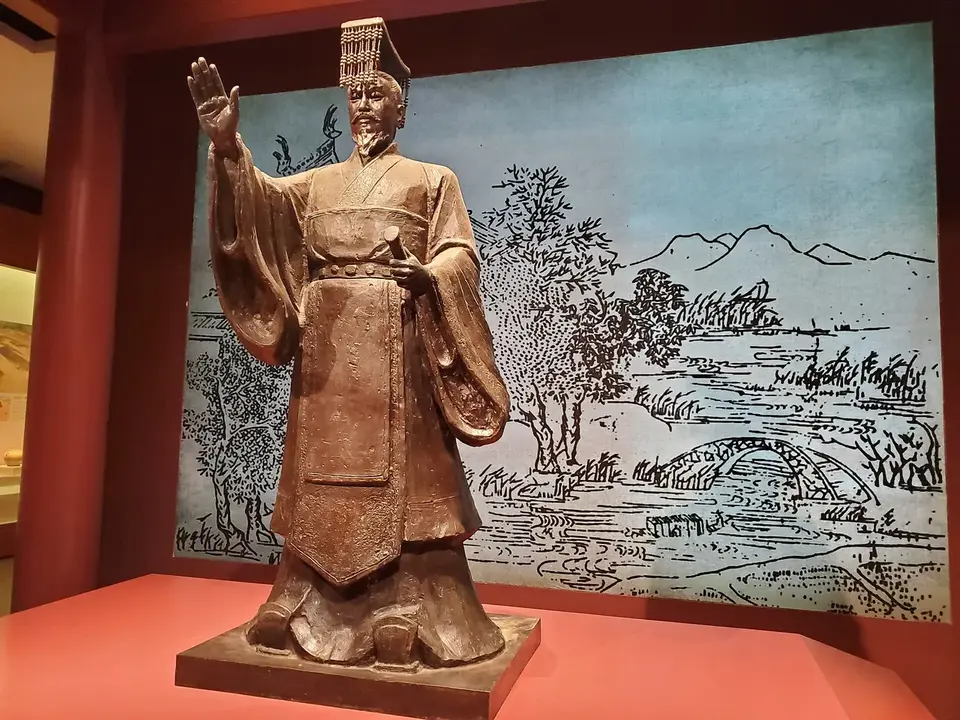
The Establishment of the Chen Dynasty and Chen Baxian (陈朝建立与陈霸先) was a momentous historical process occurring between 552 (the first year of the Chengsheng era of Liang) and 557 (the first year of the Yongding era of Chen), wherein military commander Chen Baxian crushed domestic rebellions, thwarted invasions by Northern Qi, and founded the Chen Dynasty from the ashes of the ruined Liang Empire. In 548, the catastrophic Hou Jing Rebellion erupted, devastating Jiankang and decimating the aristocratic clans of Jiangnan. General Chen Baxian marched his battle-tested army northward from Lingnan, joining forces with commander Wang Sengbian to recapture Jiankang and eradicate Hou Jing in 552. Emperor Yuan of Liang assumed the throne at Jiangling, leaving Wang Sengbian in control of Jiankang while Chen Baxian garrisoned the strategic bastion of Jingkou. In late 554, Western Wei stormed Jiangling and executed Emperor Yuan. Exploiting the vacuum, Northern Qi ruler Gao Yang dispatched an army escorting captive prince Xiao Yuanming to claim the throne. Terrified by northern might, Wang Sengbian yielded, deposing the legitimate heir Xiao Fangzhi to enthrone Xiao Yuanming. To defend southern independence, Chen Baxian launched an amphibious strike from Jingkou in September 555, storming Stone Fortress to execute Wang Sengbian and enthrone Xiao Fangzhi as Emperor Jing. When Wang's partisans guided one hundred thousand Northern Qi cavalry to besiege Jiankang, Chen Baxian mounted a fierce defense amidst torrential rains, destroying the invaders outside the walls. In October 557, Emperor Jing abdicated, and Chen Baxian ascended the throne as Emperor Wu, establishing the Chen Dynasty and stabilizing southern civilization.
Chen Baxian and Wang Sengbian annihilate Hou Jing's rebel forces and establish a dual command over the realm
Western Wei destroys Jiangling and executes Emperor Yuan, shattering Liang central authority
Chen Baxian executes the colluding general Wang Sengbian and enthrones Xiao Fangzhi as Emperor Jing
Chen Baxian crushes one hundred thousand Northern Qi troops amidst monsoon mud, preserving southern China
Emperor Jing abdicates; Chen Baxian ascends the throne to establish the Chen Dynasty
In 548, surrendered general Hou Jing launched a catastrophic insurrection against the Liang Dynasty, capturing the imperial citadel of Jiankang. Emperor Wu of Liang (Xiao Yan) was starved to death in his palace, and members of the imperial family were slaughtered. Rebel hordes plundered the Yangtze delta, turning the fertile agricultural lands into desolate wastelands strewn with unburied corpses and exterminating the hereditary southern aristocracy.
Confronted with the collapse of the state, Chen Baxian, then serving as military commander in southern Jiaozhou, liquidated his personal estates to mobilize loyalist troops. Navigating dense mountain defiles across the Dayu Ridge, Chen Baxian marched north to join general Wang Sengbian. Combining naval and infantry forces, the two commanders defeated Hou Jing's forces in 552, driving the rebel into flight where he was killed by subordinates, temporarily stabilizing Jiangnan.
Following the pacification of Hou Jing, Emperor Yuan (Xiao Yi) was proclaimed emperor at Jiangling (modern Jingzhou, Hubei). He appointed Wang Sengbian as Grand Commandant and Director of the Secretariat to govern Jiankang, while appointing Chen Baxian as Minister of Works and Governor of South Xuzhou to defend the maritime bastion of Jingkou, creating a dual military leadership.
In late 554, Western Wei general Yu Jin launched an invasion against Jiangling. Jiangling fell after a brief siege; Emperor Yuan was executed, and over one hundred thousand civilian captives were marched into slavery in Chang'an. The disaster extinguished the Liang central government, plunging southern China into leaderless chaos.
Capitalizing on the power vacuum, Emperor Wenxuan of Northern Qi (Gao Yang) resolved to reduce southern China to a vassal state. Northern Qi mobilized fifty thousand soldiers under Duan Shao to escort captive prince Xiao Yuanming south to assume the Liang throne.
Intimidated by Northern Qi's military host, Wang Sengbian bowed to northern ultimatums, deposing Emperor Yuan's sole surviving son, Prince Xiao Fangzhi, and enthroning Xiao Yuanming. Chen Baxian repeatedly dispatched urgent letters warning that surrendering the throne to a northern puppet would forfeit southern sovereignty. When Wang Sengbian refused to reconsider, Chen Baxian acted decisively. In September 555, Chen secretly marshaled elite marines at Jingkou, launching a surprise strike down the Yangtze toward Jiankang. Chen's shock troops scaled the walls of Stone Fortress, capturing and executing Wang Sengbian and his son. Xiao Yuanming was deposed, and fourteen-year-old Xiao Fangzhi was enthroned as Emperor Jing.
Enraged by Wang Sengbian's execution, his subordinate commanders Xu Sihui and Ren Yue allied with Northern Qi, guiding an army of one hundred thousand northern cavalry across the Yangtze. The invaders encamped along the ridgelines of Mount Mofu and Purple Mountain, enveloping Jiankang in an iron siege. Jiankang was depleted of provisions, with defenders surviving on meager grain rations.
Displaying extraordinary composure, Chen Baxian distributed his personal horses and private grain stores to the troops, personally commanding the ramparts. In June 556, weeks of continuous downpours turned the plains into quagmires, neutralizing Northern Qi's cavalry advantage. Seizing the opportunity, Chen Baxian unleashed a coordinated counter-offensive between Xuanwu Lake and Mount Mofu, cutting the enemy supply lines and pontoon bridges. The Northern Qi host disintegrated in panic, with tens of thousands drowning in the flooded marshes. Chen's forces decapitated northern commander Xiao Gui and captured forty-six high-ranking enemy generals, saving the southern realm from destruction.
Having eliminated external invaders and pacified domestic warlords, Chen Baxian's authority was unassailable. The surviving Xiao Liang dynasty was hollow and incapable of administering the realm.
In October 557 (second year of Taiping), Emperor Jing issued an imperial abdication decree. Acceding to petitions from civilian and military officials, Chen Baxian ascended the imperial throne at the southern altar in Jiankang, adopting the dynastic title "Great Chen" and establishing the era name Yongding, posthumously revered as Emperor Wu of Chen. Chen instituted frugal palace policies, lightened labor taxes, encouraged refugee resettlement, and stabilized the southern economy, opening a thirty-year chapter for the Chen Dynasty.
Chen Baxian purged the capitulationist faction under Wang Sengbian, pacified regional warlord insurrections, and twice destroyed invading Northern Qi hosts outside Jiankang. In 557, Chen Baxian formally supplanted the Liang Dynasty, establishing the Chen Dynasty.
The establishment of the Chen Dynasty was a critical turning point that averted the complete destruction of southern Chinese civilization. Following the devastation of the Hou Jing Rebellion and the loss of the Upper Yangtze, the southern court was on the verge of collapsing into a northern nomadic protectorate. Through his military leadership, Chen Baxian preserved the territorial integrity of southern China. Although Chen occupied the smallest geographic footprint among the Southern Dynasties, Chen Baxian's governance restored agricultural production and protected southern Chinese cultural heritage, preserving the foundation for national reunification under the Sui Dynasty three decades later.