Creation of the Hexi Commission
Emperor Ruizong issues an edict establishing the Hexi Commission at Liangzhou under Heba Yansi, creating the first permanent military commissioner.
Tang Dynasty (唐朝) · HISTORICAL EVENT
藩镇节度使设立
Establishment of Fanzhen Military Commissioners (藩镇节度使设立) refers to the major institutional transition during the reigns of Emperor Ruizong and Emperor Xuanzong (710–742), wherein the Tang Dynasty created permanent regional military commanders holding comprehensive military, fiscal, and administrative authorities along strategic frontier zones to counter escalating threats from the Tibetan Empire, Second Turkic Khaganate, and Khitans. Early in the…
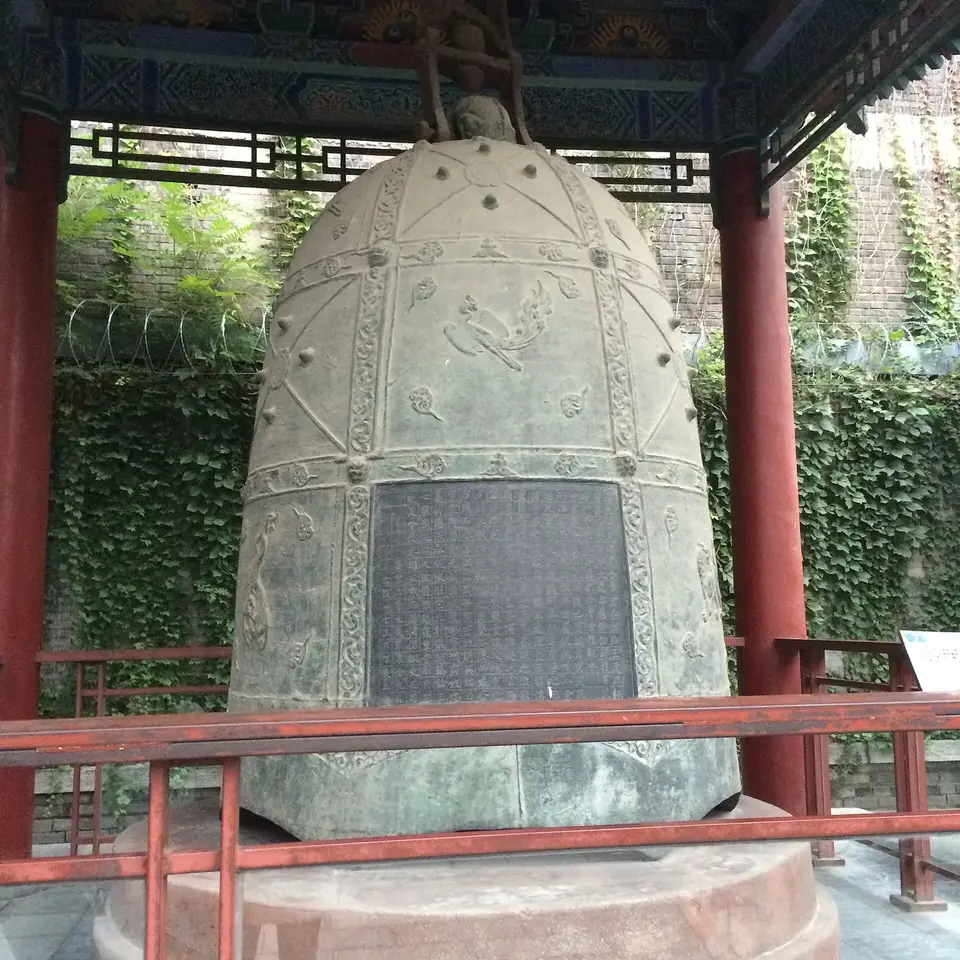
Establishment of Fanzhen Military Commissioners (藩镇节度使设立) refers to the major institutional transition during the reigns of Emperor Ruizong and Emperor Xuanzong (710–742), wherein the Tang Dynasty created permanent regional military commanders holding comprehensive military, fiscal, and administrative authorities along strategic frontier zones to counter escalating threats from the Tibetan Empire, Second Turkic Khaganate, and Khitans. Early in the dynasty, the empire relied on the peasant-militia system, dispatching temporary campaign commanders during wartime. As the equal-field distribution system broke down and the militia collapsed, the court shifted to a mercenary army model, leading to the institutionalization of permanent regional commands. Between 710 and 711, Emperor Ruizong appointed Heba Yansi as Area Commander of Liangzhou and Military Commissioner of Hexi, marking the formal creation of the military commissioner as a permanent post. By the beginning of the Tianbao era, Emperor Xuanzong established nine military commissions and one expeditionary commission, commanding nearly 500,000 elite troops. These commissioners accumulated additional fiscal and civil surveillance appointments, consolidating military, administrative, and fiscal governance in frontier commands and ultimately precipitating the An-Shi Rebellion.
Emperor Ruizong issues an edict establishing the Hexi Commission at Liangzhou under Heba Yansi, creating the first permanent military commissioner.
Heba Yansi receives imperial tallies and broad administrative remits, establishing the commissioner post as an official regional institution.
Emperor Xuanzong reorganizes northern defense arcs, creating the Youzhou and Shuofang military commands.
The court establishes Longyou Commission to coordinate defenses with Hexi against Tibetan drives toward Chang'an.
Xuanzong institutes Jiannan Commission at Chengdu over twenty-five prefectures, fortifying southwestern borders.
The Ten Military Commissioners of Tianbao are codified, commanding nearly 500,000 elite mercenary troops.
An Lushan is appointed commander over both Fanyang and Pinglu, concentrating control over northern forces.
An Lushan receives command of Hedong alongside Hebei surveillance powers, monopolizing military, fiscal, and civil rule across three circuits.
The acute military imbalance between the border and the capital culminates in An Lushan's massive uprising, spreading the commissioner system across China.
In the early Tang Dynasty, the state maintained military dominance through the fubing militia system, which combined agrarian labor with military service. Soldiers farmed during peacetime and mobilized with self-furnished weapons and mounts during military campaigns, securing imperial centralization over regional forces. However, from the reigns of Emperor Gaozong and Empress Wu Zetian onward, economic expansion and widespread land engrossment dismantled the equal-field land distribution system, dissolving the economic basis of the militia.
Impoverished peasants fled tax rolls, leaving local militia units severely undermanned. Furthermore, prolonged frontier engagements forced militiamen into distant campaigns lasting years, driving many households into bankruptcy. By the early reign of Emperor Xuanzong, the militia units were practically deserted. Confronting this collapse, the court abandoned the farmer-soldier model, turning to professional salaried enlistment by recruiting displaced peasants into permanent standing garrison units.
Following the early conquests of the Eastern Turks and Xueyantuo, the Tang borders expanded enormously. However, from the late seventh century, formidable nomadic empires emerged along the periphery. The Tibetan Empire expanded across the Qinghai-Tibetan Plateau, threatening the Hexi Corridor and the Tarim Basin; the Second Turkic Khaganate revived in the northern steppe, raiding the Ordos Loop and Shanxi; and Khitan and Xi confederacies repeatedly defeated Tang frontier armies in the northeast.
In response, Tang grand strategy transitioned from territorial conquest to defensive containment. Yet nomadic cavalry relied on swift mobility across vast distances. The traditional Tang practice of commissioning temporary expeditionary generals, who relinquished command upon the cessation of hostilities, involved lengthy mobilization timelines and unfamiliarity with regional terrain, proving incapable of sustaining continuous frontier defense.
To anchor frontier defenses during the transition to mercenary forces, the imperial court founded permanent garrisons, outposts, and forts across border regions. To coordinate these scattered detachments, the court dispatched imperial commissioners, surveillance envoys, and area marshals.
During their deployments, the imperial throne conferred upon these leaders imperial tallies authorizing field summary execution and unified force control. Under Empress Wu and Emperor Zhongzong, these commissions remained ad-hoc assignments terminated at the end of operations. As border warfare intensified, creating expansive, permanent theater-level commands across civilian prefectures became an institutional imperative.
In 710, faced with acute Tibetan pressure against the Hexi Corridor and vital Silk Road transit lines, the central government recognized that the existing Liangzhou Area Command could not adequately direct defense across thousands of miles. In the eleventh month of the first year of Jingyun, Emperor Ruizong issued an imperial edict establishing the Hexi Military Commission in Liangzhou, appointing Senior General Heba Yansi as Area Commander of Liangzhou and Military Commissioner of Hexi, concurrently overseeing logistics and state agricultural colonies.
In the fourth month of 711, Emperor Ruizong issued formal investiture edicts confirming Heba Yansi as the permanent Military Commissioner of Hexi, with administrative control over seven prefectures: Liangzhou, Ganzhou, Suzhou, Yizhou, Guazhou, Shazhou, and Xizhou. The court transferred complete authority over agricultural colonies and military administration east of the Yumen and Yang passes to Heba Yansi to counter Tibetan incursions and sever alliances between Turks and Tibetans.
The investiture featured grand imperial ceremonial traditions. Under dynastic protocol, Heba Yansi received dual tallies and pennants, six battle standards, specialized pavilions, and military fanfare ensembles, granting him unhindered operational command and summary capital authority within his jurisdiction. Prefectural and county magistrates welcomed the commissioner with full honors. This investiture transformed the commissioner position from an ad-hoc wartime assignment into an institutionalized regional office possessing defined boundaries, fixed headquarters, dedicated secretariats, and theater armies.
Upon his accession in 713, Emperor Xuanzong expanded the institutional blueprint established in Jingyun. To erect a continuous defensive cordon against Tibetans, Turks, and Khitans across the northern, northwestern, and northeastern frontiers, Xuanzong and chancellors Yao Chong and Song Jing consolidated frontier bastions into permanent commands encompassing multiple prefectures.
In 713, the court founded the Youzhou Commission (later renamed Fanyang, based at modern Beijing) to neutralize the Khitans and Xi, and the Shuofang Commission (based at Lingzhou, modern Lingwu) to defend the Ordos Loop against the Turks. In 718, the court created the Longyou Commission (based at Shanzhou, modern Ledu) to operate alongside Hexi against Tibetan assaults on the capital approaches. In 719, Xuanzong established the Jiannan Commission (based at Chengdu) to command twenty-five prefectures defending Sichuan from southwestern routes.
Along the northeastern perimeter, Pinglu Commission was established in 719 to oversee western Liaoning border defenses against the Khitans and Mohe tribes. In 730, Hedong Commission was founded at Taiyuan to secure the Yanmen Pass and the northern passes. In Central Asia, the court stabilized the Anxi Four Garrisons Commission at Kucha to isolate communications between Tibetans and Turks, while establishing the Beiting Commission at Tingzhou to secure routes north of the Tianshan Mountains.
Distinguished commanders such as Wang Jun, Guo Yuanzhen, Zhang Shougui, and Wang Zhongsi directed these regional armies. General Zhang Shougui anchored Youzhou, crushing Khitan forces, while Wang Zhongsi commanded four frontier commissions simultaneously, securing decades of peace during the height of the Kaiyuan era.
In 742, Emperor Xuanzong formalized the border defense commands into a definitive administrative framework known as the Ten Military Commissioners of Tianbao. The territorial domains, headquarters, strategic orientations, and standing military quotas of the ten commands received statutory codification.
The military deployments of the ten commands were established as follows: Anxi Commission, commanding 24,000 troops at Kucha, focused on the Tarim Basin; Beiting Commission, commanding 20,000 troops at Tingzhou, secured northern Central Asia; Hexi Commission, commanding 73,000 troops at Liangzhou, protected the Silk Road; Longyou Commission, commanding 75,000 troops at Shanzhou, resisted Tibetan offensives; Shuofang Commission, commanding 64,700 troops at Lingzhou, countered the northern Turks; Hedong Commission, commanding 55,000 troops at Taiyuan, guarded the northern steppes; Fanyang Commission, commanding 91,400 troops at Youzhou, suppressed the Khitans; Pinglu Commission, commanding 37,500 troops at Chaoyang, checked northeastern tribes; Jiannan Commission, commanding 30,900 troops at Chengdu, checked Tibetan advances in the southwest; and Lingnan Expeditionary Commission, commanding 15,400 troops at Guangzhou, stabilized southern coastal frontiers.
These ten regional frontier commands deployed 491,400 regular cavalry and infantry troops supported by nearly 80,000 warhorses. Conversely, imperial palace guards defending Chang'an and Luoyang numbered fewer than 100,000, consisting largely of untrained urban conscripts. The finest armaments, cavalry, and veteran generals were concentrated along border marches, creating a perilous military asymmetry.
Maintaining this massive standing force required millions of bolts of silk and bushels of grain shipped annually from the Yangtze and Huai river valleys, consuming the bulk of imperial tax receipts. This expenditure placed severe fiscal burdens on interior populations while increasing imperial reliance on autonomous frontier marshals.
Initially, military commissioners acted strictly as theater field commanders, while local taxation and administration remained subordinate to Ministry of Revenue officials and regional circuit surveillance commissioners. However, continuous logistical needs for weapons, horse feed, and provisions often suffered delays due to bureaucratic resistance from civilian prefects.
To guarantee uninterrupted supplies, Emperor Xuanzong permitted military commissioners to concurrently hold posts as Logistics Commissioners and Military Agricultural Colony Commissioners. By 749, dynamic state farms numbered nearly one thousand units across the frontier, reclaiming nearly 50,000 qing of land and producing almost two million shi of grain annually. These revenues were diverted directly to commissioner treasuries, bypassing the Ministry of Revenue and transforming border marches into self-financing entities.
More critically, administrative surveillance authorities were surrendered to the commissioners. Regional surveillance commissioners had historically inspected local prefectures to investigate malfeasance and report infractions directly to the throne. In the Tianbao era, to prevent civilian oversight from hindering military commanders, Xuanzong instituted administrative consolidation, appointing military commissioners to concurrently serve as Circuit Surveillance Commissioners.
Through this reform, commissioners secured supreme control over military troops, tax revenues, and civil administrations, including the power to appoint county magistrates and execute judicial decisions. Prefectural magistrates became subordinate staff officers within commissioner military secretariats, eliminating central administrative oversight.
During the late Kaiyuan and Tianbao eras, Chief Minister Li Linfu maneuvered to monopolize central authority by blocking civilian ministers from earning military honors on the border. Under early Tang precedent, prominent civilian ministers like Yao Chong and Song Jing had served as frontier commanders before entering the Grand Council. To prevent border generals from attaining civilian chancellorships, Li Linfu advised Emperor Xuanzong to appoint non-Han officers, arguing that non-Han generals were martial fighters with no political factions at court.
Emperor Xuanzong adopted this recommendation, replacing civilian governors with non-Han military commanders such as An Lushan, Gao Xianzhi, Geshu Han, and An Sishun. These commanders prioritized martial authority over Confucian administrative traditions, binding mercenary troops through private retinues and adoptive bonds.
In 744, Emperor Xuanzong appointed An Lushan as Military Governor of both Fanyang and Pinglu. In 751, the emperor further granted him command over Hedong, consolidating control over three northern circuits in one commander. An Lushan possessed 150,000 elite cavalry and infantry along with supreme civil surveillance powers across the northern plains.
While Xuanzong remained secluded in palace pastimes and court intrigue flourished under Yang Guozhong, defensive walls and armories across the interior deteriorated after decades of peace. Palace guards lacked training and military hardware decayed. This grave internal military vacuum set the stage for An Lushan's catastrophic uprising in 755, devastating the prosperity of the High Tang and dragging the realm into enduring turmoil.
In its initial decades, the military commissioner system fulfilled critical national security functions. By stationing regular mercenary forces supported by military agricultural colonies and direct logistics, the Tang court eliminated the cumbersome mobilization delays inherent in the fubing militia. During the Kaiyuan and early Tianbao eras, commanders like Wang Zhongsi, Geshu Han, and Zhang Shougui employed these standing armies to check Khitan incursions, push back Tibetan forces, and maintain the tranquility of the Silk Road and the empire.
The institutional consolidation wherein commissioners absorbed logistics, agricultural colonies, and regional surveillance destroyed the delicate balance of administrative power. With regional civil surveillance dismantled, military commissioners combined troop mobilization, capital punishment, tax collection, and administrative patronage. Frontier circuits operated as semi-independent warlord fiefdoms beyond the practical oversight of central ministries.
The deployment of 491,400 elite mercenary troops along the borders contrasted with fewer than 100,000 ill-equipped palace guards in the capital, generating a profound structural vulnerability. When powerful northern commands mutinied, the central court possessed no credible standing forces to resist them, suffering total defensive collapse within weeks of rebellion.
The unmonitored concentration of authority in the hands of frontier commanders led directly to the eight-year An-Shi Rebellion, which devastated imperial prosperity. To survive the rebellion, the court replicated the military commissioner framework across the interior, granting expansive autonomous privileges to loyalist and surrendering rebel generals alike. This policy institutionalized 150 years of chronic regional warlord fragmentation, permanently weakening the Tang state until its eventual fall.