Joining the Expedition
Ban Chao sets aside the pen to join Dou Gu's campaign, leading thirty-six men into the desert
Eastern Han Dynasty (东汉) · HISTORICAL EVENT
班超经营西域
Ban Chao Manages the Western Regions (班超经营西域) was a monumental geopolitical and military accomplishment of the Eastern Han dynasty spanning the reigns of Emperors Ming, Zhang, and He, from 73 to 102 CE (Yongping 16 to Yongyuan 14). Following the fall of the Western Han, official Chinese administrative ties with the Western Regions were severed, leaving the Tarim Basin city-states vulnerable to brutal subjugation by the Northern Xiongnu. To sever the…
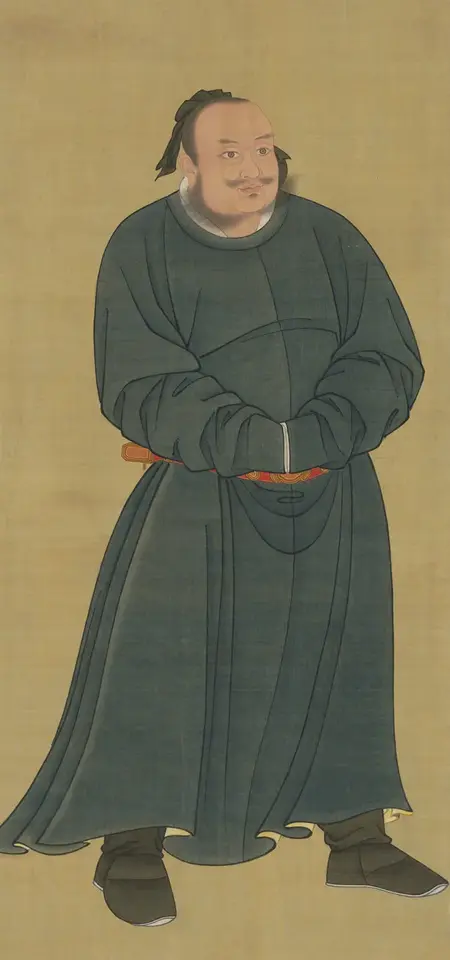
Ban Chao Manages the Western Regions (班超经营西域) was a monumental geopolitical and military accomplishment of the Eastern Han dynasty spanning the reigns of Emperors Ming, Zhang, and He, from 73 to 102 CE (Yongping 16 to Yongyuan 14). Following the fall of the Western Han, official Chinese administrative ties with the Western Regions were severed, leaving the Tarim Basin city-states vulnerable to brutal subjugation by the Northern Xiongnu. To sever the Northern Xiongnu's strategic right flank and revive Eurasian commercial arteries, Emperor Ming resolved to re-establish Han authority along the Silk Road. In 73 CE, Ban Chao set aside his scribe's brush to join General Dou Gu's frontier campaign, leading thirty-six resolute volunteers on an exploratory mission into the desert. Employing daring stratagems under the maxim "How can one catch tiger cubs without entering the tiger's lair?", Ban Chao incinerated the Xiongnu diplomatic camp in Shanshan, won over the influential kingdom of Yutian (Khotan), and bloodlessly installed a loyal monarch in Shule (Kashgar). When the imperial court ordered a general withdrawal, Ban Chao yielded to the weeping entreaties of the local populace, turning back to hold Panto Castle and pioneering the grand strategy of "using barbarians to control barbarians." Over thirty-one years of continuous operations, Ban Chao (appointed Chief Clerk of the Western Regions before becoming Protector-General) crushed Shache and Gumo, routed a 70,000-man invasion force sent by the Kushan Empire, pacified Qiuci (Kucha), and executed the defiant leadership of Yanqi (Karasahr), bringing more than fifty states under Han suzerainty. The Eastern Han restored the Protectorate of the Western Regions, enfeoffed Ban Chao as Marquis of Dingyuan, and dispatched Gan Ying on an epic embassy toward Daqin (Rome). Ban Chao returned to Luoyang with white hair in 102 CE, having secured one of the greatest accomplishments in world diplomatic and military history.
Ban Chao sets aside the pen to join Dou Gu's campaign, leading thirty-six men into the desert
Ban Chao burns the Xiongnu camp, executing their envoys and opening the southern Silk Road
Ban Chao executes the hostile shaman in Yutian and bloodlessly dethrones puppet Douti in Shule
Emperor Zhang orders evacuation; moved by weeping multitudes, Ban Chao turns back to hold Panto Castle
Ban Chao formulates the strategy of "using barbarians to attack barbarians"; Xu Gan arrives with reinforcements
Ban Chao executes a feigned retreat, destroying the Shache-Qiuci coalition and securing the southern basin
Ban Chao employs scorched-earth tactics to starve the 70,000-strong Kushan army, forcing Viceroy Xie to surrender
Qiuci surrenders; the Eastern Han re-establishes the Protectorate of the Western Regions, appointing Ban Chao Protector-General
Ban Chao leads 70,000 allied troops to take Yanqi, executing the rebel king and receiving the title Marquis of Dingyuan
Ban Chao dispatches Gan Ying to Da Qin, reaching the shores of the Persian Gulf
Ban Chao returns to Luoyang, passing away in the ninth month at age seventy-one
Under Emperor Wu of Western Han, Zhang Qian pioneered communications with the Western Regions, culminating in the formal establishment of the Protectorate of the Western Regions under Emperor Xuan. Han imperial law and garrison commands stabilized the oasis networks north and south of the Tianshan Mountains. However, late Western Han fiscal exhaustion led to administrative withdrawal. Wang Mang's usurping Xin regime adopted haughty, discriminatory policies, arbitrarily demoting all Western Regions monarchs to mere marquises, provoking intense regional hostility.
In 10 CE, Han garrison troops in Cheshi mutinied and fled to the Xiongnu; three years later, Yanqi rebelled and murdered Protector-General Dan Qin. Wang Mang sent an expeditionary force under Wang Jun, which suffered a devastating defeat, and Protector-General Li Chong was killed in Qiuci. Following the collapse of the Xin dynasty, civil wars consumed central China, severing formal administrative links between the Central Plains and Central Asia for over half a century.
During this prolonged vacuum, the Northern Xiongnu re-established brutal military hegemony over the Tarim Basin. They instituted the Office of the Commandant of Servants (Tongpu Duwei), imposing ruinous tribute quotas and forced labor upon the oasis kingdoms. During the Jianwu era of Emperor Guangwu, eighteen kingdoms, including Shache and Shanshan, repeatedly dispatched embassies offering prince hostages to Chang'an, pleading with the Eastern Han to reinstall the Protectorate and protect them from nomadic predation.
However, Emperor Guangwu was preoccupied with consolidating domestic pacification and lacked the military reserves for trans-desert expeditions, reluctantly declining their petitions. Consequently, the oasis kingdoms were forced into temporary submission to the Northern Xiongnu.
By the Yongping reign of Emperor Ming, several decades of peace had enriched the national granaries and treasuries of the Eastern Han. Meanwhile, the Northern Xiongnu coordinated continuous raids with western dependencies against the Hexi Corridor, directly imperiling frontier defense. Emperor Ming resolved to launch a strategic counteroffensive to sever the Northern Xiongnu's right arm, committing to recover the Western Regions and reopen the Silk Road.
Ban Chao, courtesy name Zhongsheng, hailed from Anling in Fufeng, the younger son of renowned historian Ban Biao and brother of Ban Gu. In his youth, his family was impoverished, compelling Ban Chao to work as a government copyist in Luoyang. Harboring grand ambitions, he famously threw down his writing brush in frustration, exclaiming: "A real man with vision should emulate Fu Jiezi and Zhang Qian, achieving merit in distant lands to win a marquisate; how can one waste his life among pens and inkstones?"
In 73 CE (Yongping 16), General Dou Gu launched an expedition from Jiuquan, smashing the Northern Xiongnu Prince of Huyan at Lake Barkol near the Tianshan Mountains. Serving as an acting major, Ban Chao led an advance detachment against Yiwulu (modern Hami), decapitating numerous enemy horsemen and exhibiting exceptional tactical leadership. Recognizing his strategic acumen, Dou Gu appointed Ban Chao to lead a diplomatic mission of thirty-six handpicked volunteers deep into the Western Regions.
Ban Chao marched west through Yangguan Pass, arriving at Shanshan (Lop Nor region), the eastern gateway to the southern Silk Road. King Guang of Shanshan initially welcomed the Han delegation with lavish hospitality. Within days, however, the king's demeanor grew cool and detached; he avoided audiences and curtailed supplies to the mission.
Ban Chao remarked to his officers: "The king's hesitation indicates that Northern Xiongnu emissaries have arrived, leaving him torn between two powers." Calling in a Shanshan servant assigned to his quarters, Ban Chao feigned omniscience, demanding: "Where is the camp of the Xiongnu envoys who arrived days ago? Conceal nothing, or face execution!" Terrified, the servant confessed that over one hundred Xiongnu delegates had arrived and were camped thirty li outside the city. Ban Chao immediately detained the servant in isolation to maintain total operational secrecy.
That night, Ban Chao summoned his thirty-six comrades, providing them with wine. As spirits rose, he declared: "We stand in a distant land, seeking glory through extraordinary feats. Now the Xiongnu envoys have arrived, and the king grows insolent. If pressured, he will bind us and present us to the nomads, leaving our bones exposed in the sands! What shall we do?" The men pledged their lives to his command. Rising, Ban Chao delivered his famous maxim: "How can one catch tiger cubs without entering the tiger's lair? Tonight, amidst high winds, we shall set fire to the Xiongnu encampment and slaughter them. Once they are dead, the king will be terrified, and our mission secured!"
Under cover of darkness and howling desert gales, Ban Chao led his thirty-six warriors to the enemy camp. He stationed ten men at the gate with copper drums, ordering them to beat furiously once flames arose, while the remaining twenty-six men deployed around the tents armed with bows and torches. Setting the camp ablaze with the wind, the Han troops unleashed terror upon the sleeping nomads. Ban Chao personally cut down three adversaries, while his archers picked off fleeing targets. Thirty Xiongnu officers were decapitated, and over seventy attendants perished in the inferno.
At dawn, Ban Chao summoned King Guang and displayed the severed heads of the Xiongnu commanders. Paralyzed with terror, the king fell to his knees in tears. Ban Chao delivered a reassuring exposition of Han benevolence and integrity. Thoroughly humbled, King Guang pledged eternal loyalty to the Han crown, dispatching his royal heir to Luoyang as hostage, thereby reopening the southern Silk Road.
Returning to report to Dou Gu, Ban Chao received high commendation from Emperor Ming, who promoted him to Acting Major and ordered him to proceed deeper into the Tarim Basin. In the spring of 74 CE (Yongping 17), Ban Chao traveled over a thousand li west to Yutian (Khotan), the premier power of the southern route, which had recently annexed Shache and hosted a resident Xiongnu supervisor. King Guangde of Yutian treated the Han delegation with arrogance.
The kingdom was steeped in shamanic superstition. Instigated by the Xiongnu, the chief shaman declared that the gods were displeased with Yutian's overtures to Han, demanding Ban Chao's prized warhorse as a sacrificial offering. King Guangde sent his prime minister to request the steed. Ban Chao agreed without hesitation, but stipulated that the shaman must come to the camp in person to lead the horse away.
When the haughty shaman arrived, Ban Chao seized him and severed his head on the spot. Sending the head to King Guangde, Ban Chao severely rebuked the monarch for consorting with traitors. Having heard of Ban Chao's ferocity in Shanshan, King Guangde was petrified. He immediately executed the Xiongnu supervisor, surrendered unconditionally to the Han court, and dispatched his prince as a hostage.
Ban Chao then advanced to Shule (Kashgar) near the eastern foothills of the Pamir Mountains. Shule had recently been conquered by Qiuci (Kucha), which had executed the native king and installed a puppet noble named Douti. Douti ruled with heavy-handed tyranny, alienating the local populace.
Camping thirty li outside Shule's Panto Castle, Ban Chao deployed a lone officer, Tian Lü, into the city under the pretense of delivering a diplomatic dispatch. Entering the palace, Tian Lü caught Douti off-guard, drew his dagger, and seized the puppet king before his guards could react. Ban Chao marched his main force into the citadel, convened the royal elders and tribal chieftains, and formally deposed Douti, enthroning Zhong, nephew of the deceased native king. Overjoyed, the populace wept and bowed in gratitude. Ban Chao magnanimously spared Douti's life, sending him safely back to Qiuci to demonstrate imperial moral restraint. The entire southern Tarim Basin was firmly aligned with the Eastern Han.
In 75 CE (Yongping 18), Emperor Ming passed away. Exploiting the court mourning, the Northern Xiongnu orchestrated a massive coalition with northern oasis kingdoms Qiuci and Yanqi. Yanqi ambushed and killed Protector-General Chen Mu, while thousands of Qiuci cavalry besieged Geng Gong at Jinpu and laid siege to Ban Chao and King Zhong in Panto Castle. The defenders held out for months on vermin and boiled leather armor, beating back multiple scaling assaults.
In 76 CE (Jianchu 1), the newly enthroned Emperor Zhang, facing domestic fiscal distress, ordered the complete abandonment of the Western Regions, instructing Ban Chao to withdraw his personnel to the capital.
When the edict reached Shule, the kingdom was plunged into despair. General Lida drew his blade, lamenting: "If the Han envoys abandon us, we will be butchered by Qiuci. Better to die before the envoy than perish by barbarian hands!" He slit his throat on the spot, falling dead in the tent.
As Ban Chao began his withdrawal toward Yutian, tens of thousands of citizens lined the desert road in profound mourning. Elders, women, and children knelt weeping, crying: "The Han envoy is like our father and mother; if you depart, how can we survive?" King Guangde fell prostrate, clasping the hooves of Ban Chao's warhorse with such intensity that the steed could not take a single stride. Overcome by the profound devotion of the oasis peoples, Ban Chao wept openly. Realizing that his departure would deliver millions of innocent lives back into Xiongnu bondage and extinguish thirty years of imperial labor, Ban Chao defied the imperial order, turning his horse around and shouting: "I shall not return; I will live and die with the peoples of the Western Regions!" Returning to Panto Castle, he reorganized defenses, reigniting anti-Xiongnu resistance across Central Asia.
Back in Shule, Ban Chao consolidated local administration. He understood that the central treasury could not sustain huge regular armies across thousands of li of desert. The only viable path was "using barbarians to attack barbarians" (yi yi gong yi)—marshaling allied regional levies while maintaining strict moral discipline.
In 80 CE (Jianchu 5), Ban Chao submitted his historic Memorial Requesting Troops (Qibing Shu), outlining his grand strategy: "Using barbarians to attack barbarians is the optimal strategy. Though my command is small, it suffices to overawe the kingdoms. Given a few years, Qiuci will surrender and the Western Regions will be pacified!" Deeply moved, Emperor Zhang praised his loyalty and dispatched Acting Major Xu Gan with one thousand infantry and cavalry to reinforce Shule.
With Xu Gan's arrival, Ban Chao crushed a revolt led by Shule commander Fanchen in 84 CE, decapitating a thousand rebels and stabilizing the western Tarim Basin. Concurrently, a petty envoy named Li Yi, who was assigned to escort Wusun delegates, delayed in Yutian out of cowardice and sent secret memorials slandering Ban Chao as arbitrary and exaggerated in his conquests. Emperor Zhang rebuked Li Yi and placed him under Ban Chao's orders. Demonstrating supreme magnanimity, Ban Chao harbored no grudge, appointing Li Yi to escort royal hostages to Luoyang, winning immense admiration for his nobility.
In 87 CE (Jianchu 12), the King of Qiuci allied with Shache, deploying 20,000 troops to sever the southern road. Ban Chao mobilized 25,000 allied soldiers from Yutian and Shule to relieve Shache. Facing a massive relieving force from Qiuci, Wensu, and Gumu, Ban Chao executed a brilliant ruse of feigned retreat. He openly proclaimed that Yutian troops were exhausted and began dismantling camp, deliberately allowing a Qiuci spy to escape.
Believing the Han army was fleeing, the King of Qiuci led his cavalry in disorganized pursuit while Shache troops poured from their gates. Once the enemy formations were stretched thin across the plains, Ban Chao turned his elite Han horsemen and hidden Yutian cavalry around, striking the exposed Shache center with devastating fury. Over 5,000 enemy troops were slain, and the Shache king surrendered unconditionally. This victory cemented Han supremacy across the southern Tarim Basin.
In 90 CE (Yongyuan 2), the monarch of the powerful Kushan Empire (Da Yuezhi) west of the Pamirs, harboring resentment over a rejected imperial marriage alliance, dispatched his Viceroy Xie with an invasion force of 70,000 cavalry across the high mountain passes to crush Ban Chao.
Confronted by an enemy outnumbering him ten to one, Ban Chao calmed his panicked troops, remarking: "Though the Yuezhi are numerous, they have marched thousands of li across the treacherous Pamir passes. Their logistical supply is precarious. This is an exhausted host. We need only conduct a scorched-earth defense, clearing the fields and remaining behind deep trenches. Within weeks, their provisions will fail, and when they retreat, we shall intercept and capture their general!"
Ban Chao withdrew all oasis populations into fortified strongholds, storing or burying all grain. The Kushan forces assaulted the citadels in vain, finding no forage for their starving mounts. Facing starvation, Viceroy Xie dispatched cavalry carrying gold and jewels toward Qiuci to purchase emergency supplies.
Anticipating this move, Ban Chao deployed an ambush in the narrow mountain gorges. The Kushan supply mission was annihilated, and Ban Chao sent the severed heads of the emissaries directly to the Kushan camp. Devastated by the total severance of his supply lines, Viceroy Xie realized his army was trapped. He unconditionally surrendered, kowtowing before Ban Chao to plead for mercy. Demonstrating imperial magnanimity, Ban Chao spared Xie and escorted the survivors back across the Pamirs. Terrified by Han martial prowess, the Kushan Empire submitted tribute annually thereafter.
With the Kushan threat neutralized, Qiuci stood completely isolated. In 91 CE (Yongyuan 3), Emperor He formally recognized Ban Chao's achievements by re-establishing the Protectorate of the Western Regions, appointing Ban Chao as Protector-General (Xiyu Duhu) and Xu Gan as Senior Clerk, stationed at Wulei (modern Luntai). The King of Qiuci stripped to the waist and offered formal submission. Ban Chao installed the pro-Han prince Baiba as King of Qiuci and dispatched Major Yao Guang to garrison northern posts, pacifying Wensu and Gumu. Thirty-six kingdoms south of the Tianshan Mountains were fully restored to Han suzerainty.
By 94 CE (Yongyuan 6), only Yanqi, Weili, and Weixu remained hostile, fearful of retribution for having murdered Protector-General Chen Mu twenty years earlier. Ban Chao assembled 70,000 allied troops from eight oasis kingdoms and encircled Yanqi. Feigning a diplomatic banquet, Ban Chao invited the regional rulers to his headquarters. When King Guang of Yanqi arrived, Ban Chao exposed his treason and ordered his execution on the very spot where Chen Mu had perished, executing over a thousand unyielding rebels. With this decisive act, all fifty-plus kingdoms of the Western Regions were pacified. Emperor He conferred upon Ban Chao the title of Marquis of Dingyuan (Marquis of Far-Pacification), earning him the enduring historical title "Ban Dingyuan."
With the Silk Road fully pacified, transcontinental commerce flourished. In 97 CE (Yongyuan 9), seeking to extend direct contact to the furthest western civilizations, Ban Chao dispatched his officer Gan Ying on an official embassy to Da Qin (the Roman Empire). Gan Ying traversed Central Asia and the Parthian Empire, reaching the Persian Gulf (Tiaozhi Sea). Although Parthian sailors dissuaded him from crossing the open ocean, Gan Ying compiled invaluable geographic and ethnographical records of the Mediterranean and Near Eastern worlds, expanding Chinese horizons to the Atlantic margins.
Having spent thirty-one years in the western wilderness, Ban Chao grew old and frail. In 100 CE (Yongyuan 12), longing for his ancestral home, he submitted a moving memorial: "Your servant dares not hope to reach Jiuquan; I desire only to enter Yumen Pass alive!" His sister Ban Zhao likewise petitioned Emperor He. Deeply moved, Emperor He issued an edict summoning Ban Chao back to the capital in 102 CE (Yongyuan 14).
Ban Chao arrived in Luoyang at the age of seventy-one, greeted with immense honors by the court and populace, and was appointed Commandant of the Archers. In the ninth month of that year, he passed away peacefully from illness and exhaustion. The court provided lavish funeral expenses and buried him on Mount Mang, concluding the epic life of an unparalleled frontier commander.
Ban Chao's thirty-one-year tenure concluded in sweeping geopolitical victory for the Eastern Han dynasty. Operating with negligible domestic manpower, Ban Chao relied on unmatched personal courage, moral integrity, and diplomatic finesse to implement his strategy of "using barbarians to attack barbarians." He dismantled the Northern Xiongnu's military apparatus in Central Asia, bringing more than fifty oasis states across the Tarim Basin and Tianshan ranges into willing submission to the Han throne. The Protectorate of the Western Regions was fully restored and fortified. Ban Chao rose from an impoverished copyist to Marquis of Dingyuan, fulfilling his youthful vow to enter Yumen Pass alive and cementing his status as an immortal national hero.
The management of the Western Regions shaped Chinese territorial integrity and Eurasian civilizational exchange. Geopolitically, Ban Chao shattered the Northern Xiongnu's grip on the Silk Road, accelerating their disintegration and westward displacement into the Eurasian steppe, thereby permanently neutralizing the nomad threat against China's northwestern frontier. Culturally and commercially, his pacification re-established the vital transcontinental highway, allowing Chinese silk, iron smelting, and water conservancy technologies to flow west, while Buddhist art, music, astronomy, and agricultural crops enriched the Central Plains. Finally, Gan Ying's embassy to the Persian Gulf represented China's first official attempt to establish contact with the Roman Empire, fundamentally expanding ancient Chinese knowledge of world geography.