Tumu Crisis and New Reign
Yingzong is captured by Oirats; Yu Qian enthrones Zhu Qiyu as Emperor Jingtai.
Ming Dynasty (明朝) · HISTORICAL EVENT
夺门之变
The Duomen Coup was a dramatic palace military coup executed in February 1457 (8th year of Jingtai) in the Ming dynasty capital of Beijing, also known as the Restoration of the Southern Palace. Following the 1449 Tumu Crisis, Emperor Yingzong was captured by the Oirats, leading minister Yu Qian and the imperial court to enthrone his younger brother Zhu Qiyu as Emperor Jingtai. After his repatriation, Yingzong was placed under strict house arrest in the…
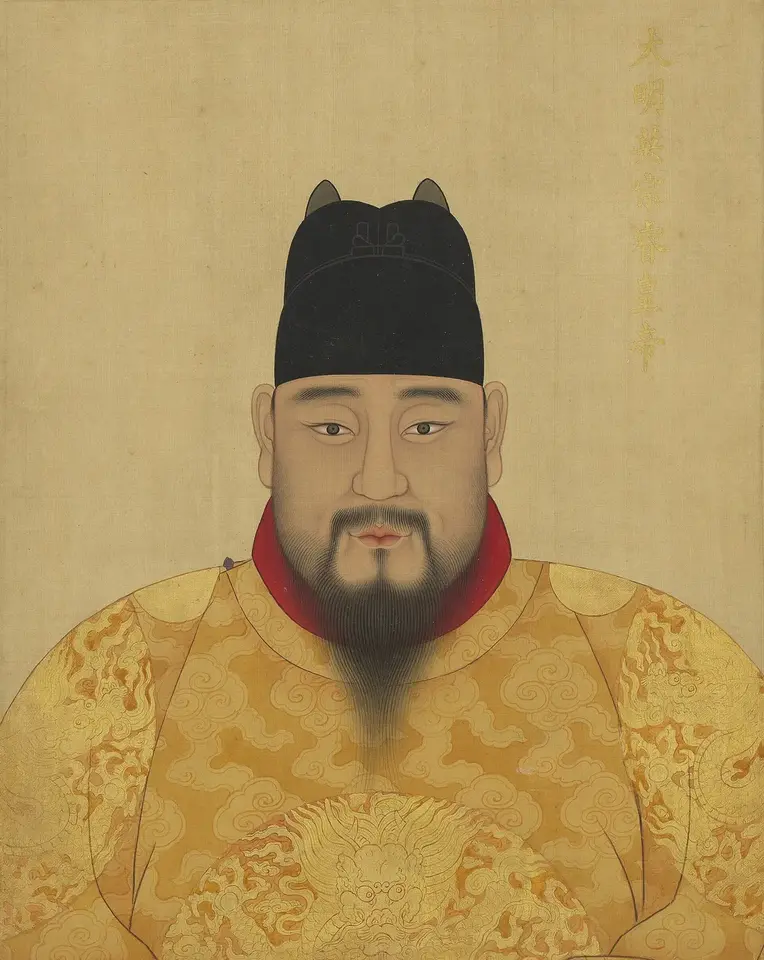
The Duomen Coup was a dramatic palace military coup executed in February 1457 (8th year of Jingtai) in the Ming dynasty capital of Beijing, also known as the Restoration of the Southern Palace. Following the 1449 Tumu Crisis, Emperor Yingzong was captured by the Oirats, leading minister Yu Qian and the imperial court to enthrone his younger brother Zhu Qiyu as Emperor Jingtai. After his repatriation, Yingzong was placed under strict house arrest in the Southern Palace for seven years. When Emperor Jingtai fell gravely ill in early 1457 with the imperial succession unsettled, opportunistic commander Shi Heng, eunuch Cao Jixiang, and official Xu Youzhen organized a nighttime military assault. Battering through the Southern Palace gates with an assault ram, the conspirators escorted Yingzong to the Fengtian Hall and proclaimed his restoration. The coup resulted in the execution of loyal minister Yu Qian and ushered in a turbulent period of political vengeance and factional strife.
Yingzong is captured by Oirats; Yu Qian enthrones Zhu Qiyu as Emperor Jingtai.
Yingzong returns to Beijing and is interned under strict guard in the Southern Palace for seven years.
Jingtai replaces the crown prince with his own son, who dies shortly after, leaving succession unresolved.
Shi Heng and Xu Youzhen infiltrate the palace and batter down the Southern Palace gates.
Yingzong ascends the throne before shocked officials; Yu Qian and Wang Wen are arrested.
Yu Qian is executed; Jingtai is demoted to Prince of Cheng and dies shortly after.
In the autumn of 1449, Emperor Yingzong led a catastrophic campaign against the Oirat Mongols at Tumu Fortress, resulting in the annihilation of the imperial army and the capture of the emperor. Confronting imminent siege in Beijing, Vice Minister of War Yu Qian rejected southern retreat proposals, mobilizing forces to enthrone the emperor's younger brother, Zhu Qiyu (Emperor Jingtai), to stabilize the realm and eliminate Oirat diplomatic leverage. The Ming forces subsequently achieved a historic victory in the Defense of Beijing, preserving the dynasty.
In 1450, realizing that the captured former monarch possessed no further diplomatic value, Oirat chieftain Esen released Yingzong. However, Emperor Jingtai was unwilling to relinquish the throne. Upon Yingzong's return to Beijing, Jingtai conferred upon him the hollow title of Retired Emperor and interned him in the Southern Palace within the Forbidden City compound. To prevent communication with loyalist ministers, Jingtai ordered the gates bolted and filled with molten lead, stripped the compound of protective shade trees, and posted armed Embroidered Uniform Guard sentries around the perimeter. In 1452, Jingtai deposed Yingzong's eldest son Zhu Jianshen as crown prince, investing his own son Zhu Jianji.
However, young prince Zhu Jianji died of illness the following year, leaving the imperial succession unresolved. In January 1457, Emperor Jingtai fell gravely ill with a debilitating ailment and was unable to preside over court ceremonies. By mid-January, the emperor's condition had deteriorated critically. Senior ministers, including Minister of War Yu Qian and Grand Secretary Wang Wen, prepared a memorial proposing to designate an imperial prince as heir presumptive, bringing the dynastic succession to a critical turning point.
Meanwhile, military commander Shi Heng, who had earned distinction during the Defense of Beijing, harbored deep anxieties that a regular accession under Yu Qian's leadership would diminish his political standing. Seeking paramount favor and rewards, Shi Heng resolved to orchestrate a coup. He formed an alliance with general Zhang Yue, influential court eunuch Cao Jixiang, and the astrologer-official Xu Youzhen. Observing auspicious celestial alignments, Xu Youzhen declared that the time was ripe for action, sealing the conspiracy.
On the night of February 11, 1457 (16th day of the first lunar month), heavy snowfall blanketed Beijing. Exploiting his authority as metropolitan garrison commander, Shi Heng ordered the immediate closure of all nine city gates under the pretext of border emergencies. He mobilized approximately one thousand private retainers and trusted palace guards, assembling them outside the Donghua Gate of the Forbidden City. Eunuch Cao Jixiang acted as inside collaborator, unlocking the heavily guarded inner palace gates to admit the conspirators.
Upon infiltrating the palace precinct, Xu Youzhen locked each gateway behind them and cast the keys into an open drainage channel, demonstrating to his soldiers that retreat was impossible. Advancing through the darkness, Shi Heng and his troops reached the walled perimeter of the Southern Palace. Finding the massive portals locked with lead, the soldiers brought forward a large timber ram and battered the palace gates, breaking open a wide breach in the walls.
Startled by the shattering crash of timber, the retired emperor Zhu Qizhen emerged holding a candle, fearing that Emperor Jingtai had dispatched assassins to murder him. Shi Heng and Xu Youzhen prostrated themselves before him, announcing that Emperor Jingtai was dying and that the ministers had arrived to escort him back to the dragon throne. Reassured of their loyalty, Yingzong mounted an imperial sedan chair. Escorted by heavily armored troops brandishing halberds, the procession marched through the deserted palace corridors toward the Fengtian Hall.
By dawn on February 12, Yingzong ascended the imperial throne. As bells and drums sounded throughout the Forbidden City, civil and military officials gathered for the routine morning audience. When the doors of the Fengtian Hall swung open, the assembled officials were stunned to see the long-imprisoned retired emperor seated upon the imperial throne instead of Emperor Jingtai.
Standing on the imperial dais, Xu Youzhen proclaimed that the Retired Emperor had resumed the throne, commanding the court to kowtow. Overwhelmed by shock and intimidated by drawn swords, the officials prostrated themselves and offered imperial congratulations. In his bedchamber, the bedridden Emperor Jingtai received the news with resignation, whispering that his brother would govern well before sinking into despair.
The restoration immediately initiated a wave of political retribution. Fearing that Yu Qian's immense popularity and military prestige would undermine their authority, Xu Youzhen and Shi Heng seized Yu Qian and Grand Secretary Wang Wen in the audience hall. Xu Youzhen convinced Yingzong that executing Yu Qian was necessary to validate the legitimacy of the restoration. Imperial censors fabricated charges that Yu Qian had conspired to enthrone an external prince. On February 16, 1457, Yu Qian was executed outside the Chongwen Gate, deeply shocking the populace.
Following the purge, Yingzong issued an edict demoting Jingtai to Prince of Cheng and confining him to the western palaces, changing the era name to Tianshun. On March 14, 1457, the deposed thirty-year-old prince died under mysterious circumstances, bringing a bloody conclusion to the dynastic succession crisis.
The Duomen Coup permanently scarred the political culture of the mid-Ming Dynasty. By seizing the throne through armed force rather than legitimate ancestral succession, Emperor Yingzong created an enduring crisis of dynastic legitimacy, triggering intense debates regarding the respective merits of the Jingtai and Tianshun eras that persisted for decades.
Institutionally, the coup empowered unscrupulous military commanders and palace eunuchs. Conspirators Shi Heng and Cao Jixiang monopolized power, introducing the infamous Shi-Cao political disturbances characterized by extortion and palace intimidation. The conspirators rapidly turned on one another: Xu Youzhen was exiled, Shi Heng died in prison, and Cao Jixiang launched a treasonous military insurrection in 1461 that was brutally suppressed.
Morally and legally, the execution of national hero Yu Qian alienated the Confucian scholar-official class. It was not until the reign of Emperor Xianzong (Zhu Jianshen) that Yu Qian was formally rehabilitated and bestowed posthumous honors. The factional bitterness and reliance on secret police surveillance that accompanied the coup set dangerous precedents that plagued Ming court politics through the late sixteenth century.
Traditional historians have universally condemned the Duomen Coup as an unnecessary act of political opportunism. The History of Ming criticized Shi Heng and Xu Youzhen as selfish adventurers who exploited a temporary imperial power vacuum to seek personal advancement.
Historian Wang Shizhen observed that with Emperor Jingtai bedridden without heirs, the throne would have naturally reverted to Yingzong upon Jingtai's demise. The violent coup served solely to enrich conspirators and orchestrate the tragic destruction of upright statesmen like Yu Qian.
Modern historians analyze the coup as an explosive consequence of the Tumu Crisis, demonstrating how institutional ambiguities surrounding succession and the militarization of capital garrisons enabled ruthless factions to subvert established dynastic governance.