Strategic Planning at Mount Tiandu
Zhang Yuan urges a strike into Guanzhong; Li Yuanhao gathers 100,000 cavalry at Mount Tiandu for a two-pronged offensive against Zhenrong.
Northern Song Dynasty, Western Xia Dynasty (北宋、西夏) · HISTORICAL EVENT
定川寨之战
The Battle of Dingchuan Fort was a critical military engagement fought in the intercalary ninth lunar month of 1042 between the Northern Song dynasty and the Western Xia empire at Dingchuan Fort, located northwest of modern Guyuan, Ningxia. Following decisive victories at Sanchuankou and Haoshuichuan, Western Xia Emperor Jingzong, Li Yuanhao, adopted a strategy drafted by Han adviser Zhang Yuan to pin down frontier garrisons and threaten the Guanzhong…
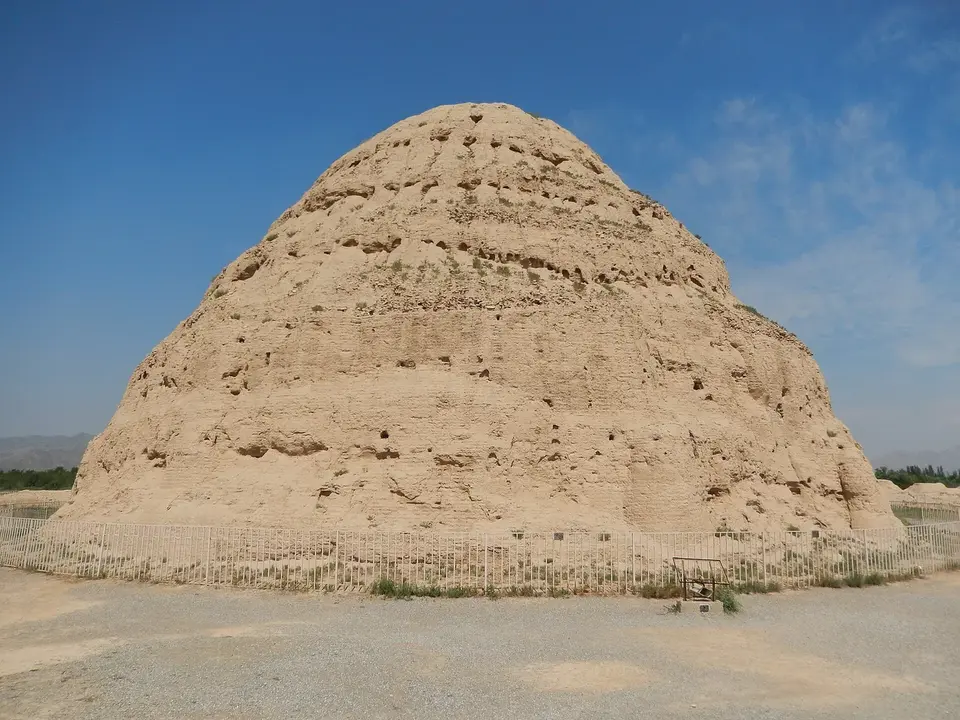
The Battle of Dingchuan Fort was a critical military engagement fought in the intercalary ninth lunar month of 1042 between the Northern Song dynasty and the Western Xia empire at Dingchuan Fort, located northwest of modern Guyuan, Ningxia. Following decisive victories at Sanchuankou and Haoshuichuan, Western Xia Emperor Jingzong, Li Yuanhao, adopted a strategy drafted by Han adviser Zhang Yuan to pin down frontier garrisons and threaten the Guanzhong heartland. Mobilizing one hundred thousand cavalrymen from Mount Tiandu, Xia forces executed a double envelopment against Zhenrong Army. Song military commissioner Wang Yan instructed deputy commissioner Ge Huaimin to adopt defensive delaying tactics. Disregarding explicit orders, Ge Huaimin marched his army deep into hostile territory, stationing his command inside Dingchuan Fort. Xia cavalry quickly severed the retreat bridges and mountain springs, trapping the Song force in an arid perimeter amidst fierce sandstorms. When Ge Huaimin attempted a Southeast breakout, his army was ambushed against demolished trench barricades; sixteen commanders, including Ge Huaimin and Cao Ying, fell in combat, and over nine thousand Song soldiers were slaughtered. The defeat forced the Song empire into broad strategic concessions that culminated in the 1044 Qingli Peace Accord.
Zhang Yuan urges a strike into Guanzhong; Li Yuanhao gathers 100,000 cavalry at Mount Tiandu for a two-pronged offensive against Zhenrong.
Commissioner Wang Yan orders Ge Huaimin to Wating Fort, issuing strict directives against aggressive pursuit.
Defying commands, Ge Huaimin advances to Wugukou and gathers reinforcements to push deep into the borderlands.
Rejecting Zhao Xun's defensive proposal at Malancheng, Ge Huaimin splits his army into four columns marching toward Dingchuan.
Tangut forces dismantle the ditch bridge and cut off water; a sandstorm triggers mass panic as Ge Huaimin falls from his horse.
Trapped in the fort without water, Ge Huaimin insists on breaking out along the main highway, ignoring Zhao Xun's detour plan.
The breakout force is trapped at the severed ditch and slaughtered; Ge Huaimin and sixteen commanders are slain.
Xia cavalry ravage 600 li down to Weizhou before Fan Zhongyan's relief army forces Li Yuanhao to withdraw north.
During the Baoyuan and Kangding eras of Emperor Renzong of Song, the Tangut chieftain Li Yuanhao proclaimed himself emperor and founded the Western Xia dynasty, triggering full-scale hostilities with the Northern Song empire. In the battles of Sanchuankou and Haoshuichuan, Western Xia forces effectively employed ambush tactics to annihilate veteran Song field formations led by Liu Ping and Ren Fu. These staggering losses forced Song border authorities along Shaanxi into an inflexible, passive defensive posture.
Buoyed by repeated triumphs, Li Yuanhao sought a decisive strategic blow to shatter Song resistance. Zhang Yuan, a disgruntled Han literatus who had defected to Western Xia and risen to high ministerial rank, presented a daring operational plan. Zhang argued that the Song empire had massed its premier military contingents and logistical supplies exclusively along the frontier circuits of Huanqing, Jingyuan, and Yan'an, leaving the strategic interior of the Guanzhong Plain and the ancient metropolis of Chang'an dangerously undefended. Zhang proposed that Xia armies execute a massive feint along the border, tying down Song garrisons before unleashing swift cavalry columns to sweep through the passes and seize Chang'an. Embracing this concept, Li Yuanhao ordered a massive two-pronged offensive against Zhenrong Army.
In the intercalary ninth month of 1042, Li Yuanhao concentrated one hundred thousand cavalrymen of the Left and Right Wings at Mount Tiandu, modern Haiyuan in Ningxia. The invasion forces split into two wings: one thrust toward Liufan Fort while the other marched past Pengyang toward Weizhou, creating a pincer designed to lure Song relief forces into a mobile killing zone. Upon receiving warnings of the invasion, Song Pacification and Military Commissioner Wang Yan dispatched his deputy, Ge Huaimin, from Weizhou to garrison Wating Fort and block the passes.
Wang Yan thoroughly understood the lethal Tangut penchant for luring opponents into prepared ambushes. He repeatedly sent couriers bearing handwritten directives ordering Ge Huaimin to anchor his defense securely against fortified positions, feign weakness, and await tactical errors rather than advancing into open ground. However, Ge Huaimin was an inexperienced, arrogant commander driven by personal ambition. Reaching Wating Fort on the ninth day, Ge Huaimin incorporated local contingents and flagrantly violated Wang Yan's orders by marching north into Wugukou. He subsequently summoned forward commanders Cao Ying, Zhao Xun, and Li Liangchen, concentrating tens of thousands of men in a hazardous advance toward Zhenrong.
On the twentieth day of the intercalary ninth month in 1042, Ge Huaimin's column reached the southwestern perimeter of Zhenrong Army. Imperial supervisor Zhao Zheng climbed a vantage point and observed thick smoke signals and swarming Tangut scouts across the hills, urgently warning Ge Huaimin that the primary Xia host was dangerously close. Ge Huaimin temporarily halted at Yangmacheng, where reinforcements under Cao Ying, Li Zhihe, Wang Bao, Wang Wen, and Li Yue joined the main column. Intelligence arrived that Li Yuanhao had shifted his main cavalry camps beyond the Great Wall Ditch, prompting Song officers to debate a dawn assault.
Commander Zhao Xun, an experienced officer familiar with frontier geography, strongly cautioned against hasty combat. He argued that the Tanguts had marched great distances and sought a rapid conclusion; the Song army should construct defensive stockades at Malancheng, severing Xia withdrawal lines while maintaining firm communications with Zhenrong to protect logistical trains. Zhao urged patience until the enemy was exhausted. Driven by an urgent desire for personal glory, Ge Huaimin rejected Zhao Xun's plan and issued a disastrous order dividing his army into four separate columns advancing simultaneously toward Dingchuan Fort, fatally fragmenting his command.
At dawn on the twenty-first day, Song scouting commanders Xiang Jin and Liu Zhan advanced toward Zhaofu New Fort, where they were ambushed by massive Xia cavalry formations and driven into Xiangjia Gorge. Realizing that the Song main body had walked into his operational trap, Li Yuanhao surged across the Great Wall Ditch to assault the Song center. Ge Huaimin, Cao Ying, and Ye Zhidun fell back into the perimeter of Dingchuan Fort to establish defensive lines.
Around midday, Tangut forces exploited their overwhelming numbers to sever the Song lines. Xia engineers dismantled the timber bridges spanning the deep Great Wall Ditch, cutting off all Song avenues of logistical resupply and organized retreat. Simultaneously, Xia cavalry captured the hills surrounding Dingchuan Fort and cut off the freshwater streams that supplied the garrison. Facing severe thirst, Ge Huaimin attempted to deploy outside the fortress. Li Yuanhao launched coordinated assaults, shattering Liu He's detachment west of the river before concentrating furious cavalry charges against Cao Ying's northeastern flank. Because Ge Huaimin had fragmented his forces into four uncoordinated commands, Cao Ying's ranks collapsed under the assault.
As the battle reached a desperate pitch, a violent sandstorm suddenly swept across the arid plateau, filling the sky with blinding dust. In the swirling gloom, Song formations lost all visual contact and tactical coherence. Overwhelmed by panic, thousands of soldiers broke ranks and stampeded back toward the fort gates, trampling comrades underfoot. In the pandemonium, Ge Huaimin was unseated from his charger and was nearly trampled to death by his own fleeing troops before being dragged through the gates.
In this moment of acute peril, commander Zhao Xun gathered a contingent of shock axemen and held the fort bridge, hacking down pursuing Tangut horsemen and checking the enemy assault long enough to secure the fortress gates. By nightfall, Li Yuanhao's cavalry had encircled Dingchuan Fort in concentric rings. Deprived of food and water for the entire day, the trapped troops suffered agonizing thirst, leaving men and horses completely incapacitated. In a midnight war council, Ge Huaimin insisted on breaking out along the main highway toward Zhenrong. Zhao Xun vehemently objected, emphasizing that the main roadway was completely exposed, the bridge over the Great Wall Ditch was already destroyed, and Xia cavalry undoubtedly waited in ambush. Zhao proposed an unexpected flanking route northwest through the hills toward Longgan Fort. Ge Huaimin stubbornly rejected the proposal.
At dawn on the twenty-second day, Ge Huaimin deployed Cao Ying and Zhao Xun as the vanguard, Liu He on the flanks, and Li Zhihe and Wang Bao to protect the rear, launching a desperate southeastern breakout from the eastern gates. Just before departure, officers knelt before Ge Huaimin's horse, begging him to redirect the column toward Longgan Fort, but Ge Huaimin angrily spurred his mount forward along the main highway.
After advancing barely two li, the fleeing Song column reached the Great Wall Ditch, only to find the bridges smashed and the deep earthworks impassable. Lurking in prepared positions, Li Yuanhao's cavalry sprang the ambush. War drums thundered as waves of Tangut ironclad cavalry slammed into the disordered Song formations pinned against the chasm. With nowhere to retreat, Song resistance collapsed into a slaughter. Ge Huaimin, Cao Ying, Zhao Xun, Li Zhihe, Liu He, Ye Zhidun, Wang Bao, Wang Wen, and eight other senior commanders were cut down on the battlefield. Over nine thousand four hundred elite Song soldiers were systematically wiped out. Only Zhao Zheng and a small detachment managed to hold the fort, while scattered survivors escaped through mountain ravines toward Longgan.
Following his triumph, Li Yuanhao swept southward, destroying dozens of Song encampments and raiding as far south as Weizhou across a six-hundred-li perimeter. The populace of Chang'an and the Guanzhong region descended into profound panic. The invasion halted only in early tenth lunar month, when Pacification Commissioner Fan Zhongyan led heavy reinforcements from Huanqing Circuit to seal the passes, while twenty thousand Song garrison troops mobilized across Shaanxi to threaten the Tangut flanks, compelling Li Yuanhao to withdraw northward laden with plunder.
The Battle of Dingchuan Fort resulted in the complete annihilation of the Jingyuan Circuit field army. Ge Huaimin and sixteen high-ranking commanders, including Cao Ying, Zhao Xun, and Li Zhihe, were killed in action. Over nine thousand four hundred veteran soldiers were slaughtered, alongside the loss of ten thousand warhorses and tens of thousands of weapons and sets of armor. Western Xia cavalry laid waste to hundreds of li of territory up to the outskirts of Weizhou, sparking immense dread across the Guanzhong Plain and Chang'an, while exhausting Song offensive capabilities in Shaanxi.
Alongside Sanchuankou and Haoshuichuan, Dingchuan Fort cemented Western Xia's tactical supremacy in open warfare, shattering any lingering Northern Song aspirations to crush the Tangut state militarily. The disaster laid bare critical structural defects within the Song military apparatus, notably uncoordinated command structures, rigid deployment mandates, and divided local authority. In response, Emperor Renzong overhauled frontier administration, elevating proven reformers such as Han Qi and Fan Zhongyan to supreme command across Shaanxi. Politically, the catastrophe compelled the Song court to accept the reality of Tangut independence, directly leading to the conclusion of the Qingli Peace Accord in 1044, wherein Song agreed to provide substantial annual subsidies in silver, silk, and tea in exchange for nominal Tangut vassalage and border security.