Accession at Kaiping
Kublai Khan ascends the throne at Kaiping, resolving to govern the empire using Chinese administrative institutions.
Yuan Dynasty (元朝) · HISTORICAL EVENT
大都营建与迁都
The Construction and Relocation of the Capital to Dadu (大都营建与迁都) was a monumental urban enterprise and geopolitical transformation executed by Kublai Khan (Emperor Shizu of Yuan) between 1267 and 1276. Following his triumph in the Toluid Civil War against Ariq Böke, Kublai Khan recognized that the remote steppe capital of Karakorum could not effectively govern the vast agrarian territories of China. Resolving to anchor his dynasty within the Central…
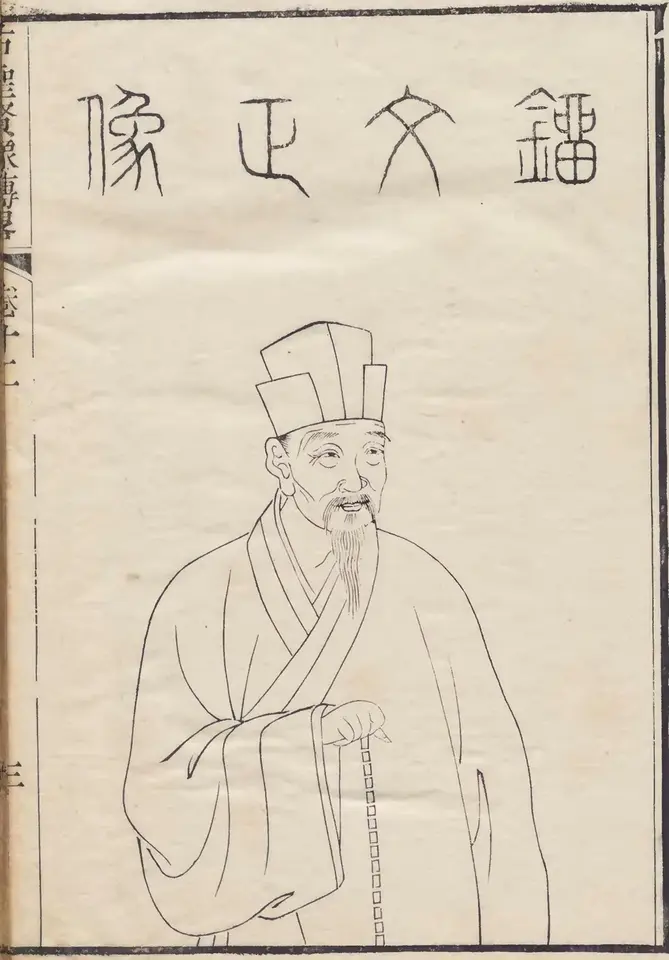
The Construction and Relocation of the Capital to Dadu (大都营建与迁都) was a monumental urban enterprise and geopolitical transformation executed by Kublai Khan (Emperor Shizu of Yuan) between 1267 and 1276. Following his triumph in the Toluid Civil War against Ariq Böke, Kublai Khan recognized that the remote steppe capital of Karakorum could not effectively govern the vast agrarian territories of China. Resolving to anchor his dynasty within the Central Plains, he bypassed the ruined Jin capital of Zhongdu and selected a new site around the Qionghua Island lakes to build the imperial capital of the Great Yuan dynasty—Dadu (Beijing). Planned by the Confucian statesman Liu Bingzhong according to the classical Rites of Zhou, designed by the Arab architect Yeheidie'erding, and engineered with an advanced water network by Guo Shoujing, Dadu represented the zenith of medieval urban design. In 1272, the city was officially proclaimed Dadu, and on New Year's Day of 1274, Kublai Khan formally transferred the imperial seat, receiving the homage of civil officials and foreign envoys in the Hall of Daming. The completion of the city in 1276 established the Dual Capital system alongside Shangdu, while the Tonghui Canal enabled southern grain fleets to sail directly into the heart of the capital, fixing the urban axis of Beijing for the next seven centuries.
Kublai Khan ascends the throne at Kaiping, resolving to govern the empire using Chinese administrative institutions.
Adopting Liu Bingzhong's recommendation, construction begins on the new capital centered around Qionghua Island.
Kublai Khan adopts the dynastic title Great Yuan, asserting classical Chinese dynastic legitimacy.
The court officially designates the new capital as Dadu (Beijing), known in Mongolian as Khanbaliq.
Construction concludes on the Hall of Daming and Pavilion of Yanchun, establishing the imperial seat.
Kublai Khan formally transfers the capital to Dadu, receiving the homage of ministers and foreign envoys.
The exterior ramparts with eleven gates and a perimeter of 28.6 kilometers are fully completed.
Guo Shoujing constructs the Baifu aqueduct to channel fresh water into Wengshan Lake and Jingshitam.
The Tonghui Canal opens, enabling southern grain fleets to berth directly inside Jingshitam harbor.
The Mongol Empire originated along the Onon River in the northern steppe, establishing its early capital at Karakorum in modern Mongolia. Karakorum was located in a harsh, semi-arid environment incapable of producing sufficient grain, relying entirely upon arduous overland supply trains from China. As the empire expanded to incorporate vast sedentary agricultural civilizations, Karakorum became an administrative liability, leaving the imperial court vulnerable to nomadic tribal insurgencies.
In 1260, Kublai Khan ascended the throne at Kaiping with the backing of northern Chinese literati, subsequently defeating his younger brother Ariq Böke in a four-year civil war. Kublai Khan realized that consolidating imperial rule required abandoning steppe nomadism in favor of centralized bureaucratic governance rooted in traditional Chinese administrative practices. Relocating the political heart of the empire to the Central Plains to control agricultural wealth became a vital strategic necessity.
The former Jin capital of Zhongdu occupied the northern communications nexus of Yanshan, but it had suffered catastrophic destruction when Genghis Khan's forces captured and burned the city in 1215. The palace precincts lay in ruins, and the city's water source, the Lianhua Pond stream, had silted up and could no longer support a major urban population or canal shipping.
In early 1267, the senior Han advisor Liu Bingzhong conducted an exhaustive terrain survey. He urged Kublai Khan to avoid the cramped, ruined precincts of old Zhongdu and instead select virgin terrain three li to the northeast, centered upon the Qionghua Island lakes (comprising modern Beihai, Zhongnanhai, and Jingshitam). This expansive open plain offered abundant natural water, excellent drainage, and direct connectivity to northern mountain passes and southern river routes.
The spatial design of Dadu represented a landmark synthesis of classical Chinese statecraft and multi-ethnic architectural expertise. Liu Bingzhong based the master plan on the classical Kaogongji (Artificers' Record) in the Rites of Zhou, establishing a balanced imperial layout featuring nine north-south and nine east-west avenues, with ancestral temples on the left, state altars on the right, the administrative court in front, and commercial markets in the rear.
In 1267, excavation and construction commenced under a multi-ethnic team of master builders. Kublai Khan appointed the Arab Muslim master architect Yeheidie'erding as Chief of the Chadi'er Bureau to oversee the architectural design of imperial palaces. Han generals Zhang Rou and Duan Zhen supervised tens of thousands of soldiers and civilian artisans in monumental rammed-earth engineering. Over several years of continuous construction, symmetrical outer ramparts and splendid palace compounds arose across the plain.
In November 1271, Kublai Khan adopted the classical phrase from the Book of Changes—Great is Qian, the Originator—to proclaim the dynastic title Great Yuan, claiming full legitimacy as the sovereign ruler of China. In February 1272, the emperor decreed that the new capital be officially designated Dadu (known in Turkic and Mongolian as Khanbaliq, meaning the City of the Khan). By 1273, the central ceremonial halls—including the Hall of Daming and the Pavilion of Yanchun—were completed with glazed ceramic tiles and marble balustrades.
On New Year's Day of 1274, Kublai Khan formally transferred the government from Kaiping to Dadu (Beijing). The emperor ascended the throne in the Hall of Daming to receive the New Year homage of imperial princes, ministers, and foreign ambassadors from Goryeo, Central Asia, and the Western Regions. The grand ceremonial transfer marked the definitive establishment of Dadu as the supreme political capital of the Great Yuan Empire. The court instituted the Dual Capital system, governing from Dadu during autumn and winter while residing at Shangdu during spring and summer.
The rapid influx of officials, soldiers, and merchants generated severe challenges in grain supply and potable water. Hydrological scientist Guo Shoujing conducted extensive geological surveys, locating pristine, stable springs at Baifu Spring on Shenshan Mountain in Changping. In 1291, Guo Shoujing engineered an aqueduct spanning fifty li, diverting highland springs into Wengshan Lake and funneling fresh water directly into Jingshitam Lake.
Building upon this hydraulic network, Guo Shoujing supervised the excavation of the Tonghui Canal, linking Jingshitam east to the Bai River at Tongzhou. The canal connected Dadu directly with the Grand Canal network, enabling grain barges from southern agricultural provinces to sail directly into Jingshitam harbor inside the capital. The lake became an inland maritime basin crowded with barges, resolving grain shortages and fueling urban commercial prosperity.
By 1276, the exterior fortifications of Dadu were fully completed. The rammed-earth ramparts enclosed a perimeter of 28.6 kilometers with eleven monumental gates. The city was organized into an orderly grid of primary thoroughfares, subsidiary streets, and narrow residential alleys (hutongs), divided into fifty administrative wards. The Center Pavilion was erected at the geographic midpoint, flanked by the Drum Tower and Bell Tower to regulate municipal time.
Under Pax Mongolica, Dadu developed into the most open and populous international metropolis in the medieval world. Venetian merchant Marco Polo resided in the capital for over a decade, recording in his travels that Dadu was arranged with geometric perfection, featuring straight avenues, magnificent palaces, and an abundance of commerce unparalleled in Europe. The city welcomed Persian merchants, Arab scholars, European envoys, and Tibetan monks, functioning as the diplomatic and cultural nexus of Eurasia.
The construction of Dadu and the transfer of the imperial government anchored the political core of the Mongol Empire within the agricultural plains of China. The city replaced ancient Chang'an and Luoyang as the northern political center, inaugurating an enduring shift in Chinese imperial geography.
The establishment of the Dual Capital system allowed the Yuan monarchy to balance two distinct civilizational realms: Dadu served as the formal administrative capital for managing the agrarian empire and conducting civil bureaucracy, while Shangdu functioned as the summer residence for holding steppe assemblies and maintaining ties with Mongolian nomadic princes.
In urban geography, Dadu provided the enduring foundation for modern Beijing. When the Yongle Emperor of the Ming dynasty rebuilt Beijing in the early fifteenth century, he preserved Dadu's north-south meridian axis, the central position of the imperial palace, the residential hutong street grid, and the internal canal reservoirs.
Furthermore, Guo Shoujing's completion of the Tonghui Canal completed the Grand Canal, integrating the agricultural wealth of the Yangtze delta with the northern frontier defense network. As an open commercial emporium embracing diverse ethnic and religious traditions, Dadu became the model of a multi-ethnic imperial metropolis, setting an enduring standard for Eurasian urban civilization.
In the History of Yuan, Song Lian recorded that when the Yuan rose to power, Emperor Shizu surveyed the northeast of Zhongdu and erected the new capital with magnificent halls and balanced avenues, establishing a grand imperial design worthy of a world empire.
In the New History of Yuan, Ke Shaomin observed that Kublai Khan recognized that Karakorum could not control the Central Plains, astutely building Dadu to secure the foundations of the state. He reflected that with Liu Bingzhong's classical design and Guo Shoujing's brilliant canals, the wealth and talents of the realm congregated at Dadu, initiating the zenith of the Yuan dynasty.
Marco Polo recorded with admiration that the layout of Khanbaliq was planned with such mathematical regularity that its avenues resembled a chessboard. He reflected that the commercial wealth, vast population, and imperial grandeur of the city surpassed anything seen in Christendom, confirming Dadu as the greatest metropolis on earth.