Dongshan's Arrogant Tribute Mission
Dongshan visits Beijing under the guise of tribute but verbally abuses officials, demanding excessive wealth and threatening border pillage.
Ming Dynasty (明朝) · HISTORICAL EVENT
成化犁庭
Chenghua Liting (成化犁庭, also known as the Campaign of Dinghai) was a decisive joint punitive military expedition launched in 1467 (from August to October in the 3rd year of the Chenghua reign) by Emperor Xianzong of the Ming Dynasty in military alliance with the Joseon Kingdom against the Jianzhou Jurchens. The term Liting originates from the Book of Han, meaning to completely plow under and eradicate an enemy's fortified lair like turning over…
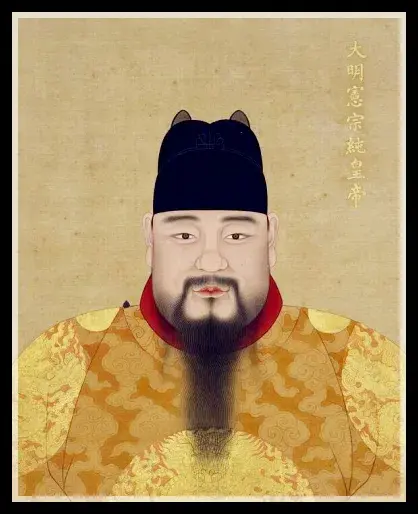
Chenghua Liting (成化犁庭, also known as the Campaign of Dinghai) was a decisive joint punitive military expedition launched in 1467 (from August to October in the 3rd year of the Chenghua reign) by Emperor Xianzong of the Ming Dynasty in military alliance with the Joseon Kingdom against the Jianzhou Jurchens. The term Liting originates from the Book of Han, meaning to completely plow under and eradicate an enemy's fortified lair like turning over agricultural soil. In the early Chenghua period, Jianzhou Jurchen chieftains Dongshan and Li Manzhu repeatedly led border raids across Liaodong and northern Joseon, looting grain and abducting thousands of civilians into slavery. After diplomatic warnings failed, Ming Regional Commander Zhao Fu detained and lawfully executed the defiant chieftain Dongshan at Guangning. Subsequently, Emperor Xianzong mobilized tens of thousands of elite imperial troops led by Left Censor-in-Chief Li Bing and General Zhao Fu in a three-pronged advance, while issuing an imperial decree directing Joseon to dispatch ten thousand troops to sever the Jurchens' eastern escape routes. Converging deep within the rugged mountain forests of the Suzi River, the Ming-Joseon allied forces dismantled hundreds of fortified wooden redoubts, executed Li Manzhu and over nine hundred enemy combatants, captured hundreds of insurgents, and liberated more than 1,100 captive civilians. The campaign dealt a devastating blow to the Jianzhou Jurchen leadership, pacifying the northeastern frontier for half a century.
Dongshan visits Beijing under the guise of tribute but verbally abuses officials, demanding excessive wealth and threatening border pillage.
Official Gao Wang proposes luring Dongshan into custody; Emperor Xianzong instructs Regional Commander Zhao Fu to execute the plan.
Zhao Fu detains Dongshan at Guangning; when Dongshan stabs an interpreter during resistance, Ming forces execute him after subduing his retainers.
Emperor Xianzong appoints Li Bing and Zhao Fu to command operations, neutralizes neighboring Jurchen tribes, and directs Joseon to mobilize.
Zhao Fu and Li Bing lead the central army from Fushun toward Gucheng, while Han Bin and Wu Zhong advance along the flanks.
Joseon Commander Kang Sun and General Nam I lead ten thousand elite soldiers across the Yalu River, targeting the stronghold of Wumifu.
Nam I's assault force storms Wumifu and executes Li Manzhu and his son; Ming troops raze Dongshan's strongholds along the Suzi River.
Ming and Joseon forces converge; 923 insurgents are slain, and 1,172 captive civilians are liberated from slavery.
Emperor Xianzong pardons surviving Jurchen heirs, granting hereditary commissions to Dongshan's and Li Manzhu's descendants to restore peace.
The Ming court reinforces frontier garrisons and builds the Liaodong Border Wall from Fushun to Fengcheng and Kaiyuan.
Beginning in the Yongle era, the Ming court established the Jianzhou Guard and the Jianzhou Left Guard, implementing a policy of loose-rein administrative control and appointing indigenous tribal leaders to hereditary imperial commissions, including Li Manzhu and Dongshan. With the continuous introduction of iron agricultural implements and farming techniques from the Central Plains, the agrarian economy of the Jianzhou Jurchens developed rapidly, leading to a marked demographic expansion. However, the tribal confederacies retained primitive customs of plunder and coercive enslavement alongside their emerging agrarian lifestyle.
During the early Chenghua reign, severe climatic disruptions in Liaodong and friction over border markets prompted Jurchen chieftains to violate imperial treaties. While nominally presenting tribute at the imperial court to obtain generous gifts, chieftains Li Manzhu and Dongshan secretly encouraged armed horsemen to raid Ming garrisons in Kaiyuan, Tieling, and Fushun. The raiders burned villages, looted grain and cattle, and captured tens of thousands of Han and Korean border residents to sell into servitude or force into domestic bondage, severely destabilizing frontier security across southern Manchuria.
The Ming court initially sought to resolve frontier border frictions through diplomatic persuasion and imperial warnings. In April 1467 (the 3rd year of Chenghua), Dongshan, the regional commander of the Jianzhou Left Guard, arrived in Beijing under the pretext of offering tribute horses and seeking imperial reconciliation. However, during imperial court audiences, Dongshan exhibited blatant defiance, and his retainers publicly hurled verbal abuses at imperial interpreters. Emperor Xianzong sternly admonished Dongshan for his ingratitude and explicitly warned that any further frontier incursions would be met with military retribution. Although Dongshan formally prostrated himself, he voraciously demanded excessive amounts of gold, silver, and silk, openly boasting to companions that upon his return to Liaodong, he would forge an alliance with the Haixi and Wild Jurchens to mount large-scale raids against the empire.
True to his word, Dongshan intensified his marauding expeditions immediately upon returning to Liaodong, laying waste to civilian settlements between Kaiyuan and Liaoyang. In July 1467, Ministry of Rites official Gao Wang submitted a memorial advising: "Dongshan is untamable and deceitful. The frontier will never know tranquility unless he is eliminated. The court should lure him with gifts under the guise of an imperial audience and direct Regional Commander Zhao Fu to arrest and execute him." Emperor Xianzong approved the stratagem. When Dongshan returned with a delegation, Zhao Fu detained his party at Guangning (modern Beizhen, Liaoning). When instructed to return all abducted civilians, Dongshan drew a concealed dagger and stabbed a court interpreter. Ming guards promptly subdued him and locked him in irons. Dongshan's subordinate chieftain Hataha mobilized 110 warriors to storm the station, but Zhao Fu had stationed archers who shot dead 26 rebels, capturing the rest. Dongshan was summarily beheaded at the Guangning garrison gates.
Following Dongshan's execution, surviving chieftains mobilized for retaliation under Li Manzhu. Recognizing that half-measures would leave perpetual border instability, Emperor Xianzong resolved to carry out a comprehensive campaign to dismantle the Jurchen military infrastructure.
In August 1467, the emperor appointed Left Censor-in-Chief Li Bing to oversee military operations alongside Regional Commander Zhao Fu, organizing a punitive force of tens of thousands of veteran troops. To isolate the Jianzhou Guard, Ming emissaries were dispatched to the Haixi and Wild Jurchen tribes, effectively neutralizing potential tribal alliances through diplomatic reassurances. Simultaneously, Emperor Xianzong dispatched an imperial envoy to King Sejo of Joseon, declaring that the Jianzhou Jurchens were a shared menace and ordering the deployment of elite Joseon forces along the Yalu and Tumen rivers to pinch off eastern retreat routes. A coordinated strategic encirclement was thus established across the northeastern theater.
In September 1467, as autumn winds chilled the Manchurian frontier, General Zhao Fu and Left Censor-in-Chief Li Bing completed their military muster of fifty thousand troops at Shenyang. Taking into account the rugged mountainous terrain of the Jianzhou strongholds, Zhao Fu divided his army into three operational wings to execute a coordinated converging encirclement:
The central column was led personally by Zhao Fu and Li Bing as the main strike force. In late September, the central army advanced from Fushun Pass, crossing Mount Baodao and Mount Zhanyu before surmounting the treacherous precipices of the Five Ridges. Forcing their way across the Suzi River, they drove straight toward Gucheng (modern Xinbin Manchu Autonomous County), the primary stronghold of Dongshan's Jianzhou Left Guard. Utilizing combined infantry and cavalry tactics spearheaded by firearms and repeating crossbows, the central column rapidly breached frontier redoubts.
The right column was placed under Regional Commander Han Bin, who marched out from Lianshanguan and Tongyuanbao to enter through Aiyang Pass (northeast of modern Fengcheng). This wing sealed off southern mountain passes, blocking any Jurchen retreat toward coastal areas.
The left column was commanded by Right Vice Censor-in-Chief Wu Zhong, advancing out of Tieling through dense northern forests. This movement severed communication lines between the Haixi Jurchens and Jianzhou, providing flank security for the primary assault.
While the Ming columns pressed eastward, Joseon forces initiated operations from the south. Upon receiving the imperial edict, the Joseon court appointed Senior Councilor Kang Sun as Supreme Commander, with Eo Yuso commanding the left wing and Nam I leading the right wing. Mobilizing ten thousand elite cavalry and infantry equipped with field artillery and ample supplies, the Joseon army crossed the Yalu River on September 27.
Maintaining strict discipline and rapid operational mobility, the Joseon forces marched toward Wumifu (modern northern Huanren Manchu Autonomous County), the mountain headquarters of elder chieftain Li Manzhu. Chieftains Eo Yuso and Nam I launched a dawn assault from two directions. Li Manzhu, preoccupied with reorganizing remnant forces after Dongshan's death, was taken completely by surprise as Joseon horsemen broke through perimeter stockades with fire arrows and crossbow volleys.
During the fierce engagement at Wumifu, the elderly chieftain Li Manzhu and his son Gunaha retreated into a fortified cavern, resisting tenaciously. Joseon General Nam I scaled the precipitous cliffs at the head of an elite assault detachment, overrunning the cavern redoubt. Li Manzhu and Gunaha were killed in combat, and dozens of their immediate family members were taken prisoner.
Concurrently, the Ming central column engaged Dongshan's remaining forces along the Suzi River. Clad in heavy armor and supported by Divine Engine division hand-cannoneers, Ming troops stormed successive defensive fortifications. The imperial army swept through the core settlements of the Jianzhou Guard, torching thousands of wooden stockades, grain storehouses, and metallurgy workshops. Stripped of shelter and provisions, surviving Jurchen stragglers were systematically routed throughout the surrounding forests.
In October 1467, Ming and Joseon forces linked up, successfully concluding the month-long joint punitive campaign. Official tallies verified by the Ministry of War demonstrated substantial battlefield success:
The Ming columns killed 637 insurgent combatants, captured 94 warriors, took custody of 151 dependents, and successfully liberated 1,165 captive Han Chinese civilians from Jurchen encampments. The Joseon expeditionary force killed 286 insurgent combatants, captured 23 fighters and dependents, and liberated 7 captive frontier civilians.
In total, the allied armies killed 923 Jurchen combatants, captured 117 prisoners of war, secured 151 dependents, and rescued 1,172 enslaved civilians, while confiscating thousands of horses, livestock, and armaments. The two core administrative and military entities of the Jianzhou Jurchens—Li Manzhu's Jianzhou Guard and Dongshan's Jianzhou Left Guard—were dismantled, with their primary leadership eradicated and military strength broken.
Following the victory, Emperor Xianzong refrained from total extermination, adhering to the traditional imperial doctrine of punishing rebel leaders while pacifying the general population. The Ming court extended pardons to surviving juvenile heirs, permitting Dongshan's son Tuoluo and Li Manzhu's grandson Wanzhetu to inherit hereditary commissions as tribal commanders, thereby restoring tributary relations and stabilizing the frontier economy.
Nonetheless, recognizing that the Jurchen tribes might regain strength in the future, the court overhauled the regional defense system. Following recommendations from provincial inspectors, defensive garrisons and artillery deployments were substantially reinforced at Fushun Pass, Qinghe Castle, and Aiyang Castle. Furthermore, Emperor Xianzong allocated imperial treasury funds to construct the expansive Liaodong Border Wall, stretching from Fushun southward to Fengcheng and northward toward Kaiyuan. Supported by watchtowers and beacon stations, the Liaodong Border Wall established an effective barrier against nomadic horsemen, anchoring regional defensive stability for the next century.
In October 1467, the Chenghua Liting campaign concluded in a complete military triumph for the Ming-Joseon alliance. Ming forces captured and lawfully executed the chief instigator Dongshan at Guangning, while Joseon forces eliminated Li Manzhu and his son Gunaha at Wumifu, completely leveling tribal settlements developed over five decades. The allied armies killed 923 combatants, captured hundreds of insurgents, and liberated 1,172 abducted Ming and Joseon civilians. Deprived of leadership and military capacity, remnant Jurchen groups fled deep into the Manchurian wilderness, subsequently sending tribute to reaffirm their submission to the Ming court.
Chenghua Liting fundamentally reshaped the geopolitical landscape of northeastern Asia during the mid-Ming period. First, it eliminated the primary security hazard facing Liaodong, inaugurating half a century of sustained peace and agricultural revival from the Chenghua reign through the early decades of the 16th century, enabling thriving frontier markets between Han and Jurchen populations. Second, the campaign catalyzed a fundamental overhaul of Ming defensive architecture; by constructing the Liaodong Border Wall between Fushun, Fengcheng, and Kaiyuan, the Ming government transitioned from passive garrison defense to an integrated, fortified frontier network. Third, the campaign remains an exemplary model of coordinated military operations within the traditional tribute framework, demonstrating Ming imperial authority in stabilizing East Asian regional security.