Ming Taizu Institutes the Brocade-Clad Guard
Zhu Yuanzhang establishes the Jinyiwei and creates the Northern Judicial Pacification Office with its independent imperial dungeons.
Ming Dynasty (明朝) · HISTORICAL EVENT
厂卫制度确立
The Establishment of the Chang-Wei System (厂卫制度确立, Chang-Wei Zhidu Queli) marked a defining turning point in the extreme centralization of despotic autocracy during the Ming Dynasty. The designation "Chang-Wei" (Depots and Guards) refers collectively to the imperial secret police, espionage, interrogation, and bodyguard organizations answering directly to the throne. The "Guard" (Wei) refers to the Brocade-Clad Guard (Jinyiwei), instituted by…
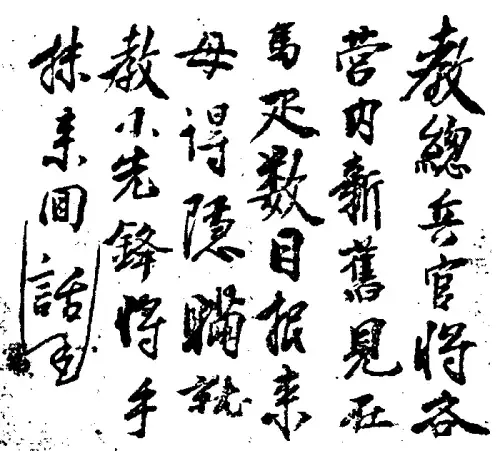
The Establishment of the Chang-Wei System (厂卫制度确立, Chang-Wei Zhidu Queli) marked a defining turning point in the extreme centralization of despotic autocracy during the Ming Dynasty. The designation "Chang-Wei" (Depots and Guards) refers collectively to the imperial secret police, espionage, interrogation, and bodyguard organizations answering directly to the throne. The "Guard" (Wei) refers to the Brocade-Clad Guard (Jinyiwei), instituted by Emperor Taizu (Zhu Yuanzhang) in 1382 CE; the "Depots" (Chang) denote the Eastern Depot (Dongchang), established by Emperor Chengzu (Zhu Di) in 1420 CE, and the Western Depot (Xichang), created by Emperor Xianzong in 1477 CE. Possessing sweeping statutory mandates to execute covert surveillance, extrajudicial arrests, and torture, these organs operated independent imperial prisons (zhaoyu) entirely outside the oversight of regular judicial ministries (the Ministry of Justice, Censorate, and Grand Court of Revision). Led by senior eunuchs from the Directorate of Ceremonial commanding plainclothes military officers, the integrated Depot-Guard apparatus enabled sweeping bureaucratic purges and systemic political terror, fundamentally distorting late imperial Chinese statecraft.
Zhu Yuanzhang establishes the Jinyiwei and creates the Northern Judicial Pacification Office with its independent imperial dungeons.
Shocked by widespread judicial torture, Zhu Yuanzhang orders torture instruments burned and cases returned to the Ministry of Justice.
Following the Jingnan coup, Emperor Chengzu restores Jinyiwei privileges, utilizing Ji Gang to eliminate political dissidents.
Zhu Di creates the Eastern Depot under eunuch directorship, institutionalizing eunuch dominance over the imperial security apparatus.
Emperor Xianzong establishes the Western Depot, extending secret police abductions and interrogations across the provinces.
Eunuch Liu Jin founds the Palace Depot to monitor all administrative bureaus and rival intelligence services, initiating severe torture purges.
Lu Bing is appointed commander of the Jinyiwei, wielding unprecedented political influence through close coordination with the throne.
Wei Zhongxian utilizes the Eastern Depot and Jinyiwei to torture and execute Donglin leaders in the imperial dungeons.
Chongzhen eliminates Wei Zhongxian's faction, but later revives eunuch surveillance during the military crises of the late Ming.
The Ming Dynasty falls; the incoming Qing court abolishes the Depots and strips the Jinyiwei of secret police and judicial authority.
In 1380 CE (the 13th year of Hongwu), Emperor Taizu executed Chancellor Hu Weiyong on charges of treason and abolished the Grand Secretariats and prime ministership that had functioned for over a millennium, personally assuming direct control over the Six Ministries.
With executive power concentrated exclusively in the emperor's hands, administrative burdens expanded exponentially. Born into peasant poverty and possessing an intensely suspicious disposition, Zhu Yuanzhang harbored deep misgivings toward the founding military nobility and scholar-bureaucrats, fearing factionalism and subversion.
In his perception, traditional judicial bodies—such as the Censorate, Ministry of Justice, and Grand Court of Revision—were constrained by legal codes and bureaucratic fraternities, rendering them prone to mutual shielding. To monitor the private behavior and speech of subjects without administrative interference, Zhu Yuanzhang required a covert political police force answering solely to the monarch.
In 1402 CE (the fourth year of Jianwen), Prince of Yan Zhu Di captured Nanjing during the Jingnan Campaign, usurping the imperial throne from his nephew, the Jianwen Emperor. Upon ascending as Emperor Chengzu, he executed prominent loyalist ministers, including Fang Xiaoru, Qi Tai, and Huang Zicheng, alongside their extended families.
Having seized power through armed rebellion, Zhu Di was plagued by intense psychological anxiety regarding his dynastic legitimacy. Rumors persisted that the Jianwen Emperor had survived and escaped; scholar-officials secretly condemned the usurpation; and clandestine opposition simmered across the empire.
Zhu Di distrusted outer court officials, whereas palace eunuchs had rendered invaluable espionage service during his rebellion. Relying on palace domestics rather than outer-court bureaucrats, Zhu Di resolved to establish a dedicated intelligence hub managed directly by eunuchs to monitor both civil officials and the Brocade-Clad Guard.
While the Ming institutional framework codified comprehensive statutory laws in the Great Ming Code, an irreconcilable contradiction existed between written statutes and untrammeled imperial prerogative. Regular judges operated within procedural constraints, requiring concrete evidence and standardized sentencing guidelines; conversely, autocratic rule prioritized the immediate eradication of suspected dissent.
The creation of extrajudicial machinery that bypassed formal bureaucratic channels emerged as a permanent institutional temptation for Ming sovereigns. This internal requirement transformed temporary investigative devices into an enduring, systemic apparatus of state terror.
In 1382 CE (the 15th year of Hongwu), Zhu Yuanzhang abolished the Palace Retinue Guards and the Armored Regalia Office, instituting the Brocade-Clad Guard Imperial Command (Jinyiwei).
Beyond providing ceremonial escorts and personal imperial security, the Jinyiwei was invested with sweeping statutory powers of covert surveillance, investigation, and arrest. Within its administration, Zhu Yuanzhang created two specialized divisions: the Southern and Northern Judicial Pacification Offices (Nan-Bei Zhenfusi). The Northern Office was assigned exclusive jurisdiction over sensitive cases mandated directly by imperial decree, operating its own autonomous dungeons, historically termed the Imperial Prison (Zhaoyu).
Possessing sweeping warrants to interrogate, detain, and torture suspects without informing civilian magistrates, Jinyiwei plainclothes riders (tiqi) could apprehend any official or commoner nationwide. During the later Hongwu reign, Zhu Yuanzhang utilized the Jinyiwei to orchestrate sweeping treason purges—including the Hu Weiyong, Lan Yu, and Empty Stencils scandals—executing tens of thousands of founding nobles and civil administrators.
In 1387 CE, recognizing that rampant torture had generated widespread panic and systemic false convictions, Zhu Yuanzhang ordered the public burning of Jinyiwei torture instruments and transferred pending cases to the Ministry of Justice. However, this reform proved to be a temporary tactical reprieve rather than a permanent dismantling of the secret police system.
Upon taking the throne, Emperor Chengzu restored the operational privileges of the Jinyiwei, employing ruthless interrogators such as Ji Gang to eliminate political dissidents. Furthermore, to prevent outer military officers from monopolizing intelligence, Zhu Di established the Eastern Depot (Dongchang) in 1420 CE north of Dong'anmen in Beijing.
The Eastern Depot was commanded by the Director of the Directorate of Ceremonial, the second or third most powerful eunuch in the palace, titled the Grand Superintendent of the Eastern Depot (Tidu Dongchang Taijian). Its rank-and-file investigators and field operatives (fazi) were drawn directly from the elite ranks of the Jinyiwei.
The statutory reach of the Eastern Depot vastly exceeded that of the Jinyiwei. Depot spies monitored the Six Ministries, the Grand Secretariat, provincial market centers, and the private mansions of grandees. They listened for whispered sedition, official corruption, or factional intrigue, posting observers inside the Northern Judicial Pacification Office to supervise interrogations and placing watchers at palace gates to monitor officials attending court audiences.
Every evening, confidential intelligence reports were transcribed onto parchment slips and delivered straight to the inner palace for imperial review. Emperors utilized this stream of secret reports to track officials, while normal censorial channels were marginalized.
In 1477 CE (the 13th year of Chenghua), an occult conspiracy rattled the palace, prompting Emperor Xianzong to commission his trusted young eunuch Wang Zhi to establish the Western Depot (Xichang).
Wang Zhi extended intelligence tentacles across all thirteen provincial administrations. Officials and commoners alike were secretly abducted and subjected to waterboarding and beatings without official warrants. The Western Depot even arrested border generals and Vice Ministers of War without prior ministerial clearance, terrorizing the bureaucracy. Although Grand Secretary Shang Lu led senior ministers in protesting until the agency was dissolved, it was swiftly revived, operating until Wang Zhi's downfall in 1482 CE.
In 1508 CE (the third year of Zhengde), the notorious eunuch Liu Jin consolidated dictatorial power, reviving both the Eastern and Western Depots. Furthermore, he established the Palace Depot (Neixingchang) inside the Forbidden City under his personal control. The Palace Depot surveilled not only civilian officials, but also monitored the operatives of the Eastern and Western Depots and Jinyiwei. Suspects arrested by this inner agency endured branding, limb amputation, and ear-slitting, representing the peak of state terror until Liu Jin's execution in 1510 CE.
The profound dread inspired by the Chang-Wei apparatus stemmed from its institutionalization of gruesome physical torture and secret extrajudicial procedures.
The Northern Judicial Pacification Office operated an array of standardized torture devices, including iron fetters, leg-crushers (jiagun), and finger-vices (zangu), alongside horrific mutilation techniques such as the "pipa" (flaying the ribs with iron blades) and iron skull-clamps. When executing imperial floggings at court (tingzhang), the position of the supervising depot eunuch's boots signaled to the executioners whether the victim should be spared or beaten to death, resulting in dozens of outspoken remonstrators perishing on the palace flagstones.
During the Tianqi reign, powerful eunuch Wei Zhongxian took control of the Eastern Depot, collaborating with Jinyiwei commanders Tian Ergeng and Xu Xianchun to unleash terror against the reformist Donglin movement. Renowned scholar-officials such as Yang Lian, Zuo Guangdou, and Wei Dazhong were subjected to iron spikes driven into their skulls and red-hot irons pressed to their chests, dying in agony as statutory law was replaced by extrajudicial cruelty.
Prisoners held in the imperial dungeons were denied family visits and medical care, while corrupt wardens extorted bribes under threat of execution. Even when proven innocent, survivors frequently emerged permanently crippled, leading commoners to refer to the imperial prison as a living hell.
In 1628 CE (the first year of Chongzhen), the Chongzhen Emperor (Zhu Youjian) executed a swift purge of Wei Zhongxian's faction, forcing the eunuch to commit suicide, executing his confederates, and recalling provincial tax commissioners to restore judicial stability.
However, possessing a suspicious and vacillating character, Chongzhen soon succumbed to the same autocratic reliance on secret police. Amid foreign invasions by the Manchus and domestic peasant rebellions, he reinstated eunuch supervisors at the Eastern Depot and dispatched Jinyiwei agents to monitor military commanders, falsely imprisoning and executing key defense leaders such as Xiong Tingbi and Yuan Chonghuan.
In 1644 CE (the 17th year of Chongzhen), Li Zicheng's rebel armies captured Beijing, and Emperor Chongzhen hanged himself on Coal Hill. Entering the imperial capital, insurgent soldiers padlocked the Eastern Depot and demolished the imperial dungeons. Following their entry into China, the Qing Dynasty permanently abolished the Eastern and Western Depots, stripping the Jinyiwei of its investigative and judicial powers and reducing it to a ceremonial escort bureau (Luanyiwei), bringing 260 years of Ming secret police governance to a definitive end.
The establishment of the Chang-Wei apparatus destroyed the integrity of statutory law in imperial China. The legitimate three-fold judicial structure—comprising the Ministry of Justice, Censorate, and Grand Court of Revision—was completely neutralized.
The imperial prisons operated under arbitrary imperial decree rather than statutory codes, relying on torture and hearsay. Any scholar or commoner labeled an imperial target was subjected to secret arrest and indefinite detention, eradicating procedural justice and reducing the legal system to an arbitrary instrument of terror.
The primary structural consequence of subordinating the Jinyiwei to the Eastern Depot was the permanent institutionalization of eunuch dictatorship. Entrusting personal domestic servants with armed intelligence and extrajudicial authority guaranteed the recurring rise of corrupt eunuchs such as Wang Zhen, Liu Jin, and Wei Zhongxian.
Faced with omnipresent surveillance and the threat of torture in the imperial dungeons, the civil bureaucracy succumbed to widespread demoralization. Principled resistance eroded as opportunists aligned themselves with depot directors, corrupting Confucian moral values and eroding the professional ethos of the imperial civil service.
Far from stabilizing the regime, the Chang-Wei system intensified factional polarization between inner-court eunuchs and outer-court scholar-bureaucrats. The brutal suppression of the Donglin movement decimated experienced civilian leadership during a period of acute national crisis.
Simultaneously, dispatching depot agents into commercial regions to extort arbitrary revenues provoked urban rebellions, such as the Suzhou tax protests. When confronted by external Manchu invasions and domestic agrarian uprisings, the alienated administrative apparatus proved incapable of coordinated defense, ensuring the ultimate collapse of the Ming Dynasty.