Tang Capital Established at Chang'an
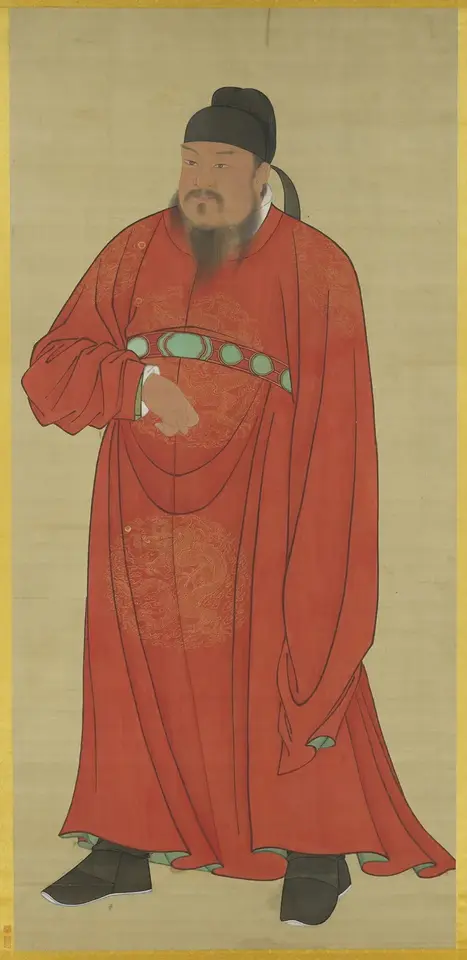
Emperor Gaozu ascended the throne, renaming Sui Daxing as Chang'an and establishing the capital of the Tang Dynasty.
Tang Dynasty (唐朝) · HISTORICAL EVENT
唐长安国际都市发展
The Development of Chang'an as an International Metropolis (618–755, from the founding of the Tang under Emperor Gaozu to the eve of the An Lushan Rebellion under Emperor Xuanzong) was the most glorious chapter in the urban history of medieval Eurasia. Establishing its capital at the Sui city of Daxing and renaming it Chang'an, the Tang dynasty inherited and deepened the cosmic grid plan designed by master architect Yuwen Kai based on the hexagrams of the…
The Development of Chang'an as an International Metropolis (618–755, from the founding of the Tang under Emperor Gaozu to the eve of the An Lushan Rebellion under Emperor Xuanzong) was the most glorious chapter in the urban history of medieval Eurasia. Establishing its capital at the Sui city of Daxing and renaming it Chang'an, the Tang dynasty inherited and deepened the cosmic grid plan designed by master architect Yuwen Kai based on the hexagrams of the Book of Changes (Yijing). Encompassing 87.27 square kilometers, the city was organized around the monumental 150-meter-wide Zhuque Avenue, flanked symmetrically by 108 enclosed residential wards and the thriving East and West markets. Tang emperors successively constructed Daming Palace and Xingqing Palace on elevated plateaus, completing an elaborate canal and defense network. During the High Tang, Chang'an's population exceeded one million, drawing tens of thousands of foreign merchants, diplomats, students, and clerics from Persia, Arabia, Sogdiana, Silla, and Japan. The West Market bustled with international commerce, while Qujiang Pool hosted imperial banquets, and Buddhist, Daoist, Christian, Zoroastrian, and Manichaean sanctuaries flourished side by side. As the undisputed eastern origin of the Silk Road, Chang'an stood as the largest and most prosperous cosmopolitan metropolis of the medieval world, shaping urban forms across East Asia.
Emperor Gaozu ascended the throne, renaming Sui Daxing as Chang'an and establishing the capital of the Tang Dynasty.
Emperor Taizong commenced construction of Yong'an Palace on the Longshou Plateau as a summer retreat for Emperor Gaozu, later renamed Daming Palace.
Syrian missionary Alopen arrived in Chang'an; Emperor Taizong authorized the translation of scriptures and the construction of the Daqin Monastery.
Master Xuanzang oversaw the construction of the Giant Wild Goose Pagoda at Da Cien Temple to preserve Sanskrit Buddhist texts.
Emperor Gaozong ordered the comprehensive expansion of Daming Palace, relocating imperial court governance to the complex the following year.
Emperor Xuanzong ascended the throne, expanding his princely residence into Xingqing Palace as metropolitan population exceeded one million.
Imperial engineers completed the Cao Canal and Guangyun Pool, gathering millions of bushels of southern tribute grain to supply the metropolis.
Rebel forces stormed Tongguan, forcing Emperor Xuanzong to flee to Sichuan and subjecting the capital to extensive plunder.
Insurgent armies entered the capital; palace halls and commercial markets were damaged by widespread fires and urban fighting.
Warlord Zhu Wen forcibly relocated the court to Luoyang, systematically dismantling palaces and residences, reducing the ancient capital to ruins.
The ancient Han capital of Chang'an had endured for over seven centuries, but by the late Northern and Southern Dynasties, its palaces were decaying, its drainage systems were clogged, and underground aquifers had turned saline. Furthermore, the northern shift of the Wei River threatened seasonal inundations. In 582 (Kaihuang Year 2), Emperor Wen of Sui commissioned master architect Yuwen Kai to survey the dry, elevated Longshou Plateau to the southeast, completing the new capital of Daxing in just nine months.
Yuwen Kai incorporated principles from the Rites of Zhou and the I Ching hexagrams into his design. Leveraging six natural ridges extending south from the Longshou Plateau, he mirrored the six lines of the Qian hexagram: line two ("dragon in the field") anchored the imperial palace, line three accommodated civilian ministries in the Imperial City, and line five supported royal temples to bless the realm. The city encompassed 87.27 square kilometers, establishing an enduring spatial template for the Tang Dynasty.
In 618, Emperor Gaozu Li Yuan accepted the abdication of Sui and established the Tang Dynasty, renaming the capital Chang'an to signify enduring peace. Emperor Taizong subsequently inaugurated the Zhenguan reign, pacifying the Eastern Tujue, Tuyuhun, Gaochang, and Western Tujue, earning the title of Heavenly Qaghan.
Imperial prestige and economic expansion reached extraordinary heights. As tributary missions arrived from across Eurasia and the Silk Road reopened, original palace complexes proved inadequate for imperial administration and foreign diplomacy. From the Zhenguan through the Kaiyuan eras, the Tang court expanded palaces, refined city walls, and excavated canals, transforming Chang'an from an administrative center into the premier international metropolis of Eurasia.
Tang Chang'an represented the ultimate realization of axial symmetry in Chinese urban design. The city was structured into three concentric zones: Outer City, Imperial City, and Palace City, covering 87.27 square kilometers. The city was organized around the great north-south meridian of Zhuque Avenue, stretching over 150 meters wide directly south from Chengtian Gate and Zhuque Gate, dividing the metropolis into two equal halves: Wannian County to the east and Chang'an County to the west.
The street network featured eleven north-south avenues and fourteen east-west streets, dividing residential zones into 108 enclosed wards (fang). Each ward was enclosed by two-meter-tall rammed-earth walls with internal crossroads and gates that closed at nightfall upon the striking of curfews. Poet Bai Juyi celebrated this immaculate order, writing that thousands of homes resembled a chessboard and twelve avenues spread like vegetable beds.
Chang'an's defensive walls reflected advanced medieval civil engineering. The outer ramparts were constructed from compacted loess earth, measuring nine to twelve meters thick at the base and over five meters high, surrounded by a deep moat. Twelve grand gates pierced the exterior walls, with three entrances on each flank. The primary southern portal, Mingde Gate, featured five parallel entryways each nearly six meters wide, reserved for imperial rituals and visiting foreign heads of state.
On the eastern wall, Chunming Gate received domestic canal traffic and tribute caravans from the Central Plains; on the western wall, Jinguang Gate and Kaiyuan Gate opened directly toward Central Asia. Kaiyuan Gate was revered as the Gateway of the Silk Road, outside of which stood a stone stele reading: "9,900 li west to Anxi." Monks, ambassadors, and Sogdian merchant caravans departed through this portal. City gates operated under military watches, opening at dawn drums and locking at evening gongs, providing impenetrable metropolitan security.
Early Tang monarchs resided in the low-lying Taiji Palace inherited from the Sui. However, the palace was humid and oppressive in summer, aggravating the chronic arthritis of Emperor Gaozong. In 634 (Zhenguan Year 8), Emperor Taizong began constructing Yong'an Palace on the northern ridge of the Longshou Plateau as a summer retreat for retired Emperor Gaozu, later renaming it Daming Palace.
In 662 (Longshuo Year 2), Emperor Gaozong ordered the comprehensive expansion of Daming Palace. Mobilizing master craftsmen from across the empire, construction was completed in just over a year, creating an imperial complex covering 3.2 square kilometers—4.5 times the size of Beijing's Forbidden City. Dominating the skyline south of Danfeng Gate, the complex featured the elevated Longwei Causeway leading to Hanyuan Hall for grand New Year ceremonies, Xuanzheng Hall for routine court councils, and Linde Hall for banquets hosting foreign envoys. Emperor Gaozong and Empress Wu Zetian relocated court governance to Daming Palace, creating the East Court that anchored the empire, supplemented later by Emperor Xuanzong's Xingqing Palace to the south.
Commercial exchange in Chang'an was concentrated within the state-administered East Market and West Market. The East Market, located east of Zhuque Avenue across 0.92 square kilometers, served court grandees, aristocrats, and examination candidates, specializing in regional silks, stationeries, precious metal crafts, and hostels.
Conversely, the West Market was the celebrated Golden Market and the primary international emporium of medieval Eurasia. Situated beside Kaiyuan Gate across more than one square kilometer, it gathered tens of thousands of foreign merchants from Persia, Arabia, Sogdiana, and India. The market was organized into 220 specialized guilds, featuring Persian shops, jewelry stalls, imported silk repositories, Central Asian wine taverns, and specialized deposit houses (gui fang). Market magistrates regulated transactions, beating drums three hundred times at noon to open trade and striking gongs three hundred times before sunset to close, overseeing mountainous accumulations of international merchandise.
With the explosion of long-distance trade, Chang'an pioneered early financial and credit institutions. Within the West Market, safe-deposit houses (gui fang, also known as zhi ku) provided affluent merchants and foreign traders with secure vaults for bullion, issuing paper receipts (tie) that could be transferred to settle commercial debts, representing early ancestors of bank accounts and paper checks.
Furthermore, to eliminate the perils of transporting thousands of heavy copper cash strings across bandit-infested highways, merchants and the court developed flying money (fei qian) during the mid-Tang. Merchants deposited cash with provincial liaison offices (jin zou yuan) in Chang'an, receiving written vouchers that could be redeemed for equivalent copper coins upon arrival in southern trading hubs. This credit transfer system slashed transaction costs, stimulating both domestic commerce and trans-continental Silk Road trade.
Within the city walls, the 108 residential wards were lively micro-communities. Each ward was bisected by central lanes into four quarters, further subdivided into residential alleys (qu xiang). Wards were self-contained, possessing communal wells, grain mills, bakeries, and apothecaries. A ward head (fang zheng) oversaw gates, maintained census rolls, and policed public order, ensuring compliance with morning and evening curfews.
The social composition of the wards was diverse. Wards near the palace, such as Chongren, Shengye, and Anding, housed aristocratic estates and examination hostels, such as the mansion of Duke Guo Ziyi, which occupied half a ward and housed three thousand kin and retainers. Southern wards accommodated artisans, common laborers, and renting scholars. By the High Tang, commercial pressures breached strict curfew rules in wards adjacent to the East Market, where teahouses and wine shops operated into the night, nurturing the earliest urban night markets in Chinese history.
The palaces of Chang'an represented the structural zenith of ancient timber-frame architecture. Hanyuan Hall, the main throne room of Daming Palace, measured eleven bays wide and five bays deep, constructed upon a fifteen-meter-high rammed-earth terrace. Flanked by Xiangluan and Qifeng pavilions linked by elevated covered galleries, the hall was approached via the sloping Longwei Causeway, giving imperial audiences an aura of celestial grandeur.
Linde Hall formed a multi-hall complex encompassing over 5,000 square meters—twice the size of the Hall of Supreme Harmony in Beijing—capable of accommodating three thousand guests at state banquets. Tang timber architecture featured massive interlocking bracket sets (dougong) that extended outward by up to a third of column height, providing structural flexibility against earthquakes while projecting an aesthetic of majestic strength.
During its zenith, Chang'an's population surpassed one million inhabitants, including twenty to fifty thousand foreign residents, diplomats, students, and clerics, making it the only truly cosmopolitan metropolis of its scale in the medieval world.
Neighborhoods adjacent to the West Market, including Changshou, Buzheng, and Liquan wards, evolved into foreign quarters. Sogdian merchants from Samarkand, Bukhara, and Kesh adopted Chinese surnames and served as imperial musicians, bodyguards, and merchants. Foreign dignitaries held high state offices: Japanese envoy Abe no Nakamaro served as Director of the Palace Library for decades, forming close friendships with Li Bai and Wang Wei; Silla scholar Choe Chiwon passed the Jinshi examinations to become a renowned writer; Persian Prince Peroz received military commissions and lived out his days in the capital. Foreign fashions permeated elite society: noblewomen wore Central Asian boots and veils, sampled grape wines, and danced the whirling Sogdian dances to Persian music.
To solve water supply, drainage, and transport logistics, the Tang court expanded canal networks, diverting southern rivers into the Longshou, Qingming, Yong'an, Tonghua, and Cao canals. These waterways flowed across wards into palace lakes, lining avenues with weeping willows and keeping summer streets clean. Underground ceramic and stone conduits managed urban drainage efficiently.
In 742 (Tianbao Year 1), Li Qiwu excavated the Cao Canal, while Wei Jian built the Guangyun Pool outside the eastern gates, gathering millions of bushels of southern grain transports. In the southeastern corner of the city, the court landscaped Qujiang Pool into an imperial pleasure park. Surrounded by pavilions and apricot orchards, Qujiang Pool hosted the celebratory Banquets for newly passed Jinshi scholars. Two handsome young graduates were designated Flower-Seeking Envoys to ride across the capital gathering peonies, followed by the tradition of inscribing their names upon the Giant Wild Goose Pagoda, an event celebrated by young Bai Juyi.
Chang'an welcomed diverse world religions with tolerance, allowing Buddhist temples, Daoist shrines, and foreign sanctuaries to flourish side by side. Buddhism thrived at Da Xingshan Temple, Qinglong Temple, and Da Cien Temple, where the Giant Wild Goose Pagoda was built to house Sanskrit sutras brought by Master Xuanzang from India, who translated over 1,300 scrolls in the capital.
Daoism was revered as the imperial faith at Zongsheng and Xuandu abbeys. In 635 (Zhenguan Year 9), Syrian missionary Alopen introduced Nestorian Christianity (Jingjiao), receiving imperial permission from Emperor Taizong to build the Daqin Monastery in Yining Ward, commemorated by the bilingual Nestorian Stele in 781. Zoroastrianism (Xianjiao) maintained fire altars in Buzheng and Liquan wards under the administration of the Sabao Bureau; Manichaeism and early Islam also received imperial sanction, exemplifying a rare era of harmonious interfaith coexistence.
The outbreak of the An Lushan Rebellion in 755 shattered the golden age. Rebel armies breached Tongguan, forcing Emperor Xuanzong to flee to Sichuan, exposing the capital to its first major sack. Over subsequent decades, Tibetan incursions, military mutinies, and the Huang Chao Rebellion repeatedly battered the city.
In 896, warlord Li Maozhen assaulted Chang'an, reducing palaces to ashes. In 904 (Tianyou Year 1), warlord Zhu Wen compelled Emperor Zhaozong to move the capital to Luoyang, ordering the systematic dismantling of Chang'an's palaces, temples, and civilian residences, floating the salvaged timber down the Wei and Yellow rivers. Regional general Han Jian abandoned the outer walls and palaces, consolidating defenses within a contracted fortress built over the old Imperial City. After three centuries as the premier world metropolis, Tang Chang'an fell into ruin.
The development of Tang Chang'an represented the highest achievement of pre-modern urban planning. Its 87.27-square-kilometer footprint, rigid north-south axis, modular ward system, and sophisticated water management remained unparalleled in the medieval world. Covering 2.4 times the area of Han Chang'an, 1.4 times Ming-Qing Beijing, and over seven times Byzantine Constantinople, it established a lasting template of imperial spatial grandeur.
For over two centuries, Chang'an functioned as the primary crossroads of Eurasian civilization. It was the starting point from which Chinese silk, tea, ceramics, and papermaking flowed westward, and the destination where Central Asian music, dance, astronomy, and world religions converged. This cosmopolitanism gave rise to High Tang civilization, providing a model of peaceful inter-civilizational exchange.
The urban form of Tang Chang'an exerted profound influence across East Asia. During the Nara and Heian periods, Japan modeled Heijo-kyo (Nara) and Heian-kyo (Kyoto) directly on Chang'an's grid avenues and dual market layout. Similarly, Silla's capital of Gyeongju and the Balhae capital of Shangjing Longquanfu were replicas of Chang'an, spreading classical Chinese metropolitan planning throughout East Asia.
Dynastic and modern historians have praised the cosmopolitan grandeur of Tang Chang'an. The Treatise on Geography in the Old Book of Tang observes: "Chang'an stands accessible from all directions, the convergence of all under heaven. The imperial territory extends for a thousand li, home to the Son of Heaven. Towering palaces welcome envoys from ten thousand nations; ancient and modern capitals cannot compare."
Tang poet Du Fu wrote of the era: "Remembering the zenith of the Kaiyuan days, even small towns held ten thousand households... Rice flowed like oil and grain was white, public and private granaries were full." Modern urban historians and Western sinologists recognize Tang Chang'an as the only genuine world metropolis (cosmopolis) of the seventh and eighth centuries, representing the highest peak of medieval urban civilization in demographic scale, economic vitality, and cultural tolerance.