Emperor Taiwu Formulates Unification Plan
Tuoba Tao ascends the throne and adopts Cui Hao's strategic sequence to conquer northern rivals.
Northern Wei Dynasty (北魏) · HISTORICAL EVENT
北魏统一北方
The Northern Wei unification of northern China was a decisive decade-long military conquest spanning from 429 to 439 (from the 2nd year of Shenjia to the 5th year of Taiyan) wherein Emperor Taiwu (Tuoba Tao), third sovereign of Northern Wei, led his Xianbei cavalry to extinguish regional warlord regimes and reunify the Yellow River basin. Following the collapse of the Western Jin in the Disaster of Yongjia, northern China fractured into the chaotic…
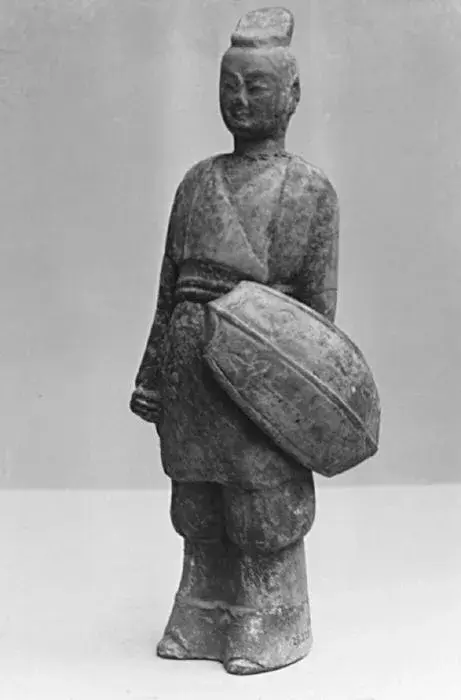
The Northern Wei unification of northern China was a decisive decade-long military conquest spanning from 429 to 439 (from the 2nd year of Shenjia to the 5th year of Taiyan) wherein Emperor Taiwu (Tuoba Tao), third sovereign of Northern Wei, led his Xianbei cavalry to extinguish regional warlord regimes and reunify the Yellow River basin. Following the collapse of the Western Jin in the Disaster of Yongjia, northern China fractured into the chaotic Sixteen Kingdoms period, marked by incessant wars and economic devastation. In 386, Tuoba Gui revived the state of Dai at Daibei, renaming it Wei and establishing his capital at Pingcheng to launch the dynasty's rise. Ascending the throne in 423, Tuoba Tao demonstrated exceptional strategic acumen. Advised by master strategist Cui Hao, Emperor Taiwu executed a grand plan: first crushing the nomadic Rouran Khaganate to eliminate threats to his rear, and then sequentially subduing Hu Xia, Northern Yan, and Northern Liang. In 429, Tuoba Tao led a long-range cavalry expedition across the Gobi Desert to smash the Rouran Khaganate, forcing Khagan Datan to flee to his death and securing the submission of three hundred thousand Gaoche nomads. Returning south, Northern Wei conquered Hu Xia's fortress capital of Tongwan City by 431, took Longcheng to extinguish Northern Yan in 436, and marched across the desert to capture Guzang and absorb Northern Liang in 439. Spanning a single decade, these campaigns ended 135 years of regional partition, reunifying northern China and establishing the geopolitical boundary between the Northern Dynasties and the southern Liu Song dynasty.
Tuoba Tao ascends the throne and adopts Cui Hao's strategic sequence to conquer northern rivals.
Tuoba Tao draws the Hu Xia cavalry outside Tongwan City, routing the defenders and seizing the citadel.
Taiwu leads an army across the Gobi Desert, defeating the Rouran Khaganate and absorbing the Gaoche tribes.
Northern Wei divisions crush Helian Ding at Pingliang, incorporating Shaanxi and eastern Gansu into the empire.
Wei cavalry advance across the frozen Yellow River, crushing Dao Yanzhi's Yuanjia Northern Expedition.
Tuoba Tao leads imperial columns into western Liaoning, besieging Longcheng and devastating outer fortresses.
E Qing storms Longcheng, Feng Hong flees to Goguryeo, and Northern Wei annexes western Liaoning.
Tuoba Tao leads the central divisions across the Tengger Desert, besieging Guzang.
Juqu Mujian surrenders Northern Liang, ending 135 years of regional partition and unifying northern China.
Tuoba Tao repels the second Yuanjia expedition, driving his cavalry to Mount Guabu to confirm northern dominance.
Following the War of the Eight Princes and the Disaster of Yongjia in the early fourth century, the Western Jin dynasty collapsed, plunging northern China into the prolonged chaos of the Five Barbarians and Sixteen Kingdoms. Non-Han chieftains and warlords representing the Xiongnu, Jie, Xianbei, Di, and Qiang carved out regional empires, including Han-Zhao, Later Zhao, Former Yan, Former Qin, Later Yan, and Later Qin.
For over a century, the Central Plains endured unending warfare, population massacres, and territorial fragmentation. Towns and metropolises were repeatedly sacked and burned, fertile farmlands reverted to wilderness, and hydraulic infrastructure fell into decay. High-ranking Han gentry fled south across the Yangtze River, while remaining northern populations withdrew behind fortified agrarian hilltop redoubts to defend their lives. Ordinary people grew weary of the ceaseless bloodshed, longing for a unified authority capable of restoring peace and agricultural productivity.
Amidst this protracted turmoil, the Tuoba clan of the Xianbei people, originating from the Greater Khingan Mountains, expanded steadily across the northern frontier. In 386 (the 11th year of Taiyuan of Eastern Jin), young chieftain Tuoba Gui convened an assembly at Niuchuan, re-establishing the state of Dai and changing the dynastic title to Wei, known to history as Northern Wei.
Tuoba Gui executed structural reforms, breaking up traditional nomadic clan divisions and settling his followers as sedentary agriculturalists. At the Battle of Canhebei in 395, Tuoba Gui crushed the veteran armies of Later Yan, capturing the fertile plains of Hebei. In 398, he transferred the capital to Pingcheng (modern Datong, Shanxi), adopting formal imperial titles, bureaucratic systems, and statutory legal codes.
His successor, Emperor Mingyuan (Tuoba Si), pushed imperial boundaries south of the Yellow River, seizing strategic bastions including Luoyang, Huatai, and Hulao Pass from the southern Liu Song dynasty. By the accession of Emperor Taiwu (Tuoba Tao) in 423, Northern Wei possessed the agricultural resources, military organization, and strategic depth necessary to launch comprehensive wars of unification.
At Tuoba Tao's accession, Northern Wei's geopolitical environment remained perilous. In the northern steppes, the nomadic Rouran Khaganate launched regular cavalry raids deep into the Wei heartland, threatening the capital at Pingcheng; across Shaanxi and Gansu, the Hu Xia state established by Helian Bobo occupied the fortress of Tongwan City and the fertile Guanzhong plain; in western Liaoning, the Chinese-ruled Northern Yan regime under Feng Hong allied with the Rouran and southern dynasties; in the Hexi Corridor, Northern Liang under Juqu Mujian dominated the Silk Road trade; and to the south, the expansive Liu Song dynasty challenged Wei across the Huai River.
Confronting multiple adversaries, most imperial courtiers advocated passive defense. However, the prominent Han scholar-advisor Cui Hao advocated an aggressive sequence of expansion. Cui Hao argued that the Rouran, relying on their vast grasslands, would never anticipate an expedition across the deep desert; once the northern rear was secured, small regional regimes like Hu Xia, Northern Yan, and Northern Liang could be conquered in rapid succession. Convinced by Cui Hao's counsel, Tuoba Tao resolved to commit the empire to a decade of continuous campaigns.
The first phase of the unification wars focused on neutralizing the Rouran Khaganate. Since the reign of Tuoba Gui, Rouran cavalry had regularly exploited Northern Wei southern expeditions to raid the suburbs of Pingcheng. In May 429 (the 2nd year of Shenjia), Emperor Taiwu overruled conservative opposition to mount a long-range cavalry offensive into the northern steppes.
Tuoba Tao ordered Prince Changsun Han to advance along the eastern route toward Mount Heishan, while the emperor personally guided the main cavalry and light infantry columns down the southern route toward the Lishui River. Discarding heavy wagons, Wei soldiers carried dried grain rations and pressed forward rapidly. Overcoming the arid expanses of the southern Gobi, the vanguard reached the Rouran royal headquarters at Shouxiang City. Unprepared for imperial divisions appearing in the steppe interior, Khagan Datan set fire to his encampments and fled westward.
Tuoba Tao pursued the retreating nomads across thousands of miles to the Ruoshui River. Imperial forces captured members of the nomadic royal clan, seizing over one million horses, cattle, and sheep. Datan fell ill from shock and died in the desert, and thirty thousand tents of the Gaoche (Tiele) people surrendered to Northern Wei. Tuoba Tao relocated these populations south of Pingcheng to serve as auxiliary cavalry and agricultural laborers, removing the nomadic threat to his northern frontier.
With the northern steppes secured, Tuoba Tao directed his armies against the Hu Xia state, established by the Tiefu Xiongnu chieftain Helian Bobo. Centered at Tongwan City (north of modern Jingbian, Shaanxi), Hu Xia possessed white-clay ramparts mixed with glutinous rice mortar, celebrated as an impregnable fortress. Following Helian Bobo's death, internal succession conflicts weakened the regime.
Recognizing that frontal assaults against the fortifications would invite severe casualties, Tuoba Tao executed a tactical feint during his 427 campaign. He concealed his heavy cavalry within the forested defiles of the Heishui valley, deploying several thousand light cavalry before the city walls to stage a mock defeat. Convinced that the Wei troops were disorganized and weak, Hu Xia ruler Helian Chang marched out with thirty thousand elite cavalry in pursuit.
When the Xia columns reached the riverbanks, an abrupt dust storm blew directly into the faces of the pursuers. Exploiting the blinding dust, Tuoba Tao led his concealed shock cavalry in a devastating flank charge. Although Tuoba Tao's horse was killed, the emperor fought on foot, slaying Xia commanders and rallying his men. The Xia army collapsed, and Wei cavalry pursued the routed survivors through the open gates of Tongwan City, capturing Helian Chang's brother Helian Ding, royal concubines, and vast quantities of treasure.
Helian Chang retreated to Shanggui, where he was captured by general An Yuan in 430. Helian Ding gathered surviving forces at Pingliang, only to be crushed by Tuoba Tao's divisions in 431. Attempting to cross the Yellow River to escape into the Hexi Corridor, Helian Ding was captured by Tuyuhun ruler Murong Mugui and delivered to Northern Wei for execution. With the fall of Hu Xia, Northern Wei annexed northern Shaanxi, eastern Gansu, and the Guanzhong plains.
With the west pacified, Northern Yan in western Liaoning remained an obstacle on Northern Wei's eastern flank. Governed by Feng Hong from Longcheng (modern Chaoyang, Liaoning), Northern Yan allied with Liu Song and the Rouran to harass the border. In August 432 (the 1st year of Yanhe), Emperor Taiwu led an expedition into western Liaoning.
Imperial divisions advanced through the mountain corridors, capturing the fortresses of Shicheng and Bailang before encircling Longcheng. Feng Hong barred the city gates, seeking military intervention from Jiankang. Adopting a strategy of attrition, Tuoba Tao dispatched general Yang Baoxian to clear surrounding counties, relocating tens of thousands of Han and Xianbei households to Youzhou.
In May 436 (the 2nd year of Taiyan), Northern Wei commanders E Qing and Gu Bi launched a coordinated assault against Longcheng. With supplies exhausted and mutinous officers deserting to the Wei lines, Feng Hong burned his palaces and fled with several thousand followers into Goguryeo. Northern Yan collapsed, and Northern Wei incorporated all of western Liaoning and Liaodong, unifying the northeastern seaboard.
While Northern Wei concentrated on absorbing Hu Xia and Northern Yan, the southern Liu Song dynasty attempted to seize the Central Plains. In 430, Emperor Wen of Song launched the first Yuanjia Northern Expedition, dispatching general Dao Yanzhi with fifty thousand infantry, cavalry, and riverine troops to recover Luoyang, Hulao, and Huatai south of the Yellow River.
Confronting threats on two fronts, Tuoba Tao maintained strategic composure. Acting on Cui Hao's counsel, Tuoba Tao recognized that summer floods favored southern riverboats over northern horsemen. He ordered southern garrisons to evacuate their posts along the southern bank, drawing the Song forces forward into empty citadels along an overextended two-thousand-li perimeter.
In October, winter froze the Yellow River solid. Seizing the opening, Tuoba Tao led his cavalry across the ice. Northern Wei commanders An Yuan and Changsun Daosheng crushed Song divisions at Jinlongcheng and Luoyang. Trapped by frozen waterways and suffering from frostbite and starvation, the Song army collapsed, and Dao Yanzhi burned his fleet before fleeing south.
Wei forces subsequently besieged Huatai, capturing the citadel and destroying the defending corps under Zhu Xiuzhi. The defeat of the Yuanjia Northern Expedition restored Henan to Northern Wei control and neutralized southern threats, freeing Tuoba Tao to complete his final conquests in the northwest.
The final campaign of the unification wars occurred in the Hexi Corridor against Northern Liang. Founded by Juqu Mengxun of the Lushui Hu, Northern Liang was centered at Guzang (modern Wuwei, Gansu), governing the commercial crossroads of Wuwei, Jiuquan, and Dunhuang. Endowed with silk trade revenues and seasoned desert troops, Northern Liang ruler Juqu Mujian outwardly submitted tribute to Pingcheng while maintaining alliances with Liu Song and the Rouran.
In July 439 (the 5th year of Taiyan), Emperor Taiwu issued an imperial mobilization decree to conquer Northern Liang. Disregarding cautious courtiers, Cui Hao emphasized that Northern Liang was politically fragile and could be taken before winter set in.
In September, Tuoba Tao led his expeditionary force across the Tengger Desert, appearing before the ramparts of Guzang. Stunned by the speed of the advance, Juqu Mujian closed the city gates and dispatched messengers to Rouran Khagan Wuti, requesting an immediate diversionary strike against Pingcheng. Although Rouran cavalry advanced south, Northern Wei imperial guard commander Changsun Shou repelled their incursions.
Outside Guzang, Tuoba Tao deployed heavy traction trebuchets and battering rams against the battlements, cutting off the city's water canals. On October 17, 439 (the bingxu day of the ninth lunar month), the garrison opened the gates, and Juqu Mujian surrendered alongside five thousand civil and military officials. Tuoba Tao sealed the state archives and relocated thirty thousand prominent gentry households, Confucian scholars, Buddhist monks, and artisans from Liangzhou to Pingcheng, infusing Central Asian art and classical scholarship into Northern Wei culture.
The capitulation of Guzang in October 439 terminated the 135-year fragmentation of the Sixteen Kingdoms, bringing all territories between the Pamir Mountains and the Liaodong Peninsula under the unified rule of the Tuoba Xianbei.
The decade-long unification wars eliminated the fragmented states of the Sixteen Kingdoms, bringing an end to 135 years of continuous warfare across northern China.
Establishing a unified central administration under Northern Wei restored the rule of statutory law across the Yellow River basin. Abandoned agrarian settlements were repopulated, state-sponsored irrigation networks were restored, and peaceful commerce resumed, enabling northern agriculture and population levels to recover from wartime devastation.
With the annexation of Northern Liang, Northern Wei established an expansive empire reaching from the Pamir Mountains to Liaodong and from the Mongolian steppes to the Huai River.
Controlling the northern mountain passes and central river crossings, Northern Wei secured dominance against the southern dynasties. When Tuoba Tao drove his cavalry to Mount Guabu in 450, the balance of power shifted decisively in favor of the north, establishing the strategic partition of the Northern and Southern Dynasties for the next 150 years.
By annexing the disparate kingdoms of northern China, the unification campaigns assembled diverse ethnic communities—Xianbei, Xiongnu, Han, Qiang, Di, and Lushui Hu—under a single sovereign authority.
The relocation of thirty thousand households from Liangzhou and Liaodong to the metropolitan zone of Pingcheng mixed classical Chinese Confucian scholarship, Buddhist philosophy, and nomadic military traditions. This multi-ethnic synthesis laid the essential groundwork for Emperor Xiaowen's Sinicization reforms and nurtured the institutions that culminated in the Sui and Tang dynasties.