Imperial Mandate for Civilian Governance
Zhao Kuangyin establishes the Song dynasty, launching policies that prioritize civil administration over military warlords and expanding civil recruitment.
Northern Song Dynasty (北宋) · HISTORICAL EVENT
北宋科举制度定型
The institutionalization of the civil service examination system in the Northern Song dynasty was an epochal structural transformation in Chinese administrative and intellectual history during the tenth through twelfth centuries. Following the dynastic founding, the Northern Song state established the core policy of exalting civil governance and curbing military influence, determined to eradicate the ingrained vices of the late Tang and Five…
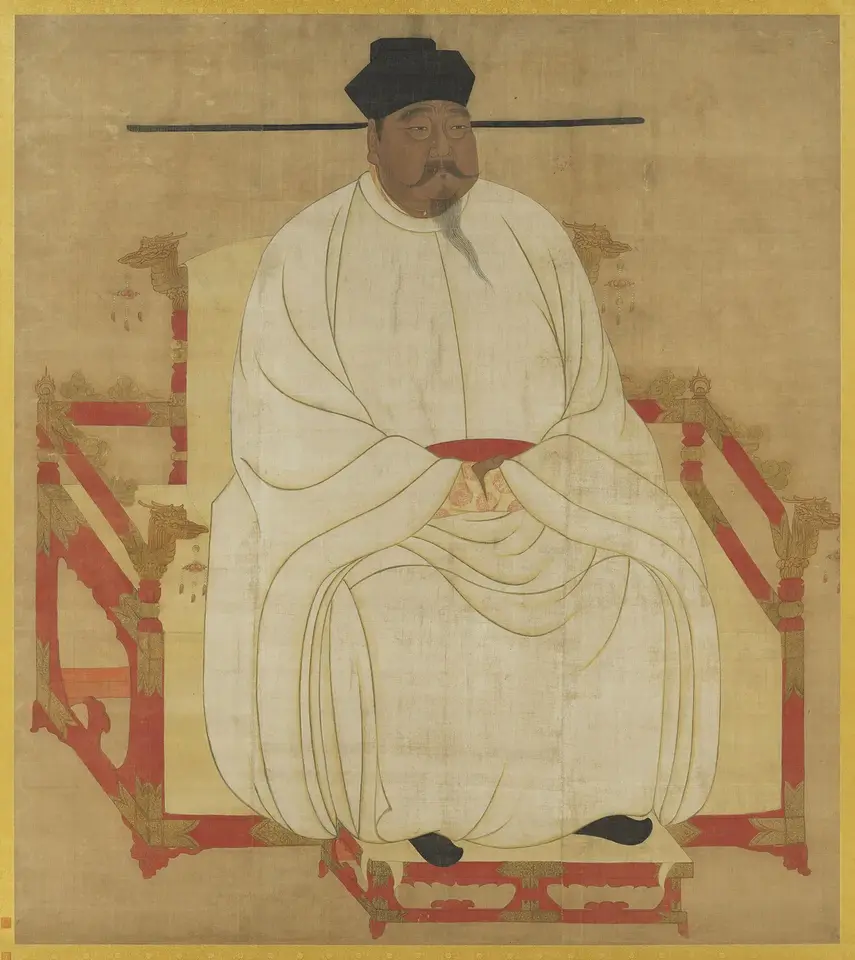
The institutionalization of the civil service examination system in the Northern Song dynasty was an epochal structural transformation in Chinese administrative and intellectual history during the tenth through twelfth centuries. Following the dynastic founding, the Northern Song state established the core policy of exalting civil governance and curbing military influence, determined to eradicate the ingrained vices of the late Tang and Five Dynasties—specifically hereditary lineage privilege, informal pre-exam recommendations, and clientelist examiner factions. In 973 (the 6th year of Kaobao), Emperor Taizu intervened in the Wu Jichuan corruption scandal to personally re-examine candidates, formalizing the palace examination into a permanent constitutional institution. This completed the triennial three-tier hierarchy comprising prefectural qualifying tests, metropolitan exams under the Ministry of Rites, and the ultimate palace examination presided over by the emperor, thereby transforming all degree holders into direct Disciples of the Son of Heaven. Under Emperors Zhenzong and Renzong, the court developed sophisticated blind-review safeguards, including name-sealing, bureaucratic recopying of papers, examiner sequestration, and kin-avoidance examinations. In 1057, the palace examination eliminated failure dismissals, and in 1071 the New Policies of Wang Anshi abolished memorization-heavy sundry disciplines in favor of classical statecraft interpretations and practical policy discourses. This rigorously governed meritocratic apparatus dismantled aristocratic lineage dominance, spurred widespread upward mobility, and defined the administrative selection paradigm for the subsequent eight centuries.
Zhao Kuangyin establishes the Song dynasty, launching policies that prioritize civil administration over military warlords and expanding civil recruitment.
Following the Wu Jichuan corruption scandal, Emperor Taizu personally re-examines candidates at Jiangwu Hall, creating the sovereign-directed palace examination.
The court institutes kin-avoidance examinations for examiners' relatives, while Chen Pengnian introduces blind name-sealing during palace assessments.
Emperor Zhenzong mandates name-sealing across all metropolitan examinations, subsequently extending it to provincial tests nationwide in 1007.
Acting on Gao Shen's proposal, the court institutes the Bureau of Copying to transcribe all examination papers in red ink, preventing handwriting identification.
Ouyang Xiu directs the landmark Jiayou examination, and Emperor Renzong decrees that all metropolitan passers are permanently immune from dismissal during palace exams.
Emperor Yingzong formalizes the three-year examination calendar into permanent statutory law, linking prefectural, metropolitan, and palace examinations.
Emperor Shenzong and Wang Anshi reform examination content, eliminating sundry categories and replacing poetry with classical essays and contemporary policy discourses.
The court distributes standardized national commentaries authored by Wang Anshi, finalizing the statutory curricular framework of the examination system.
The three-tier examination structure, blind procedural protections, and policy essay requirements are fully inherited by the Southern Song, Jin, Yuan, Ming, and Qing dynasties.
Although the imperial examination originated during the Sui dynasty and evolved substantially under the Tang, Tang-era examinations diverged sharply from modern conceptions of objective, anonymous assessments. Candidates routinely submitted literary portfolios to high-ranking court officials and eminent scholars before formal sittings, soliciting private praise and political sponsorship through practices known as preliminary circulation and warming submissions. Chief examiners frequently established preliminary quotas based on social pedigree and elite recommendations before reading a single official examination paper. This reliance systematically favored hereditary aristocrats and well-connected patricians, leaving commoner scholars with negligible pathways to officialdom.
Even more destructively, successful Tang candidates formed permanent, personal patron-client bonds with the presiding chief examiner. Degree holders pledged lifelong personal fealty to their patrons rather than the sovereign, marching under factional banners and precipitating destructive partisan vendettas—most notably the Niu-Li Factional Strife of the ninth century—which grievously destabilized central monarchical authority.
During the century-long chaos of the late Tang and Five Dynasties, regional military warlords dominated Chinese politics through raw coercive force, reducing civil governance to shambles and allowing the examination system to fall into functional decay. Military usurpers openly declared that the throne belonged solely to whoever wielded the strongest armies and fiercest cavalry.
Upon seizing power in 960, Song Taizu (Zhao Kuangyin) resolved to dismantle this destructive militarist legacy. Collaborating with his chief advisor Zhao Pu, Taizu stripped regional generals of operational command, concentrated provincial treasuries in the capital, and instituted an unyielding policy prioritizing civilian scholar-bureaucrats over military chieftains. To administer this centralized empire, the crown required an expansive, loyal, and technically competent civil administration. Eradicating private examiner-candidate patronage and replacing it with an incorruptible, state-managed examination apparatus became the foundational imperative of early Song statecraft.
The first pivotal structural milestone occurred in the spring of 973 (the 6th year of Kaobao). Vice Minister of Rites Li Fang presided over the metropolitan examination, but the release of results ignited violent public protests. Disqualified scholars Xu Fan and Xue Pi beat the imperial grievance drum on the capital thoroughfares, publicly charging Li Fang with rampant favoritism toward sons of influential court ministers. The protestors pointedly alleged that top-ranked candidate Wu Jichuan was functionally illiterate and had received first honors solely because his uncle maintained intimate personal ties with the examiner.
Infuriated by the breach of institutional discipline, Emperor Taizu ordered an immediate imperial investigation. On the thirtieth day of the third lunar month, Taizu convened all previously passed graduates and hundreds of rejected candidates at the Jiangwu Hall. The sovereign personally drafted new essay prompts from the imperial dais, demanding that every examinee compose original responses under direct imperial surveillance.
Upon personal evaluation, Taizu exposed the fraudulent results: four of Li Fang's original graduates were summarily disqualified, including Wu Jichuan, whose essay proved wholly incoherent. Li Fang was severely demoted. Simultaneously, Taizu conferred imperial degrees upon twenty-six previously rejected scholars, including Xu Fan. Taizu formally decreed that henceforth, passing the metropolitan examination under the Ministry of Rites would no longer grant definitive graduate status; candidates were required to undergo a final palace examination adjudicated by the emperor himself. By transferring ultimate evaluation, ranking, and appointment authority from departmental examiners to the crown, all new officials owed lifelong gratitude exclusively to the reigning monarch, permanently severing private examiner-client ties.
While the palace examination secured supreme imperial oversight, abuses such as handwriting recognition and covert marking symbols persisted in metropolitan and provincial circuits. To eliminate subjective bias, the Song court implemented two groundbreaking institutional innovations: name-sealing and bureaucratic recopying.
In 992 (the 3rd year of Chunhua), Chen Pengnian petitioned the throne to institute name-sealing during palace examinations. Under this regulation, specialized non-evaluating proctors folded and concealed the applicant's name, ancestry, and native place beneath white paper, sealing the fold with official interlocking stamps and arbitrary registration numbers. Graders evaluated papers solely on intrinsic textual merit without knowing candidate identities. In 1000 (the 3rd year of Xianping), Emperor Zhenzong extended name-sealing to metropolitan examinations, and by 1007 (the 4th year of Jingde) the procedure was enforced across all prefectural examinations nationwide.
To circumvent examiners who identified candidates through distinctive handwriting styles or agreed-upon covert phrasing, Assistant Prefect Gao Shen submitted a memorial in 1015 (the 8th year of Dazhong Xiangfu) urging the creation of an independent transcription bureau. Emperor Zhenzong approved the proposal, establishing the Bureau of Copying within the Ministry of Rites. Hundreds of professional scribes were assembled to transcribe every original vermilion candidate manuscript into an identical black-ink duplicate. Proofreading officials then verified the transcription character by character before distributing the duplicates to examiners. The original candidate manuscripts remained locked in secure vaults throughout the grading period, establishing the most sophisticated double-blind anonymous assessment regime in pre-modern world history.
To insulate examiners from external solicitations, bribes, and political coercion, the Northern Song perfected the sequestration protocol. The moment examiners received imperial appointments at Chongzheng Hall, they were escorted immediately into the Tribute Academy under armed guard, forbidden from returning home or contacting relatives.
The examination compounds were encircled by imperial palace guards on continuous perimeter patrol, and entry gates were heavily chained and stamped with wax seals. For months on end—encompassing drafting prompts, supervision, grading, and final tallying—examiners and staff were completely isolated from the outside world.
Simultaneously, the court instituted avoidance examinations for examiners' kin, first formulated in 992. The regulation stipulated that sons, nephews, and personal retainers of presiding examiners and high-ranking court ministers were strictly prohibited from sitting in standard testing halls alongside ordinary candidates. Instead, they were transferred to separate examination venues supervised by independent, unaffiliated proctors and graders. This avoidance mechanism was subsequently expanded across all administrative circuits, requiring candidates related to provincial surveillance commissioners and transport officials to sit in neighboring prefectures to prevent administrative coercion.
In the realm of scheduling, early Song examinations occurred erratically on annual or biennial schedules. However, as the applicant pool swelled to tens of thousands of scholars, the logistical burdens of administering palace examinations, name-sealing, and recopying placed immense strain on imperial finances and forced regional candidates to endure arduous annual journeys.
In 1066 (the 3rd year of Zhiping), Emperor Yingzong promulgated a definitive imperial decree establishing the triennial examination cycle as unalterable statutory law.
Under this formalized calendar, prefectural qualifying examinations were held across all circuits simultaneously in the eighth lunar month of the scheduled year; successful provincial licentiates gathered in Kaifeng during the second lunar month of the following spring for the metropolitan examination; and those who passed sat for the palace examination in the third lunar month. This three-year rhythm struck an enduring balance between administrative recruitment quotas and the scholarly preparation cycle, serving as the standard temporal architecture across the Yuan, Ming, and Qing dynasties.
During the early Northern Song, metropolitan passers faced rigorous elimination at the palace examination, with ten to thirty percent routinely disqualified by the emperor. Destitute scholars who had exhausted their savings over years of travel and study faced profound social disgrace upon failure, occasionally leading to suicides. In a notorious historical episode, repeatedly disqualified scholar Zhang Yuan defected to the Western Xia dynasty, where he served as a premier military strategist and orchestrated crushing defeats against Song imperial forces.
Confronting the political destabilization caused by alienated intellectuals, Emperor Renzong issued a landmark decree in March 1057 (the 2nd year of Jiayou): candidates who reached the palace examination would never again be dismissed. The palace sitting was transformed into an imperial ranking assessment rather than a cull, ensuring that every metropolitan passer received an official degree. This policy fostered deep loyalty among the scholar-gentry.
That same year, eminent statesman Ouyang Xiu presided over the metropolitan examination and led an intellectual revolution against obscure, affected classical mannerisms, known as the National Academy style. Ouyang Xiu championed lucid, analytical, and practical prose, deliberately selecting towering intellectual figures such as Su Shi, Su Zhe, Zeng Gong, Zhang Zai, Cheng Hao, and Lu Huiqing. The 1057 examination set the standard for pragmatic, policy-oriented civil discourse.
In stark contrast to the Tang dynasty, which conferred degrees on barely twenty or thirty candidates per sitting, the Northern Song vastly expanded intake quotas to populate its expanding civil administration. In 977 (the 2nd year of Taiping Xingguo), Emperor Taizong granted degrees to over a thousand individuals in a single sitting, and subsequent Song sittings routinely graduated hundreds of scholars.
To accommodate elderly candidates who had sat for metropolitan examinations across decades without success, Emperors Taizong and Zhenzong institutionalized special grace quotas. Scholars over fifty years of age who had qualified for metropolitan examinations multiple times were compiled into special imperial petitions, receiving honorary degrees and appointments to sub-prefectural administrative posts. This mechanism effectively prevented widespread societal disaffection, binding aging regional intellectuals securely to the ruling dynasty.
As literacy spread rapidly across southeastern coastal regions such as Jiangnan, Zhejiang, and Fujian, regional educational disparities surfaced as a major administrative crisis. Southern candidates, trained in sophisticated literary techniques, dominated open examinations, whereas northern and northwestern frontier scholars, steeped in military readiness and basic classics, suffered overwhelming defeat.
During the Jiayou era, this imbalance triggered the famous Circuit Quota Debate between leading court intellectuals. Hanlin Academician Ouyang Xiu argued for absolute meritocracy, maintaining that the court should award degrees strictly on raw test performance without geographic considerations. Conversely, Vice Censor-in-Chief Sima Guang argued that southern bias would deprive northern frontier circuits of native civil administrators, warning that an imperial bureaucracy composed entirely of southerners would weaken national cohesion and frontier defenses.
Emperor Renzong resolved the conflict by establishing statutory circuit quotas. The court allocated fixed provincial candidate quotas to each of the twenty-three circuits based on household population, educational baseline, and strategic significance. This reform guaranteed that scholars from underdeveloped border regions enjoyed equitable paths into the imperial bureaucracy, reinforcing geopolitical cohesion.
The Northern Song formalized a three-tier classification of graduates: the first class received Metropolitan Graduate with Honors, the second class received Regular Metropolitan Graduate, and the third class was awarded Associate Metropolitan Graduate. Following the palace examination, the emperor presided over a solemn name-calling ceremony at Jiying Hall or Chongzheng Hall.
The sovereign personally opened the sealed envelopes and announced the top three laureates—Principal Graduate, Second Graduate, and Third Graduate—before the assembled court. Successful candidates knelt before the throne to receive purple robes and gold-plated belts.
Graduates were subsequently feted at the Qionglin Garden Banquet, hosted at state expense in the imperial pleasure gardens, where they received imperial poems, vintage palace wines, and ceremonial silk flowers. Parading on horseback through the capital streets amidst throngs of cheering citizens, new graduates entered officialdom immediately without undergoing the arduous post-degree evaluations required under the Tang dynasty, cementing civil scholarship as the premier path to social prestige.
The final phase of institutionalization occurred under Emperor Shenzong and his chief councilor Wang Anshi in the 1070s. Despite the procedural sophistication of earlier Song exams, testing content had remained tethered to Tang-era poetry, rhyming couplets, and verbatim textual memorization. Bureaucrats selected under this system frequently lacked basic understanding of judicial affairs, fiscal administration, and border logistics.
In 1071 (the 4th year of Xining), Emperor Shenzong promulgated Wang Anshi's sweeping examination reforms: First, the court abolished memorization-heavy sundry disciplines such as Classics Specialists and Erudites, consolidating all recruitment into a single, unified Metropolitan Graduate examination. Second, poetic verse composition and mechanical memorization tests were eliminated, replaced by interpretive classical essays analyzing the political and philosophical tenets of Confucian canons. Third, the reform dramatically expanded the weight of contemporary policy discourses, requiring candidates to formulate concrete solutions to imperial fiscal policy, agrarian irrigation, border defenses, and administrative efficiency.
Wang Anshi directed the compilation of New Meanings of the Three Classics as standardized national textbooks. This curricular overhaul transformed the civil service examination from an exercise in literary embellishment into a rigorous mechanism for recruiting practical administrative statesmen.
The institutionalization of Northern Song civil service examinations fundamentally shattered the hereditary monopoly wielded by aristocratic clans since the Han and Tang dynasties. Through anonymous, multistage meritocratic testing, commoner scholars from modest agrarian backgrounds competed on equal footings against descendants of court patricians.
Historical records demonstrate that over fifty percent of Northern Song metropolitan graduates came from families without official officeholders across the preceding three generations. Upward mobility ceased to be an anomaly and became an institutional reality, fostering a pervasive literary culture and creating a dynamic, merit-based social order.
By transforming every graduate into a Disciple of the Son of Heaven through the palace examination, the Northern Song eliminated the dangerous patron-client allegiances that had fueled destructive partisan warfare in earlier dynasties. Ultimate appointment authority was vested exclusively in the imperial sovereign.
Simultaneously, the exam apparatus fostered an exceptionally cohesive, highly educated corps of professional scholar-officials. These civilian bureaucrats identified deeply with dynastic continuity and Confucian ethics, providing the Northern Song state with remarkable resilience, administrative sophistication, and administrative stability across three centuries.
The procedural architecture perfected under the Northern Song—comprising the triennial schedule, three-tier testing hierarchy, name-sealing, bureaucratic recopying, examiner sequestration, and kin avoidance—achieved unparalleled structural maturity.
This exact administrative matrix was adopted in full by the Southern Song, preserved by the Jurchen Jin and Mongol Yuan, and systematically codified by the Ming and Qing dynasties. For over eight hundred years, Northern Song examination law remained the defining archetype of Chinese bureaucratic recruitment, ultimately inspiring modern civil service examination frameworks in Europe and the Americas during the nineteenth century.