Han Xin and Zhang Er Launching Northern Campaign
Following victories over Wei and Dai, Han Xin advanced with tens of thousands of troops toward Jingxing Pass.
Qin Dynasty (秦朝) · HISTORICAL EVENT
井陉之战
The Battle of Jingxing (井陉之战) was a celebrated tactical annihilation battle fought in October 204 BCE (third year of Emperor Gaodi) between tens of thousands of Han troops commanded by General Han Xin and Zhang Er, and two hundred thousand Zhao troops defending the strategic bottleneck of Jingxing Pass (modern Hebei). The engagement represented a decisive turning point in the Chu-Han Contention, enabling the Han faction to complete a wide strategic…
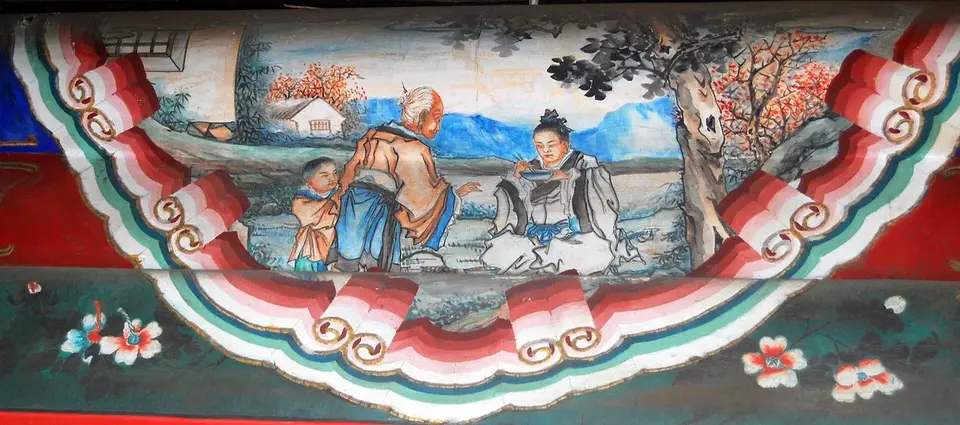
The Battle of Jingxing (井陉之战) was a celebrated tactical annihilation battle fought in October 204 BCE (third year of Emperor Gaodi) between tens of thousands of Han troops commanded by General Han Xin and Zhang Er, and two hundred thousand Zhao troops defending the strategic bottleneck of Jingxing Pass (modern Hebei). The engagement represented a decisive turning point in the Chu-Han Contention, enabling the Han faction to complete a wide strategic envelopment of Hegemon-King Xiang Yu from the north. Having subdued the Kingdom of Wei, Han forces advanced across the rugged Taihang Mountains to confront the Zhao state. Facing overwhelming numerical inferiority against heavily fortified enemy positions, Han Xin exploited the dogmatic arrogance of Zhao commander Chen Yu, who had foolishly rejected the brilliant guerrilla strategy proposed by strategist Li Zuoche. Employing a combination of unorthodox and orthodox tactics, Han Xin deployed a portion of his army with their backs to the Mianman River. Han Xin personally led frontlines to lure the entire Zhao garrison from their battlements, while a concealed cavalry unit of two thousand riders infiltrated the abandoned Zhao camp and hoisted Han red banners. Seeing their camp occupied, the Zhao army disintegrated into panic and was completely crushed, resulting in the death of Chen Yu and the capture of King Xie. The battle stands as the premier classic demonstration in Chinese military history of placing soldiers in mortal peril to ensure survival.
Following victories over Wei and Dai, Han Xin advanced with tens of thousands of troops toward Jingxing Pass.
Strategist Li Zuoche proposed cutting Han supply lines, but supreme commander Chen Yu dogmatically refused the plan.
Han Xin's scouts confirmed Chen Yu's refusal of Li's strategy, clearing the way for a decisive advance through the defile.
Han Xin sent two thousand cavalry with red banners to flank the Zhao camp, deploying ten thousand men with backs to the river.
Han Xin feigned defeat to lure the Zhao garrison out, while concealed cavalry seized the undefended camp and raised Han banners.
Seeing their camp occupied by Han flags, Zhao soldiers panicked; Han forces counter-attacked from both sides, slaying Chen Yu.
Han Xin offered a bounty to capture Li Zuoche unharmed, treating him as an honored advisor to secure the bloodless submission of Yan.
In the fourth month of 205 BCE, King of Han Liu Bang suffered a catastrophic defeat against Xiang Yu at the Battle of Pengcheng, precipitating the mass defection of tributary kings back to Western Chu. Forced to entrench along the Xingyang and Chenggao defensive lines, Liu Bang was trapped in a grueling war of attrition. To escape this strategic encirclement, General-in-Chief Han Xin proposed an ambitious northern flanking campaign, advising Liu Bang to subjugate the hostile northern realms of Wei, Dai, Zhao, Yan, and Qi, thereby constructing an expansive northern siege arc to envelop Chu from the flank and rear.
In the eighth month of 204 BCE, Han Xin executed a daring crossing using wooden vats to surprise Anyi, capturing King Bao of Wei and pacifying the realm of Wei. Shortly thereafter, Han forces defeated Dai Chancellor Xia Shuo at Eyu, subduing the state of Dai. However, as Xiang Yu intensified his assaults on Xingyang, Liu Bang repeatedly transferred veteran troops from Han Xin's army to reinforce the southern front. Consequently, Han Xin and veteran general Zhang Er were left with tens of thousands of newly recruited, inexperienced levies to force the formidable defiles of the Taihang Mountains and confront the Zhao army.
Alerted to the approaching Han army, King Xie of Zhao and supreme commander Chen Yu concentrated two hundred thousand troops at the narrow bottleneck of Jingxing Pass, constructing formidable stone ramparts. Renowned military strategist Li Zuoche, the Lord of Guangwu, accurately warned Chen Yu that Jingxing Pass was a treacherous gorge spanning hundreds of li where wagons could not travel abreast and cavalry could not ride in column. Li proposed leading thirty thousand light infantry along mountain paths to sever Han Xin's baggage trains, while Chen Yu maintained an impregnable defense behind fortified walls. Deprived of provisions in rugged defiles, the Han army would be destroyed within ten days. However, Chen Yu dismissed the proposal, claiming that an army of righteousness should not employ deceitful ambushes, declaring his intention to crush Han forces in open battle.
In the tenth month of 204 BCE, Han Xin advanced to a camp thirty li west of Jingxing Pass. Through forward scouts, Han Xin learned that Chen Yu had rejected Li Zuoche's logistics-interdiction plan. Greatly relieved, Han Xin resolved to advance through the narrow gorge. Recognizing that his raw recruits could not withstand a conventional engagement against superior numbers, Han Xin devised an audacious psychological plan based on feigned retreat and surprise base capture.
At midnight, Han Xin assembled his commanders. He selected two thousand elite light cavalry, equipping each trooper with a crimson Han banner. He ordered them to march secretly along mountain tracks to conceal themselves on ridgelines overlooking the Zhao camp. They were instructed to watch for the moment the Zhao garrison emptied their fortress in pursuit of the Han center, then storm the undefended ramparts, tear down all Zhao standards, and raise the crimson Han flags. Concurrently, Han Xin sent a vanguard of ten thousand troops ahead to deploy on open sandbars with their backs directly to the Mianman River.
At dawn, the Zhao garrison peered from their battlements and burst into laughter upon observing the Han troops deployed with their backs to the rushing waters of the Mianman River. According to standard military doctrine, armies were advised to keep hills to their rear and water to their front; Han Xin appeared to have trapped himself in fatal terrain. However, Han Xin understood the extreme psychological instincts of ordinary soldiers facing mortal danger. By deliberately eliminating any avenue of retreat, he forced his green recruits into an uncompromising struggle for survival, unleashing fierce combat resilience that compensated for numerical inferiority.
Shortly after dawn, Han Xin raised his grand general standards and marched forward with his central division out of the gorge defile. Sighting Han Xin's personal banners, Chen Yu ordered his gates thrown open, sending his two hundred thousand soldiers rushing forward to annihilate the Han center and capture the supreme commander. A savage melee erupted at the mouth of the defile, filling the valley with deafening battle cries.
After a prolonged clash, Han Xin ordered his center to abandon their battle drums and general banners, feigning complete collapse and fleeing toward the riverbank redoubts. Convinced that victory was won, Zhao commanders and soldiers broke formation, abandoning their lines in a disordered scramble to seize abandoned spoils and pursue the fleeing general. At the riverbank, the fleeing troops joined the entrenched vanguard. Facing deep waters behind and overwhelming pursuit ahead, Han soldiers fought desperately for their lives, repelling multiple assaults and inflicting catastrophic casualties on the disordered Zhao ranks.
While the Zhao army was fully engaged along the river, the two thousand concealed Han cavalry troopers charged down the slopes into the unprotected Zhao encampment. Overpowering the skeleton guard, they tore down every Zhao flag, planting two thousand crimson Han banners along the perimeter walls. The Zhao stronghold was completely transformed into a sea of red, severing all enemy communication lines.
Failing to breach the desperate Han riverfront defense and exhausted by hours of combat, Chen Yu ordered his troops to disengage and return to camp. However, as the weary soldiers turned back, they were horrified to see their ramparts covered in crimson Han banners. Assuming their rear was destroyed and their commanders captured, the Zhao troops panicked. The army shattered into uncontrollable flight, defying the frantic orders of their officers.
Capitalizing on the chaos, Han Xin ordered his riverfront troops into an all-out counter-offensive, while the cavalry force in the Zhao camp charged the panic-stricken enemy from behind. Caught in a vise, the Zhao army was slaughtered across the valley. Commander Chen Yu was killed along the banks of the Zhi River, and King Xie was captured alive. Han Xin achieved the total destruction of an army of two hundred thousand, capturing over fifty walled cities across Zhao territory.
The Battle of Jingxing eliminated the primary military power in northern China. Two hundred thousand Zhao troops were killed or captured, Chen Yu was slain, King Xie was captured, and over fifty walled cities submitted without further resistance. Liu Bang installed Zhang Er as King of Zhao to pacify the populace, firmly anchoring northern China under Han control.
The victory altered the balance of the Chu-Han Contention. Han Xin captured strategist Li Zuoche unharmed, treating him as an honored teacher to formulate the pacification of Yan and Qi. Adopting Li's counsel, Han Xin dispatched diplomatic missives to King Zang Tu of Yan, securing the voluntary submission of Yan without bloodshed and completing the northern encirclement of Western Chu.
The battle established a timeless tactical precedent in global military history. When his subordinate officers asked why he deployed with his back to the river, Han Xin cited classic military doctrine: "Cast them into fatal ground and they will survive; plunge them into mortal danger and they will live. Inexperienced troops must be placed in a position where survival requires absolute struggle; had they been given a path of retreat, they would have fled." This masterful demonstration of military psychology remains celebrated across centuries of strategic scholarship.
In Records of the Grand Historian (Shi Ji), Han historian Sima Qian praised Han Xin's tactical genius: "Han Xin's stratagems seemed gifted by Heaven. By deploying his lines with their backs to the river, he placed men in mortal danger only to ensure their survival. His officers marveled at his unfathomable foresight. Who in the art of war could surpass such brilliance?"
In Comprehensive Mirror in Aid of Governance (Zizhi Tongjian), Song dynasty historian Sima Guang analyzed the fatal flaw of the Zhao commander: "Chen Yu commanded forces outnumbering the enemy several times over and held the strategic defiles of the empire, yet suffered defeat at the hands of Han Xin's weary troops. Why? Because he dogmatically clung to the fallacy that righteous armies do not use deceit, rejecting the Lord of Guangwu's plan to cut supply lines. In the chaos of war, orthodox and unorthodox tactics generate one another; war is based on deception, and empty pride leads to ruin."
Late Ming philosopher Wang Fuzhi observed in Notes on the Comprehensive Mirror (Du Tongjian Lun): "Han Xin's deployment with his back to the river was made possible by Chen Yu's overweening arrogance. Had Chen Yu adopted Li Zuoche's plan to sever supplies along mountain paths, Han Xin would have perished. Victory was secured by exploiting the enemy's foolishness; in human affairs, success inevitably arises from discerning and seizing the opponent's fatal weakness."