Promulgation of Nationalization Edict
The Qing court issues an imperial decree nationalizing commercial railway trunk lines and revoking provincial concessions.
Qing Dynasty (清朝) · HISTORICAL EVENT
保路运动
The Railway Protection Movement was a massive anti-imperialist popular agitation and armed rebellion that erupted in 1911 across Sichuan, Hunan, Hubei, and Guangdong provinces against the Qing imperial court's surrender of commercial railroad sovereignty to foreign powers, with Sichuan representing the movement's revolutionary epicenter. In the late Qing period, local populations pooled massive civic savings through specialized taxes to construct the…
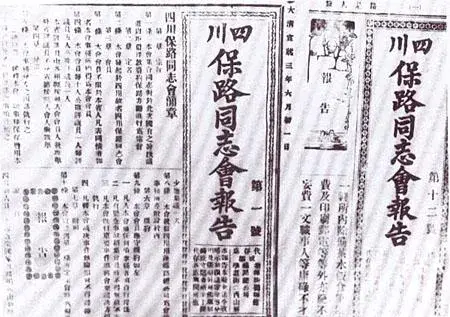
The Railway Protection Movement was a massive anti-imperialist popular agitation and armed rebellion that erupted in 1911 across Sichuan, Hunan, Hubei, and Guangdong provinces against the Qing imperial court's surrender of commercial railroad sovereignty to foreign powers, with Sichuan representing the movement's revolutionary epicenter. In the late Qing period, local populations pooled massive civic savings through specialized taxes to construct the Sichuan-Hankou and Guangdong-Hankou lines. In May 1911, the imperial cabinet proclaimed a policy of railway nationalization and finalized a predatory loan contract with a banking syndicate from Britain, Germany, France, and the United States, while Minister of Posts and Communications Sheng Xuanhuai confiscated private investment funds without cash restitution. Sichuan citizens organized the Sichuan Railway Protection League in June, pursuing civilized agitation through provincial boycotts, general strikes, and tax resistance. In September, Governor-General Zhao Erfeng arrested moderate gentry delegates and opened fire on peaceful petitioners outside his yamen, perpetrating the Chengdu Massacre. In response, the Tongmenghui joined forces with Gelaohui secret societies to form the armed Comrade Army, besieging the provincial capital and proclaiming the independent military government of Rongxian. Desperate to crush the revolt, the Qing court redeployed the elite Hubei New Army into Sichuan, leaving Wuhan defenseless and creating the decisive opportunity for the historic Wuchang Uprising, which brought down the Qing dynasty.
The Qing court issues an imperial decree nationalizing commercial railway trunk lines and revoking provincial concessions.
The court signs the predatory loan contract with a foreign consortium, pledging provincial salt revenues as security.
Minister Sheng Xuanhuai issues the Ge-Telegram refusing cash reimbursement for Sichuan shares, igniting provincial fury.
Over two thousand delegates convene at Yuefu Street in Chengdu, weeping in solidarity and founding the League.
The League resolves to initiate statewide commercial, educational, and tax strikes to challenge imperial authority.
Governor-General Zhao Erfeng arrests gentry leaders and orders troops to fire on peaceful petitioners, killing thirty-two.
Wu Yuzhang and Wang Tianjie proclaim the independence of Rongxian, establishing the first republican county government.
Exploiting the redeployment of Hubei troops into Sichuan, revolutionary soldiers in Wuchang ignite the Xinhai Revolution.
Mutinous Hubei soldiers in Zizhong assassinate Superintendent Duanfang and defect to the revolutionary cause.
Following the First Sino-Japanese War and the Boxer Uprising, Western imperialist powers initiated a fierce scramble to secure concessions for the construction and operation of Chinese trunk railroads. The Guangdong-Hankou and Sichuan-Hankou railway lines connected northern China with the southern coast and penetrated the populous southwest, possessing immense commercial and strategic value that made them primary targets for American, British, French, and German syndicates. To preserve national territorial sovereignty and resist foreign control of transportation arteries, the gentry and commercial classes of Hunan, Hubei, Guangdong, and Sichuan spearheaded a nationwide campaign to redeem foreign railway concessions and establish commercially managed domestic railway enterprises funded by civic investment.
Among the provincial commercial railway ventures, the Sichuan-Hankou Railway Company possessed a uniquely democratic and pervasive public shareholding structure. The provincial administration raised capital by levying surcharges on agrarian land taxes, grain levies, salt revenues, and real estate transactions, converting public fiscal collections into nominal company shares known as tenant shares and grain shares. Consequently, the company's capital of nearly seventy million silver dollars represented not only the investments of merchant elites and gentry landlords, but the vital life savings of millions of ordinary tenant farmers, urban artisans, and small traders. The completion of the Sichuan-Hankou line was universally perceived as an inseparable collective interest of the entire province.
On May 9, 1911 (the eleventh day of the fourth month of the third year of Xuantong), the newly reorganized Qing imperial cabinet, orchestrated by Minister of Posts and Communications Sheng Xuanhuai, issued an imperial edict decreeing the nationalization of railway trunk lines. The court asserted that commercial railway companies were underfunded and plagued by operational delays, and proclaimed that all trunk line concessions were immediately revoked and transferred to the imperial government. Commercial railway firms across the provinces were ordered to cease operations, and existing assets were slated for compulsory government acquisition, stripping the provincial citizenry of their hard-won railroad rights.
Merely eleven days later, on May 20, the Qing government disregarded passionate domestic outrage and finalized the Imperial Chinese Government Five Percent Hukuang Railways Sinking Fund Gold Loan of 1911 with a banking consortium representing Britain, the United States, France, and Germany. Totaling six million pounds sterling, the predatory agreement surrendered railway construction rights, management prerogatives, and procurement authority to the foreign consortium. Furthermore, the court pledged the provincial salt taxes and transit duties of Hunan and Hubei as financial collateral, effectively converting critical domestic infrastructure into instruments of foreign financial domination.
Following the signing of the loan agreement, the court adopted deeply inequitable and punitive financial terms regarding the reimbursement of provincial shares. While the administrations of Hunan, Hubei, and Guangdong were granted proportionate cash repayments for operational capital expended, Sheng Xuanhuai applied the most severe expropriation measures against Sichuan, citing speculative losses incurred by the Sichuan company's Shanghai branch during the 1910 rubber share bubble. On June 1, 1911, Sheng Xuanhuai and Superintendent Duanfang sent an incendiary official telegram, designated the Ge-Telegram, to Acting Governor-General Wang Renwen.
The Ge-Telegram decreed that the Qing state would issue non-redeemable government railway stock certificates rather than cash compensation for the capital invested by the Sichuan-Hankou Railway Company. The court added that if Sichuan shareholders insisted on cash restitution, the province would be forced to secure additional foreign loans secured by future provincial tax revenues. This policy revealed that the imperial state intended not only to confiscate the railway line, but to seize over ten million taels of private civic capital. Sensing that public disclosure would spark an insurrection, Wang Renwen initially withheld the telegram, but company inquiries in Yichang soon exposed the communique, sparking unbridled fury across Sichuan.
On June 17, 1911, the Sichuan-Hankou Railway Company held an emergency meeting of shareholders at its headquarters on Yuefu Street in Chengdu, drawing over two thousand representatives from the provincial gentry, merchants, students, and civic groups. The assembly hall and adjacent avenues were completely overwhelmed by crowds. Luo Lun, Vice Chairman of the Sichuan Provincial Consultative Bureau, ascended the rostrum, bowed to the audience, and proclaimed with streaming tears: The Sichuan-Hankou Railway is lost! Sichuan is lost! China is lost! The assembly erupted into widespread wailing, with municipal constables and soldiers openly weeping alongside the crowds for half an hour.
Smashing his teacup on the table, Luo Lun exhorted the throng: We must resist unto death! We must organize a unified apparatus to fight this battle to the end! Merchants shall strike! Workers shall strike! Students shall boycott classes! Farmers shall refuse to pay taxes! The assembly unanimously resolved to establish the Sichuan Railway Protection League, electing Consultative Bureau Chairman Pu Dianjun as president and Luo Lun as vice president. Establishing branches across all counties, the League declared a resolute struggle to abrogate the predatory treaty and protect the railway, marking the formal beginning of the mass movement.
During its opening phase, the leadership of the Railway Protection League, composed predominantly of constitutionalist gentry elites, pursued a strategy of peaceful, legalist petitioning termed civilized agitation. Luo Lun drafted comprehensive petitions refuting Sheng Xuanhuai's nationalization policy clause by clause, securing the signatures of more than two thousand four hundred leading scholars, officials, and merchants before presenting the document to the governor's yamen. Tens of thousands of orderly citizens escorted the petitioning delegation, demonstrating an unyielding foundation of popular legitimacy.
Acting Governor-General Wang Renwen deeply sympathized with the provincial plight and recognized the volcanic nature of public anger. He personally received the gentry delegates and sent three urgent memorials to the imperial cabinet in late May, describing the heart-wrenching anguish of the Sichuan populace. Wang denounced Sheng Xuanhuai for deceiving the throne, surrendering national sovereignty, and endangering the state, petitioning the emperor to revoke the foreign loan agreement while offering to share punishment alongside Sheng. Infuriated by his candid advocacy, the imperial cabinet dismissed Wang Renwen from office and appointed the ruthless commander Zhao Erfeng as Governor-General to enforce armed suppression.
As the Qing court adamantly rejected popular demands and the full text of the predatory Four-Power contract became public in July, the Railway Protection Movement transitioned rapidly into a total civil disobedience campaign. On August 5, 1911, the League convened an extraordinary general congress in Chengdu, denouncing Sheng Xuanhuai as a traitor and proclaiming an immediate, province-wide commercial and educational strike. In Chengdu, major mercantile houses shuttered their doors, and students from all colleges and academies walked out to distribute millions of leaflets across the countryside.
By late August, the resistance broadened into an unprecedented statewide tax boycott. Households throughout Chengdu erected ancestral spirit tablets honoring the late Emperor Guangxu outside their front gates, burning incense and invoking the deceased monarch's approval of commercial railway development to challenge the authority of the current court. Citizens flatly refused to pay land levies, transit duties, and commercial taxes, while boycotting the imperial salt monopoly. Similar resistance spread across more than one hundred counties, paralyzing the provincial taxation apparatus and leaving Qing regional administration completely isolated.
While constitutionalist elites advocated non-violent resistance, revolutionaries of the Chinese Tongmenghui recognized the historic opportunity to overthrow Qing rule through armed insurrection. Revolutionaries including Long Mingjian, Wu Yuzhang, and Wang Tianjie sought to transcend peaceful agitation by harnessing the massive grassroots networks of the Gelaohui secret society, establishing a unified revolutionary alliance.
On August 4, 1911, Long Mingjian, Wang Tianjie, and Gelaohui chieftain Qin Zaigeng gathered hundreds of lodge leaders for a clandestine conclave in Luoquan, Zizhong County. The conference resolved to transform local Railway Protection branches into armed insurgent formations designated the Railway Protection Comrade Army, naming Qin Zaigeng as Supreme Commander. The assembly formulated tactical plans to initiate coordinated armed uprisings across Sichuan, march on Chengdu, and overthrow the Qing monarchy, establishing the military foundation for the revolutionary struggle.
On September 7, 1911 (the fifteenth day of the seventh month), newly arrived Governor-General Zhao Erfeng resolved to crush the agitation through overwhelming state terror. Under the pretext of discussing financial concessions, Zhao lured leading figures of the Railway Protection League and Consultative Bureau—including Pu Dianjun, Luo Lun, Yan Kai, Zhang Lan, and Deng Xiaoke—into his official yamen, where hidden guards immediately placed them under arrest. Zhao closed the railway company headquarters, shuttered patriotic newspapers, and declared martial law across Chengdu.
News of the arrests shocked the provincial capital. Tens of thousands of unarmed commoners, artisans, merchants, and students holding ancestral incense tablets of Emperor Guangxu marched peaceably toward the yamen to demand the release of their representatives. Paralyzed by panic, Zhao Erfeng ordered cavalry units and riflemen to open fire into the dense crowd and slash fleeing civilians with sabers. Thirty-two unarmed petitioners were slaughtered on the spot and hundreds sustained critical injuries, creating the infamous Chengdu Massacre.
The Chengdu Massacre shattered any lingering belief in peaceful constitutional petitioning. On the evening of the slaughter, Tongmenghui operatives Long Mingjian and Zhu Guochen manufactured hundreds of wooden hydro-telegrams, lacquering urgent messages onto planks: Zhao Erfeng has committed treason, arrested Pu and Luo, and murdered innocent citizens; let comrades everywhere take up arms and save the province! The wooden tablets were cast into the Jin River, where currents swept them down the Min and Yangtze river networks, carrying the alarm across Sichuan overnight.
Upon receiving the warning, Comrade Armies rose in rebellion across the province. Commander Qin Zaigeng and other lodge chiefs mobilized tens of thousands of insurgents to encircle Chengdu, while hundreds of thousands of irregular fighters cut off food convoys and severed communications with the outside world. Zhao Erfeng barricaded the gates and relied on fortress artillery to defend the walls. The insurgency swept through western, southern, and northern Sichuan, collapsing the provincial administrative apparatus.
Amid the armed encirclement of the capital, the southern Sichuan town of Rongxian emerged as the vanguard of national liberation. Tongmenghui leaders Wu Yuzhang and Wang Tianjie mobilized local Comrade Armies to overwhelm the imperial constabulary and seize the county seat. On September 25, 1911, Wu and Wang convened a mass rally of over ten thousand citizens at the Rongxian Confucian Temple, formally declaring Rongxian independent from Qing imperial governance and establishing the Rongxian Military Government.
The newly founded republican authority immediately discarded the Qing Xuantong reign title in favor of the Yellow Emperor Era calendar, proclaimed revolutionary decrees, distributed grain to the needy, and manufactured munitions to assist the Comrade Army forces surrounding Chengdu. Occurring more than two weeks prior to the Wuchang Uprising, the declaration of independence in Rongxian established the very first local revolutionary republican administration in modern Chinese history, proving that the Railway Protection Movement had evolved into an armed revolution to dismantle monarchical despotism.
Confronting general insurrection across Sichuan, the imperial court dispatched Superintendent Duanfang with the elite Sixteenth Brigade of the Eighth Division of the Hubei New Army to suppress the uprising. This tactical deployment stripped the strategic middle Yangtze valley of its finest imperial garrison troops, creating a critical defensive void in Wuhan.
Duanfang's expeditionary force advanced with agonizing slowness, reaching Zizhong in Sichuan by late October. The Hubei soldiers, influenced by progressive republican ideology, deeply resented being utilized to massacre their fellow countrymen. Following news of the victorious Wuchang Uprising, discipline dissolved entirely. On November 27, 1911, soldier-conspirators led by platoon commander Liu Yizhai launched an armed mutiny inside the imperial compound at Zizhong, decapitating Duanfang and his brother Duanjin. The mutinous troops defected to the revolutionary camp, eliminating the primary strike force tasked with quelling the Sichuan uprising.
The deployment of the Hubei New Army into Sichuan provided the revolutionary underground in Wuhan with an unprecedented operational window. On October 10, 1911 (the nineteenth day of the eighth month), the Literary Society and Progressive Association launched the historic Wuchang Uprising, storming the yamen of the Governor-General of Huguang and establishing the Hubei Military Government of the Republic of China.
The Sichuan Railway Protection Movement served as the indispensable catalyst for the revolution, triggering a chain reaction across the empire. Within two months, fourteen provinces repudiated imperial allegiance and declared independence. On February 12, 1912, Empress Dowager Longyu issued the formal abdication decree on behalf of the child emperor Puyi, bringing the Qing dynasty to an end and terminating more than two millennia of imperial monarchical despotism in China.
The Railway Protection Movement completely dismantled Qing authority in southwestern China. The brutality of the Chengdu Massacre transformed peaceful petitioning into statewide armed rebellion, prompting hundreds of thousands of Comrade Army insurgents to besiege the provincial capital and liberate dozens of counties. The independent administration established in Rongxian created an operational blueprint for republican governance. The court's frantic order sending the elite Hubei New Army into Sichuan vacated Wuhan's defenses, providing the decisive breakthrough for the Wuchang Uprising. Furthermore, the Zizhong mutiny that eliminated Duanfang extinguished the Qing state's last reliable military expeditionary capacity.
The Railway Protection Movement occupies a seminal place in modern Chinese history. Revolutionary leader Sun Yat-sen famously recognized this historical reality: Had it not been for the uprising of the Sichuan Railway Protection League, the Wuchang Uprising might have been delayed by a year or more. The movement not only successfully defended national railway sovereignty against predatory international finance, but transformed an economic grievance into an armed national democratic revolution. It served as the immediate operational catalyst that ignited the 1911 Xinhai Revolution, shattered imperial monarchical rule, and opened the modern epoch of the Republic of China.