Hundred Days Reform Fails
Empress Dowager Cixi crushes the reform movement and imprisons Emperor Guangxu; Western resistance to his dethronement inflames court hatred.
Qing Dynasty (清朝) · HISTORICAL EVENT
八国联军侵华
The Eight-Nation Alliance Invasion of China (八国联军侵华) was a major imperialist joint invasion launched in 1900 (the 26th year of the Guangxu reign) by Britain, the United States, France, Germany, Russia, Japan, Italy, and Austria-Hungary. In the aftermath of the First Sino-Japanese War, foreign powers aggressively carved out imperialist spheres of influence across China, plunging the nation into existential peril and prompting the eruption of the mass…
The Eight-Nation Alliance Invasion of China (八国联军侵华) was a major imperialist joint invasion launched in 1900 (the 26th year of the Guangxu reign) by Britain, the United States, France, Germany, Russia, Japan, Italy, and Austria-Hungary. In the aftermath of the First Sino-Japanese War, foreign powers aggressively carved out imperialist spheres of influence across China, plunging the nation into existential peril and prompting the eruption of the mass anti-imperialist Boxer movement across North China. Reactionary factions within the Qing court sought to exploit Boxer martial arts to expel foreign influence, while Western powers assembled a multilateral intervention force in June 1900 to suppress the uprising and seize geopolitical control. During the war, patriotic Qing soldiers and Boxers offered fierce armed resistance at the Battle of Langfang, the defense of the Dagu Forts, and the Battle of Tianjin, during which Provincial Commander Nie Shicheng and Brigade General Luo Rongguang died heroic deaths. However, after recklessly declaring war on eleven nations, Empress Dowager Cixi wavered between resistance and appeasement, ultimately allowing allied forces to capture Tianjin and storm Beijing, forcing Cixi and Emperor Guangxu to flee to Xi'an. In September 1901, the Qing court accepted the humiliating Boxer Protocol, bearing the largest financial indemnity and most devastating sovereign concessions in modern Chinese history. This catastrophe marked China's total descent into a semi-colonial and semi-feudal society, while destroying the remaining domestic legitimacy of imperial rule.
Empress Dowager Cixi crushes the reform movement and imprisons Emperor Guangxu; Western resistance to his dethronement inflames court hatred.
Boxers advance the slogan of supporting the Qing and destroying foreigners; suppressed by Yuan Shikai in Shandong, they shift into the metropolitan province.
Massive Boxer contingents arrive in Beijing and Tianjin; Western envoys summon over four hundred marines to fortify the legations.
British Vice-Admiral Edward Seymour leads over two thousand allied troops by rail from Tianjin toward Beijing; communications are severed.
Boxers and Dong Fuxiang's Gansu Army ambush allied columns at Luofa and Langfang, inflicting heavy losses and forcing Seymour to retreat.
Allied naval squadrons bombard the Dagu coastal forts; Brigade General Luo Rongguang dies defending his post as the maritime gateway falls.
Empress Dowager Cixi issues an edict declaring war on eleven foreign nations, rewarding the killing of foreigners and besieging the legations.
Southern Viceroys Liu Kunyi and Zhang Zhidong conclude non-aggression agreements with allied consuls, shielding southern China from the conflict.
Allied columns storm Tianjin; General Nie Shicheng dies heroically in combat at Balitai; allied forces capture and plunder Tianjin on July 14.
An allied army of twenty thousand defeats Qing defenders at Beicang and Yangcun using artillery and chemical shells, opening the route to Beijing.
Allied divisions storm Beijing's city gates; Cixi and Emperor Guangxu flee westward to Xi'an as foreign troops sack the capital.
Li Hongzhang and Prince Qing sign the treaty with eleven nations, agreeing to pay 982 million taels in indemnity and forfeiting coastal defenses.
The Qing dynasty's defeat in the First Sino-Japanese War and the signature of the Treaty of Shimonoseki severely degraded China's international standing, exposing the military decrepitude of the imperial administration. Western powers immediately launched a frenzied campaign to carve up Chinese territory through leased ports and designated spheres of influence. Imperial Russia seized the lease of Port Arthur and Dalian; the German Empire occupied Jiaozhou Bay; Great Britain secured Weihaiwei and the New Territories of Hong Kong; and the French Republic leased Guangzhouwan. Simultaneously, Western syndicates aggressively seized concessions to construct railways and exploit mineral reserves, while missionary outposts penetrated provincial interiors. Certain foreign clerics exploited extraterritorial treaties to intimidate magistrates and bully peasants, igniting widespread grassroots anti-Christian and anti-foreign hostility.
Under the compounding pressures of existential geopolitical humiliation and consecutive years of catastrophic droughts, rural martial-arts societies originating in Shandong expanded rapidly, coalescing into the massive Boxer movement across the North China Plain. Composed primarily of dispossessed peasants, urban artisans, and impoverished boatmen, the Boxers raised the populist banner of supporting the Qing and exterminating foreign oppressors. Driven by visceral patriotism, they targeted symbols of foreign penetration, demolishing churches, tearing up railway tracks, and cutting telegraph lines. In late 1899, newly appointed Shandong Governor Yuan Shikai brutally suppressed Boxer networks, forcing the core leadership to shift into Zhili and the Beijing-Tianjin corridor, where their anti-imperialist agitation gained enthusiastic popular acclaim.
Within the apex of the Qing dynasty, political fractures paralyzed decision-making. Following the aborted Hundred Days of Reform in 1898, Empress Dowager Cixi placed Emperor Guangxu under strict house arrest on Yingtai Island and plotted to dethrone him in favor of Pujun, the young son of Prince Duan Zaiyi. However, Western diplomatic ministers steadfastly opposed the deposition of Emperor Guangxu, stoking intense personal malice from Cixi. Reactionary grandees including Zaiyi and Gangyi persuaded the dowager empress that the Boxers possessed supernatural invulnerability to modern munitions, proposing to deploy them against arrogant Western diplomats. Wavering between panic and revenge, Cixi permitted Boxer bands to enter the capital, seeking to leverage grassroots xenophobia against imperialist encroachment.
By late May 1900, the Boxer uprising had engulfed the metropolitan territory, drawing large numbers of regular soldiers into its ranks. Alarmed by the collapse of public security, the diplomatic corps convened in Beijing on May 20 to coordinate direct military intervention. Between May 30 and June 2, over four hundred allied marines from six nations forced their way onto trains from Tianjin to garrison the legation quarter in Dongjiaominxiang. Shortly thereafter, allied fleets assembled twenty-four modern warships off the Dagu coast, concentrating more than two thousand soldiers. When telegraphic communication between Beijing and the coast was severed on June 10, allied consuls and naval commanders formed an emergency expeditionary corps under British Vice-Admiral Edward Seymour to march upon Beijing.
On June 11, Seymour led over two thousand allied troops aboard three trains departing Tianjin toward Beijing. This blatant invasion galvanized unified military and civilian resistance. That afternoon, as the lead train approached the East Bridge near Luofa station south of Langfang, over two thousand Boxers commanded by Ni Zanqing emerged from trackside ambushes, charging forward with swords and spears to engage allied vanguards in close combat. The expedition fought its way to Langfang station by the night of June 13, only to find the forward tracks entirely dismantled and rear communications severed by armed villagers.
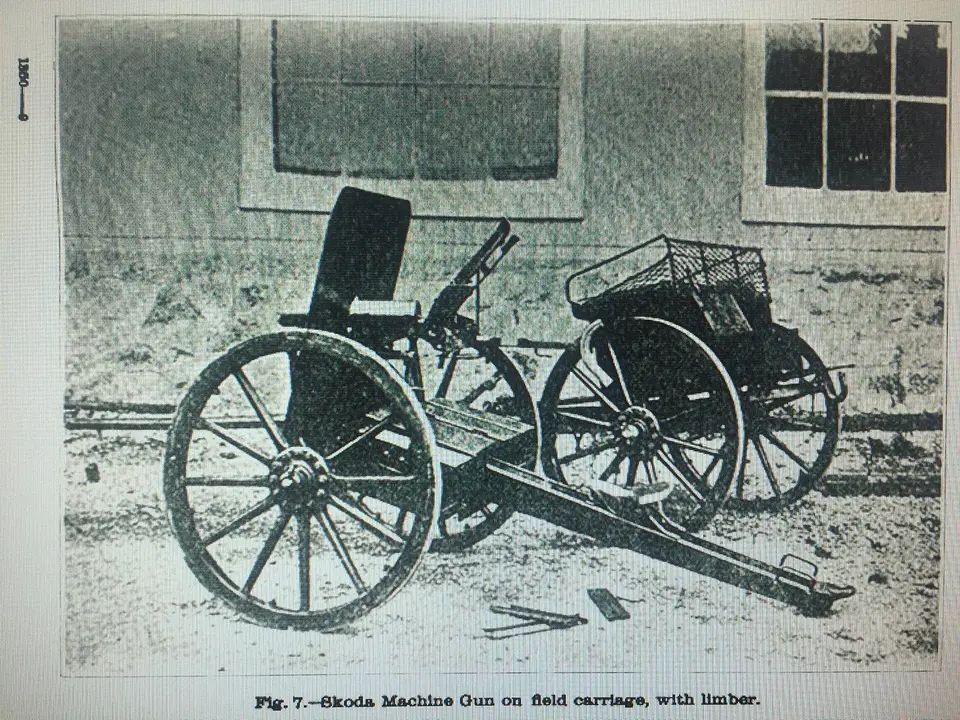
From June 14 to 18, General Dong Fuxiang's Gansu Army reinforced thousands of Boxers to encircle Seymour's forces at Langfang station. On the afternoon of June 18, Boxers charged in waves amidst rolling war drums, braving rapid-fire machine-gun salvos to engage allied troops in ferocious hand-to-hand melee, while regular Gansu riflemen maintained suppressive crossfire from peripheral buildings. Confronted by severe casualties, depleted munitions, and severed rail transit, Seymour abandoned his artillery wagons and ordered a desperate retreat toward Tianjin along the Peiho River. The Battle of Langfang shattered the myth of European military invincibility in China.
While Seymour's column stalled at Langfang, allied naval squadrons off the Bohai Gulf initiated offensive operations to seize the Dagu Forts. Commanding the mouth of the Hai River, Dagu served as the primary maritime gateway protecting the approach to Tianjin and Beijing. On June 16, naval commanders representing Russia, Britain, France, Japan, Germany, and Austria-Hungary issued an ultimatum demanding the unconditional surrender of the fortifications by dawn. Regional Brigade General Luo Rongguang flatly rejected the demand, rallying his garrison to swear an oath to defend the fortifications to the death.
At dawn on June 17, allied gunboats steamed up the Hai River and unleashed a ferocious naval bombardment against the north and south forts. Luo Rongguang coordinated counter-battery fire from heavy coastal emplacements, scoring direct hits that disabled and sank six allied warships and inflicted over two hundred casualties. However, allied landing parties landed along unprotected rear beaches, outflanking the citadel. When an allied shell detonated the main powder magazine in an enormous fireball, Luo Rongguang led surviving gunners in a final bayonet charge before falling in battle. The fall of Dagu opened the maritime doorway for massive allied reinforcements to pour into northern China.
News of the catastrophic loss of Dagu sent shockwaves through the Forbidden City. Empress Dowager Cixi convened four consecutive imperial conferences to chart a course of action. Pragmatic ministers including Xu Jingcheng and Yuan Chang pleaded for the suppression of Boxer mobs and the protection of foreign diplomats to avert disaster. However, Prince Duan Zaiyi and Gangyi forged a fraudulent diplomatic note alleging that foreign envoys demanded Cixi's immediate abdication. Enraged by this perceived threat to her throne, Cixi abandoned all restraint. On June 21, 1900, the Qing government issued an imperial edict declaring war against eleven foreign powers.
Bounties were placed on Western heads, Prince Zhuang Zaiyi and Grand Secretary Gangyi were assigned to command the Boxers, and Dong Fuxiang's Gansu Army was deployed to besiege the Dongjiaominxiang legation quarter and the Xishiku Cathedral. The legation compound housed four hundred armed guards, five hundred foreign civilians, and over two thousand Chinese converts under the command of British Minister Claude MacDonald. From June 20 onward, Boxers and regular soldiers subjected the perimeter to continuous artillery and rifle fire. However, Grand Councilor Ronglu, acutely aware that massacring foreign diplomats would invite dynastic ruin, intentionally withheld heavy Krupp siege guns and covertly dispatched food and fruit to the defenders, ensuring the legations held out for fifty-five days.
Following the capture of Dagu, allied reinforcements advanced inland to the foreign concessions at Zijzhulin in Tianjin, encircling the old walled city. Zhili Provincial Commander Nie Shicheng commanded the Wuwei Front Army, the most modernized Western-drilled infantry unit in the Qing military. Placing defense of the homeland above all else, Nie established defensive redoubts along the Haiguangsi and Balitai sectors, while Boxer leaders Zhang Decheng and Cao Futian mobilized tens of thousands of fighters to dispute the railway station and the concession perimeter.
Throughout late June and early July, the Laolongtou Railway Station was contested through bloody combat, changing hands multiple times as Gansu troops and Boxers assaulted entrenched Russian lines. Zhang Decheng deployed flaming oxen across minefields to breach barbed wire obstacles. Yet allied forces swelled to over twelve thousand men equipped with heavy artillery. On the morning of July 9, allied assault columns attacked the Balitai line under concentrated artillery barrages. Nie Shicheng rode across the frontlines directing fire; struck by seven bullets that tore open his abdomen, he fought on until collapsing from blood loss. On July 14, allied forces fired toxic chemical shells, breached the city walls with mines, and captured Tianjin, unleashing systemic slaughter and plunder across the metropolis.
Having pacified Tianjin, the allied command assembled an expeditionary army of over twenty thousand troops commanded by Japanese Lieutenant General Yamaguchi Motoomi, British Lieutenant General Alfred Gaselee, and Russian General Linevich. The strike force comprised eight thousand Japanese troops, forty-eight hundred Russians, three thousand British colonials, twenty-one hundred Americans, eight hundred French troops, and Austrian and Italian detachments. On August 4, the allied army advanced northward along both banks of the Grand Canal.
Qing divisions under Ma Yukun and Lyu Benyuan, supported by Boxer units under Li Laizhong, constructed fortified trench systems around Beicang. On the morning of August 5, allied forces launched frontal assaults, while Japanese regiments outflanked the Qing right wing. Chinese defenders inflicted heavy casualties on Japanese vanguards before allied batteries discharged chemical gas canisters, suffocating soldiers in the trenches and compelling a retreat. On August 6, allied forces routed demoralized imperial units at Yangcun. As cohesive resistance disintegrated, Qing garrisons at Tongzhou evacuated without fighting, leaving the approaches to Beijing undefended.
On August 14, 1900, allied columns reached Beijing and launched coordinated assaults against the city gates. Russian units forced the Dongbian Gate, American troops scaled the outer ramparts at the Guangqu Gate, Japanese artillery battered the Chaoyang and Dongzhi Gates, and British detachments slipped into the outer city through a drainage canal near the Guang'an Gate. General Dong Fuxiang commanded Gansu riflemen atop the Guangqu gatehouse, fighting hand-to-hand against scaling parties and killing American Captain Reilly before being overwhelmed by naval guns.
Within the capital, defense administration collapsed in utter chaos as imperial bannermen and Tiger Divine Battalions disintegrated. By the afternoon of August 14, British forces reached the Dongjiaominxiang legation quarter, lifting the siege. At dawn on August 15, American and Japanese forces assaulted the inner city walls and approached the Forbidden City. Recognizing that resistance was futile, Empress Dowager Cixi disguised herself in peasant attire and forced Emperor Guangxu into a wooden cart, fleeing westward through the Desheng Gate toward Xi'an under the guise of an imperial inspection tour. By August 16, allied soldiers established complete control over Beijing.
Upon occupying Beijing, the allied command partitioned the capital into administrative sectors under direct military rule, with Field Marshal Alfred von Waldersee establishing supreme headquarters in the Forbidden City's Yiluan Hall. Allied soldiers were granted free rein to engage in rampant murder, looting, and arson. Imperial palaces, aristocratic mansions, and civilian neighborhoods were systematically plundered. Countless cultural artifacts, imperial treasures, and rare archival holdings—including priceless manuscript volumes of the Yongle Encyclopedia and the Siku Quanshu—were carried off or destroyed, and the Hanlin Academy was burned to the ground. Thousands of civilian women drowned themselves in public wells to escape violation.
Concurrently, allied flying columns swept through Zhili and Shanxi, burning villages and massacring populations across Baoding, Zhengding, and Zhangjiakou, turning northern China into a desolate wasteland known as the Gengzi Calamity. Seizing this opportunity, the Russian Empire deployed eighteen divisions across Manchuria, orchestrating atrocities at Blagoveshchensk and the Sixty-Four Villages East of the River, slaughtering thousands of Chinese residents and occupying all three northeastern provinces.
When Cixi declared war on foreign nations, influential southern viceroys—including Liangjiang Viceroy Liu Kunyi, Huguang Viceroy Zhang Zhidong, Liangguang Viceroy Li Hongzhang, and Shandong Governor Yuan Shikai—recognized that anti-foreign extremism invited dynastic destruction. Through Shanghai Daotai Yu Lianyuan, they concluded the Mutual Protection of the Southeast pact with Western consuls. The provincial leaders agreed to protect foreign commerce and maintain public order in central and southern China, while allied powers pledged not to deploy troops into the Yangtze Valley. This pact preserved southern China from invasion, but rendered imperial decrees void and cemented regional autonomy over central control.
Following the fall of Beijing, Cixi issued a penitent decree from Xi'an, scapegoating the Boxers and ordering their annihilation while begging for peace. On September 7, 1901, Qing plenipotentiaries Li Hongzhang and Prince Yikuang signed the humiliating Boxer Protocol with eleven foreign nations. The Qing government agreed to pay a crushing indemnity of 450 million taels of silver (amortized over thirty-nine years to 982 million taels), demolish the Dagu Forts, permit foreign troops to garrison twelve strategic points along the Beijing-Shanhaiguan railway, establish the legation quarter as an exclusive armed foreign enclave, and execute pro-war officials. China was reduced entirely to a semi-colonial and semi-feudal society under multilateral imperialist control.
The Eight-Nation Alliance invasion concluded with the total defeat of Chinese armed forces and the complete subjugation of the Qing imperial administration. Following the capture of Tianjin and Beijing, allied troops perpetrated horrific atrocities, mass executions, and unprecedented cultural pillage, permanently incinerating ancient architectural complexes and dispersing national treasures across Western and Japanese collections. On September 7, 1901, the Qing empire accepted the catastrophic Boxer Protocol, obligating China to pay an extortionate indemnity of 450 million taels of silver (totalling over 982 million taels with interest), razing the defensive fortifications at Dagu, and conceding permanent foreign garrison rights along the railway artery from the sea to Beijing.
The invasion and the Boxer Protocol represented the tragic zenith of China's national humiliation in modern history. Politically, the imperial throne degenerated into an abject colonial instrument for foreign domination, entirely forfeiting its remaining domestic prestige and moral mandate among Chinese intellectuals and commoners. Economically, the staggering indemnity burden drained state coffers, requiring crippling tax levies that crushed agrarian and commercial livelihoods. Militarily, the abolition of coastal fortifications rendered the capital defenseless against foreign naval coercion. However, this profound catastrophe shattered lingering illusions regarding imperial dynastic revival, catalyzing the surge of radical republican revolutionary movements led by Sun Yat-sen and directly preparing the ground for the 1911 Revolution that overthrew the Qing dynasty.