Wang Anshi Introduces Exegesis Testing
Northern Song chancellor Wang Anshi abolishes poetry tests, introducing classical exegesis based on the New Interpretations of the Three Classics.
Ming Dynasty (明朝) · HISTORICAL EVENT
八股
The Establishment of the Eight-Legged Essay Examination System (八股) represents the foundational institutional development that defined bureaucratic recruitment and official literary prose throughout the Ming and Qing dynasties from 1370 to 1905 CE. Following the founding of the Ming dynasty, Emperor Taizu (Zhu Yuanzhang) sought to centralize imperial autocracy and establish standardized administrative selection by decreeing that imperial examinations test…
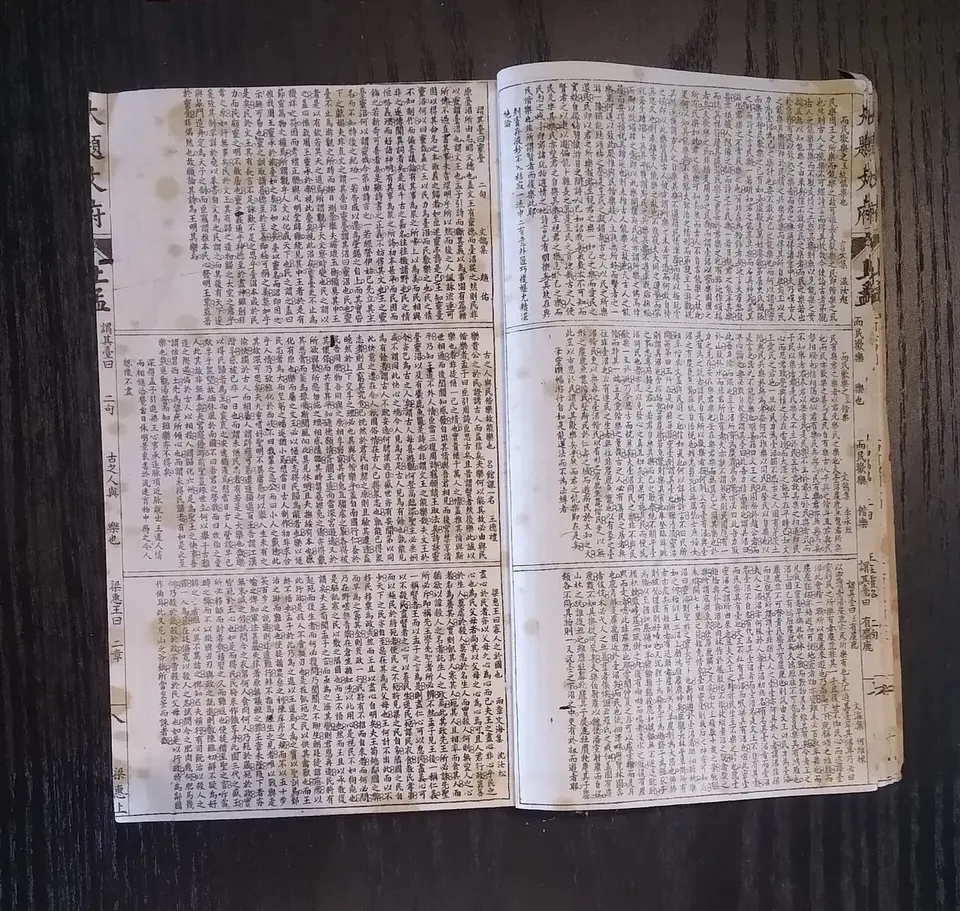
The Establishment of the Eight-Legged Essay Examination System (八股) represents the foundational institutional development that defined bureaucratic recruitment and official literary prose throughout the Ming and Qing dynasties from 1370 to 1905 CE. Following the founding of the Ming dynasty, Emperor Taizu (Zhu Yuanzhang) sought to centralize imperial autocracy and establish standardized administrative selection by decreeing that imperial examinations test the Four Books and Five Classics exclusively through the orthodox commentaries of Zhu Xi. In the practical administration of triennial provincial and metropolitan examinations, examiners required uniform and objective criteria to evaluate tens of thousands of candidate papers, driving the prose style from Song-dynasty classical exposition toward strict rhythmic parallelism. By the Chenghua and Hongzhi reigns, this evolutionary process culminated in the rigid eight-part composition known as the eight-legged essay, consisting of the opening, amplification, preliminary exposition, entry, starting legs, middle legs, later legs, and concluding legs. While celebrated literary stylists such as Tang Shunzhi and Gui Youguang infused classical vitality into the genre, the format grew increasingly sclerotic under Qing imperial censorship, degenerating into an artificial intellectual prison severely condemned by thinkers like Gu Yanwu and Yan Fu. In 1905 (the 31st year of Guangxu), facing existential geopolitical crises, the Qing throne abolished the imperial examinations altogether, bringing five centuries of eight-legged essay rule to an end.
Northern Song chancellor Wang Anshi abolishes poetry tests, introducing classical exegesis based on the New Interpretations of the Three Classics.
Emperor Renzong resumes the civil service examinations, designating the Four Books through Zhu Xi's commentaries as the primary first-session subject.
Zhu Yuanzhang establishes the three-session examination curriculum, specifying that first-session Four Books essays follow Song exegesis models.
Ming court enacts binding examination statutes mandating adherence to Cheng-Zhu commentaries and requiring candidates to adopt the persona of ancient sages.
Imperial decrees forbid transcribing official exam questions, directing all focus to the antithetical grand discourse.
Emperor Yongle issues the Great Compendia of the Four Books and Five Classics, standardizing imperial curriculum and promoting balanced prose.
Stylists led by Wang Ao and Xie Qian establish the four-pair antithetical essay, creating the definitive eight-part format.
Tang Shunzhi and Gui Youguang blend ancient prose into examination writing, elevating the aesthetic quality of the genre.
The Qing court establishes purity, genuineness, elegance, and rectitude as official stylistic standards, banning heterodox phrasing.
Emperor Qianlong publishes the Imperial Canon of Four Books Essays, establishing an immutable national template.
Emperor Guangxu decrees the replacement of the eight-legged essay with modern policy essays; reversed following Cixi's coup.
Following the Boxer Crisis, the Qing court adopts the Jiangchu Huizou proposals, permanently abolishing the eight-legged essay format.
Prompted by memorials from Yuan Shikai and Zhang Zhidong, the Qing throne terminates all civil service examinations, ending the system.
During the Northern Song Xining reforms under Emperor Shenzong, Chancellor Wang Anshi abolished the traditional civil service tests based on poetic composition, rhymeprose, and rote textual recall. Instead, Wang Anshi introduced examinations based on classical exegesis and policy essays, compiling the New Interpretations of the Three Classics as the authoritative national examination standard. Although fierce factional struggles erupted during the Yuanyou era, the court compromised by establishing concurrent tracks for poetry and classical exegesis. In Southern Song times, exegesis essays increasingly incorporated parallel phrasing borrowed from poetry. The Yuan dynasty's restoration of the examinations in 1315 firmly positioned the Four Books as the first-session subject, establishing the institutional foundation upon which the Ming dynasty would build the eight-legged essay system.
During the Jiading reign of the Southern Song dynasty, the court officially recognized Zhu Xi's Collected Commentaries on the Four Books as imperial state orthodoxy. Following the Mongol conquest and the resumption of the examinations under Emperor Renzong of Yuan, statutes mandated that all candidates interpret the classics strictly through Cheng-Zhu commentaries. By enforcing ideological uniformity through dynastic power, the imperial state eliminated competing schools of thought, channeling all scholarly efforts into mastering rhetorical presentation within an immutable doctrinal framework. This absolute ideological monopoly provided the necessary structural condition for the rapid formalization of examination prose.
Upon establishing the Ming dynasty at Nanjing, Emperor Taizu and principal advisors Liu Ji and Song Lian prioritized recruiting talented administrators. In 1370 (the 3rd year of Hongwu), imperial decrees resumed civil service examinations, specifying that the first session test Four Books and Five Classics exegesis modeled loosely on Song dynasty forms. However, confronted by thousands of examination manuscripts, examiners urgently required objective, recognizable, and uniform structural metrics to grade papers efficiently without personal bias. The institutional demands of mass grading directly fostered a preference for balanced symmetrical phrasing, propelling classical prose toward systematic parallelism.
In 1071 CE, Chancellor Wang Anshi launched sweeping civil service reforms, arguing that poetic games failed to select upright officials capable of governing the realm. He substituted classical exegesis and policy questions for poetry, publishing the New Interpretations of the Three Classics as the sole authorized answer key for metropolitan examiners. Candidates were required to elucidate the moral and political principles embedded within canonical texts. To evaluate vast numbers of manuscripts rapidly, examiners demanded rigorous logical structures, fostering the earliest standardized exposition essays and embedding an enduring evolutionary momentum toward rhythmic formalization.
Following the accession of Emperor Zhezong and the regency of Empress Dowager Gao in 1086 CE, conservative ministers led by Sima Guang and Su Shi dismantled Wang Anshi's new policies. However, while rejecting Wang Anshi's ideological monopoly, Su Shi and his allies acknowledged the educational value of classical studies. The court instituted a dual-track examination system, distinguishing between poetry-track and exegesis-track candidates while requiring both to test on classical meaning in the preliminary round. In practice, candidates on both tracks blended the rhetorical elegance of poetry with the analytical rigor of exegesis, accelerating the incorporation of parallel structures into scholarly prose.
By the late Southern Song dynasty, competition in imperial examinations intensified dramatically, driving classical exegesis into hyper-formalized artifice. Candidates adhered to rigid conventions, artificially partitioning answers into symmetrical paragraphs and employing obscure synonyms in the opening sentences to mirror the exam topic indirectly. Essays expanded to thousands of words that merely repeated the opening thesis. Neo-Confucian philosopher Zhu Xi sharply condemned this hollow pedantry, proposing that essays be limited to five or six hundred words focused directly on the authentic intent of ancient sages. While unheeded in his lifetime, Zhu Xi's ideal of concise, principle-centered argumentation became the primary inspiration for early Ming reformers.
In 1212 CE (the 5th year of Jiading), the Southern Song court formally designated Zhu Xi's commentaries on the Analects and Mencius as authorized textbooks for imperial academies, transforming private academy scholarship into state dogma. Following decades of suspended examinations under early Mongol rule, Emperor Renzong promulgated the Yanyou Restoration in 1314, staging nationwide examinations in 1315. Crucially, the Yuan regulations placed Zhu Xi's Four Books at the center of the first examination session, subordinating the Five Classics to secondary status. This reform established the Four Books as the universal intellectual currency of Chinese scholars, forming the immediate institutional prototype of the Ming eight-legged essay.
Yuan civil service statutes established a rigorous three-session examination curriculum. In the first session, Han and Southern candidates were examined on Four Books queries requiring over two hundred characters, alongside Five Classics exegesis requiring over five hundred characters. Scholar Cheng Duanli's contemporary guide Daily Study Schedule Divided by Years detailed the rigid compositional stages required of students, including the opening, connection, introductory speech, and grand discourse. In the grand discourse section, candidates organized arguments into pairs of parallel paragraphs, cultivating the structural skeleton of the eight-legged format.
In 1370 CE, Emperor Taizu issued decrees inaugurating the first triennial examinations of the Ming dynasty at Nanjing. Co-designed by Liu Ji and Song Lian, the regulations established a three-session format: the first session tested Four Books and Five Classics exegesis, the second tested historical discourses and imperial decrees, and the third examined administrative policy questions. The imperial edict specified that first-session exegesis should follow Song models, mandating a minimum length of two hundred characters for Four Books essays and three hundred for Five Classics essays. Candidates quickly recognized that balanced, parallel phrasing appealed most strongly to grading examiners.
Dissatisfied with the practical administrative competence of early graduates, Emperor Taizu briefly suspended the examinations in 1373, relying instead on personal recommendation. Recognizing the flaws of nepotism, the emperor reinstated the examinations in 1384 (the 17th year of Hongwu) and promulgated the authoritative Imperial Examination Regulations. This landmark statute decreed that examination questions must derive exclusively from the Four Books and Five Classics, and interpretations must strictly follow Cheng-Zhu commentaries. Furthermore, candidates were legally required to adopt the voice of ancient sages, speaking in the persona of Confucius or his disciples without introducing modern historical references.
To eliminate superfluous padding, Emperor Taizu issued a decisive decree in 1391 (the 24th year of Hongwu): examinations must proceed directly into the grand discourse immediately following the opening and connection, explicitly forbidding candidates from re-transcribing the official examination question. This mandate compelled candidates to focus all rhetorical energy on the central grand discourse section. To sustain momentum and demonstrate compositional mastery, scholars organized the grand discourse into balanced, antithetical paragraph blocks, cementing the structural shift toward systematic parallelism.
Following the relocation of the imperial capital to Beijing, Emperor Yongle commissioned the compilation of the Great Compendia of the Four Books, Five Classics, and Human Nature and Principle, promulgated in 1415 as the universal curriculum for imperial academies. This ideological consolidation eliminated textual debates, directing all intellectual energy into stylistic and rhythmic refinement. Under the influence of the three Yang grand secretaries (Yang Shiqi, Yang Rong, and Yang Pu), the court patronized the balanced, dignified Taige style, and the four-pair, eight-paragraph structure became the recognized hallmark of superior scholarship.
During the Tianshun and Chenghua eras (1457–1487 CE), examination prose achieved mature rhythmic discipline under the stewardship of court ministers such as Xu Pu and Shang Lu. Faced with thousands of papers that had to be graded within two weeks, examiners favored papers exhibiting crystalline structural progression, impeccable antithesis, and sonorous cadence. Leading stylists like Wang Ao perfected the art of distributing the grand discourse into four pairs of mutually responsive paragraphs. Wang Ao's prize-winning papers from the 1474 metropolitan examination were printed nationwide, establishing the structural standard for subsequent generations.
The Hongzhi reign (1488–1505 CE) represented the golden age of classical eight-legged essay prose. Grand Secretaries Xie Qian and Fei Hong championed pure, balanced, and principled compositions that integrated moral doctrine with rhetorical perfection. Commercial publishers across Jiangnan circulated anthologies of prize essays, embedding terms like starting legs and middle legs into general literacy. By the close of the Hongzhi era, the eight-part structure had gained universal acceptance under the titles of current prose (shiwen) and regulated composition (zhiyi), serving as the primary vehicle of dynastic meritocracy.
A mature eight-legged essay followed an inflexible structural sequence. The first stage, the opening (poti), consisted of two sentences that stated the essential meaning of the prompt without directly quoting its vocabulary. The amplification (chengti) followed with three to four sentences expanding the thesis. The preliminary exposition (qijiang) introduced universal moral principles through rhetorical particles such as 'now' or 'it is said'. Finally, the entry (rushou) transitioned from abstract philosophy to the specific historical protagonist or context of the prompt, preparing the stage for the parallel paragraphs of the grand discourse.
The defining core of the essay resided within the four pairs of antithetical paragraphs known collectively as the eight legs. The starting legs (qigu) introduced preliminary considerations with relatively nimble, short parallel phrases. The middle legs (zhonggu) formed the rhetorical climax, presenting substantive philosophical arguments through extended, balanced periods. The later legs (hougu) deepened the analysis through counter-arguments or multi-tiered deductions. Finally, the concluding legs (shugu) brought the themes together through concise parallel summaries before a brief unrhymed coda brought the essay to a close.
Mastery of the eight-legged essay required handling diverse prompt lengths through the subtle interplay of concrete historical facts and abstract philosophical truths. In two-clause prompts, candidates allocated four legs to the upper clause and four legs to the lower clause, alternating between principle and application. Single-sentence prompts followed continuous linear development, whereas lengthy multi-sentence chapters required symmetrical division across the paragraph units. This exacting method transformed essay writing into an intricate display of structural discipline.
As centuries of examinations exhausted standard canonical passages, examiners increasingly resorted to artificial split-and-Joined prompts (jiedati) to prevent memorized answers. Examiners spliced together the first half of one sentence with the second half of another, or fused unrelated verses across different chapters. In response, candidates expended immense intellectual energy fabricating artificial semantic bridges through clever syntactic sleight-of-hand. This pedantic exercise distorted classical meaning, reducing the moral mission of Confucian scholarship into petty grammatical games.
During the Zhengde and Jiajing eras, philosopher Wang Yangming founded the School of Mind (Xinxue), advocating the unity of knowledge and action and the innate knowing of the mind. Passing the metropolitan examination in 1499, Wang demonstrated that the human mind shared identical moral substance with ancient sages. Influenced by this philosophy, mid-Ming candidates broke free from dry recitations of Zhu Xi's commentaries, infusing their essays with intense personal conviction, dynamic reasoning, and introspective depth. This movement revitalized the genre with speculative vitality across the academies of Jiangnan.
Concurrently, the Early Seven Masters led by Li Mengyang and He Jingming initiated an archaizing literary movement championing Qin and Han prose styles. As prominent scholar-officials, their aesthetic ideals transformed examination writing. Scholars abandoned the smooth complacency of earlier court prose, incorporating the vigorous syntax, antique vocabulary, and sweeping cadence of Sima Qian's Records of the Grand Historian into their eight-legged essays. This trend elevated the literary prestige of examination prose, narrowing the gap between classical literature and examination writing.
In the mid-sixteenth century, leaders of the Tang-Song School—including Tang Shunzhi, Gui Youguang, and Wang Shenzhong—opposed mechanical imitation of archaic texts, championing the expressive, fluid prose of the eight great masters of Tang and Song. Tang Shunzhi achieved first place in the 1529 metropolitan examination, demonstrating how deep classical learning could harmonize within examination formats. Gui Youguang achieved celebrated fame, crafting prose that blended personal sincerity, natural flow, and rigorous antithetical balance. Their anthologies served as timeless models for Ming and Qing intellectuals.
During the Longqing and Wanli reigns, rapid commercialization and urban expansion fostered an intellectual climate prizing individualism and literary novelty. Faced with fierce examination competition, scholars sought to captivate examiners through startling compositional mechanics (jifa) and haughty philosophical postures (lingjia). Candidates introduced vernacular idioms, popular phrases, and Chan Buddhist paradoxes into their essays. While expanding stylistic boundaries, this pursuit of sensationalism eroded the balanced gravity of classical statecraft prose.
In the late Wanli and Tianqi eras, candidates broadened their reading beyond Neo-Confucian tracts to embrace the Daoist, Legalist, and Mohist classics of the ancient Hundred Schools of Thought. Authors incorporated paradoxes from Zhuangzi, statecraft theories from Han Feizi, and parables from Huainanzi into their Four Books expositions. Intellectuals such as Dong Qichang praised this intellectual cross-fertilization. However, the resulting ideological unorthodoxy alarmed conservative authorities, who viewed the trend as a dangerous symptom of moral and political decay.
During the Tianqi and Chongzhen eras (1621–1644 CE), as peasant rebellions raged and Manchu armies pressured the northern frontier, the Ming court attributed national crisis to the moral degeneration of the scholar-gentry. Emperor Chongzhen issued strict decrees ordering examiners to reject any manuscript exhibiting bizarre phrasing, unorthodox allusions, or heterodox interpretations. Hundreds of candidates were disqualified in the 1624 and 1634 examinations. However, these punitive administrative measures failed to arrest the institutional and military collapse of the dynasty.
In the final years of the Ming dynasty, youth literary societies such as the Jishe and Fushe, spearheaded by Chen Zilong and Xia Yunyi, sought to revive archaic literary standards and practical statecraft scholarship to rescue the empire. Chen Zilong compiled the monumental Imperial Ming Compendium of Statecraft Writings and advocated dignified, robust examination prose. In the 1631 metropolitan examination, examiners purged trivial and florid essays, promoting Chen Zilong's noble, antique compositions. Following the fall of Beijing and the southern campaigns, Chen Zilong and his comrades died fighting the Manchu invasion, concluding the Ming chapter of eight-legged essay history.
Following their entry into Beijing in 1644, the Qing rulers retained the Ming civil service examinations to conciliate the Han Chinese literati. In October 1645 (the 2nd year of Shunzhi), the court promulgated a historic statute declaring: "Prose has its standard form. All words and phrases must be classical, pure, and dignified, and candidates are forbidden from quoting heterodox schools." This decree established purity, genuineness, elegance, and rectitude (qing-zhen-ya-zheng) as the supreme aesthetic and political criterion of Qing examination writing, initiating rigorous state supervision over literati thought.
In 1652, Emperor Shunzhi reviewed examination papers and discovered that candidates still employed convoluted late Ming phrasing. The throne issued a decree commanding provincial examiners to reject any essay deviating from Chenghua, Hongzhi, and Jiajing models, threatening disciplinary punishment for offending candidates and examiners. This strict enforcement dismantled late Ming experimentation, re-anchoring scholars to literal interpretations of Zhu Xi's commentaries.
Emperor Kangxi recognized that patronizing Confucian scholarship was essential to consolidate Manchu legitimacy over China. Presenting an inscribed tablet honoring Zhu Xi in 1686, Kangxi directed examiners to reward essays adhering to the classical methods of Wang Ao, Tang Shunzhi, and Gui Youguang. Imperial officials including Li Guangdi compiled the Imperial Exegesis of the Four Books, while scholar Lu Longqi authored authoritative manuals instructing students on structural symmetry. Under Kangxi's patronage, Qing examination prose achieved crystalline formal perfection.
Under Emperor Yongzheng, the court intensified constraints on literary content, instituting an absolute ban on citing historical events occurring after the three ancient dynasties of Xia, Shang, and Zhou. Candidates were forbidden from alluding to Qin, Han, Tang, or Song figures within Four Books essays. This rule enforced total immersion in the persona of ancient sages, eliminating references to contemporary imperial governance and turning the essay into a closed linguistic exercise.
Emperor Qianlong asserted unprecedented autocratic control over literati culture. In 1754, while reviewing top metropolitan examination papers, Qianlong discovered the phrase 'nine-twisted intestines' in the paper of the highest-ranking candidate. Tracing the phrase to Han historian Sima Qian, Qianlong issued an imperial reprimand, castigating the author for utilizing post-classical vocabulary in a sacred Confucian exegesis and penalizing the examiners. This imperial intervention elevated literary scrutiny into an instrument of dynastic terror.
To establish a definitive national standard, Emperor Qianlong ordered Grand Secretary Fuheng and Liu Tongxun in 1765 to compile an exhaustive anthology of Ming and Qing masterworks. Published in 1776 by the Imperial Printing Office, the Imperial Canon of Four Books Essays (Qinding Sishu Wen) comprised hundreds of volumes distributed to all academies and examination compounds. Serving as an immutable blueprint, this imperial anthology established absolute formal uniformity, extinguishing any remaining vitality in the genre.
The institutionalization of speaking in the voice of ancient sages (dai shengxian liyan) served as the ideological core of Qing dynastic autocracy. By monopolizing textual interpretation, the throne transformed imperial literati into docile instruments of monarchical will. Candidates were conditioned to suppress individual perspectives, emotional realities, and social critiques, reducing intellectual life into passive conformity with state-prescribed formulas.
During the Jiaqing and Daoguang eras (1796–1850 CE), as internal rebellions and economic exhaustion battered the dynasty, the throne responded by imposing rigid word-count restrictions on examination papers. Regulations mandated that Four Books essays contain between six hundred and seven hundred characters; exceeding or falling short of this range resulted in immediate disqualification. Essay composition degenerated into counting words and balancing syllables, producing uniform, soulless exercises in pedantry.
Following the fall of the Ming dynasty, philosopher Gu Yanwu delivered a devastating indictment of the system in his Record of Daily Knowledge (Rizhi Lu): "The harm of the eight-legged essay equals the burning of books, and its destruction of human talent exceeds the executions outside Xianyang, where merely 460 scholars were buried." Gu pointed out that while Qin Shi Huang destroyed physical books, the examination system drained the intellectual vitality of millions over centuries, leaving the nation defenseless in times of crisis.
In his Waiting for the Dawn (Mingyi Daifang Lu), Huang Zongxi exposed how the examinations selected self-serving sycophants who abandoned their posts during crises. Wang Fuzhi similarly attacked the format in his Commentaries on the Comprehensive Mirror, demonstrating that the system served solely to perpetuate imperial autocracy at the expense of national survival. Their critiques provided the intellectual foundation for the late Qing abolition movement.
Following China's defeat in the First Opium War, visionary intellectuals led by Lin Zexu and Wei Yuan championed the revival of practical statecraft scholarship (jingshi zhiyong). Wei Yuan argued in the Illustrated Treatise on the Maritime Kingdoms that China's defeats stemmed directly from an educational system that produced scholars ignorant of geography, military engineering, and foreign affairs, demanding the introduction of modern sciences into civil selection.
Establishing their capital at Nanjing in 1853, the Taiping Heavenly Kingdom banned Confucian texts and abolished the eight-legged essay, conducting examinations based on vernacular policy discourses dealing with military and agrarian administration. The Taiping regime also permitted women to sit for examinations, producing China's first female examination graduate, Fu Shanxiang. While short-lived, the Taiping experiment shattered the myth of the eight-legged essay's inviolability.
During the Self-Strengthening Movement, officials led by Prince Gong and Li Hongzhang established the Tongwen Guan in 1862. In 1867, they proposed admitting examination graduates to study astronomy and mathematics with civil advancement guarantees. This proposal provoked furious resistance from conservative Grand Secretary Wo-ren, who claimed that dynastic survival rested upon Confucian virtue rather than foreign techniques. While the academy was established, the controversy highlighted the irreconcilable divide between classical examinations and modern statebuilding.
Following the catastrophic defeat in the First Sino-Japanese War, Kang Youwei and over one thousand provincial examination candidates submitted the famous 1895 memorial (Gongche Shangshu) to Emperor Guangxu. Kang passionately argued that national humiliation stemmed directly from the eight-legged essay, which squandered the youth of the nation's finest minds on useless composition, urging the sovereign to replace classical exams with modern policy questions and institutionalize public schooling.
Pioneering translator Yan Fu published a series of essays in 1895, including On Strength (Yuan Qiang) and On Salvation, applying Darwinian evolution and scientific empiricism to critique traditional education. Yan Fu declared that abolishing the eight-legged essay was the absolute prerequisite for national salvation, arguing that the system paralyzed intellect, corrupted moral character, and fostered parasitic elites incapable of productive labor.
During the Hundred Days of Reform in 1898, Emperor Guangxu issued an imperial decree on June 23 abolishing the eight-legged essay in provincial and metropolitan examinations in favor of policy essays on Chinese history and Western sciences, while ordering the conversion of traditional academies into modern schools. This decree dealt a fatal blow to the five-century-old format, eliciting enthusiastic praise from reformist scholars across China.
The abolition of the essay provoked fierce resistance from conservative Manchus and old-style scholars who lacked modern skills. On September 21, 1898, Empress Dowager Cixi launched a palace coup, imprisoning Emperor Guangxu and executing the Six Gentlemen of the Reform. Cixi promptly issued an edict reinstating the Four Books eight-legged essay, seeking to rally conservative support. However, this reactionary restoration proved short-lived amidst escalating national crisis.
Following the Boxer catastrophe and the allied occupation of Beijing in 1900, the Qing court was forced to accept humiliating peace terms. In 1901, Viceroys Liu Kunyi and Zhang Zhidong submitted their famous joint memorials (Jiangchu Huizou), warning that failing to foster modern talent would lead to dynastic extinction. They proposed abolishing the eight-legged essay permanently, replacing it with questions on domestic governance and international sciences. Cixi capitulated, abolishing the essay format for good in late 1901.
Although the eight-legged format was abolished, the persistence of the imperial examination system continued to drain students away from newly established schools. In 1903, Huguang Viceroy Zhang Zhidong and Zhili Viceroy Yuan Shikai submitted joint petitions urging the gradual phase-out of the examinations to secure enrollment and funding for modern academies.
In 1904, the final metropolitan examination was conducted in Beijing, with Liu Chunlin emerging as the last imperial graduate. The outbreak of the Russo-Japanese War in Manchuria delivered a profound shock to Chinese elites, demonstrating that Japan's modernization stemmed from constitutional government and universal schooling. On September 2, 1905, Yuan Shikai, Zhang Zhidong, and southern viceroys submitted a joint emergency memorial pleading for the immediate termination of the civil service examinations.
On September 3, 1905 (the 5th day of the 8th month in the 31st year of Guangxu), the imperial throne issued the decree announcing: "Beginning in 1906, all provincial and metropolitan examinations shall be suspended immediately, alongside regional qualifying tests." This decree brought the 1,300-year-old examination system and its five-century-old eight-legged essay component to an end, paving the way for the development of modern educational institutions across China.
From its origins in the early Ming to its abolition in 1905, the eight-legged essay exerted profound influence across Chinese civilization. In its earlier centuries, the format provided an objective meritocratic mechanism that checked aristocratic monopoly, providing institutional stability. However, its ossification under imperial autocracy extinguished creative thought, crippling scientific inquiry. Its abolition was the necessary price China paid to transition from dynastic tradition into the modern era.
The execution of the eight-legged essay system depended upon extensive provincial examination compounds (Gongyuan) in provincial capitals and Beijing. Compounds contained thousands of narrow five-foot brick cubicles arranged in long rows. Candidates endured grueling sessions under summer heat or winter cold, writing under candlelight while locked inside their cells for days under armed surveillance.
To guarantee absolute grading impartiality, the Ming and Qing administrations developed sophisticated anti-corruption mechanisms. Submitted papers were sealed (mifeng) to conceal personal identities, assigned secret control numbers, and recopied in red ink (tenglu) by scribes to prevent handwriting recognition before being reviewed by examiners, ensuring that compositions were evaluated solely on structural merit.
Inside the inner compound, assistant examiners evaluated red-ink copies, inspecting the opening and amplification before reading the parallel legs. Promising papers were marked with cinnabar circles and forwarded to chief examiners as recommended papers (jianjuan). Evaluative comments published in post-examination volumes established literary trends for aspiring scholars nationwide.
The prestige of the imperial examinations extended across East Asia. The Joseon dynasty in Korea incorporated Four Books and Five Classics exegesis into its examinations, while Vietnam's Le and Nguyen dynasties instituted eight-legged essay tests modeled on Chinese statutes. Scholars in the Ryukyu Kingdom similarly studied classical anthologies, demonstrating the transnational institutional reach of the Confucian civil service system.
In modern scholarship, historians such as Qian Mu have reappraised the eight-legged essay beyond late Qing polemics. Scholars recognize that early masterworks achieved extraordinary syntactic discipline and philosophical depth. Reassessing the system clarifies the structural dynamics of classical Chinese governance and provides valuable insights into the design of modern meritocratic institutions.
The institutionalization and eventual abolition of the eight-legged essay system spanned five hundred and thirty-five years, progressing from early Ming foundational statutes to Chenghua-Hongzhi formalization, Qing ideological tightening, and ultimate dissolution in 1905. Over five centuries, the essay evolved from a flexible medium of classical commentary into an inflexible rhetorical exercise enforcing state orthodoxy. On September 3, 1905, the Qing throne promulgated the imperial edict suspending all civil service examinations, rendering provincial examination halls obsolete overnight and dismantling the traditional pathway to civil rank.
The eight-legged essay system exerted profound dual effects across late imperial Chinese civilization. Politically and socially, its standardized metrics and meritocratic accessibility checked aristocratic dominance, providing rural elites and commoners with an institutionalized channel for upward mobility that anchored imperial rule. Culturally and stylistically, the format drove the rhythmic, antithetical capabilities of the classical Chinese language to extraordinary heights. However, by restricting scholarly inquiry to literal repetitions of Song commentaries, the system stifled scientific innovation, creative philosophy, and practical governance skills, leaving China ill-equipped to confront modern Western imperialism. The dissolution of the system eliminated the principal obstacle to modern education, catalyzing the rise of a new intelligentsia that spearheaded the 1911 Revolution.