Murong De crossed south and proclaimed himself emperor, established his capital at Guanggu, and founded Southern Yan.
398 CE–410 CE
Southern Yan
Regional polity南燕
Southern Yan was a regional regime established by the Murong branch of the Xianbei during the Sixteen Kingdoms period. After the death of Murong Chui, ruler of Later Yan, internal disorder weakened the state. His kinsman Murong De led his followers south across the Yellow River and established control in the area of present-day Shandong. In 398 he proclaimed himself emperor and made Guanggu the capital, creating the polity known in historiography as Southern Yan. Its institutions broadly…
398 CE–410 CECapital · See entry
ERA OVERVIEW
Southern Yan was a regional regime established by the Murong branch of the Xianbei during the Sixteen Kingdoms period. After the death of Murong Chui, ruler of Later Yan, internal disorder weakened the state. His kinsman Murong De led his followers south across the Yellow River and established control in the area of present-day Shandong. In 398 he proclaimed himself emperor and made Guanggu the capital, creating the polity known in historiography as Southern Yan. Its institutions broadly followed earlier Wei and Jin models, and the state was short-lived, with only two rulers. In 410, the Eastern Jin sent Liu Yu on a northern expedition. He captured Guanggu and took the last ruler Murong Chao prisoner, bringing Southern Yan to an end. Southern Yan existed for only a little more than a decade but was an important regional regime in Shandong during the later Sixteen Kingdoms period. Its rise and fall were closely connected to the growth of Northern Wei and Eastern Jin northern campaigns.
Time span398 CE–410 CE
CapitalSee entry
ERA TIMELINE
After Huatai was captured by Northern Wei, Murong De adopted a proposal by his official Pan Cong, moved east, seized Qing and Yan territories, and occupied Guanggu.
Murong De changed his title to emperor and adopted the Jianping era name.
Murong De died, and his nephew Murong Chao succeeded him; one account describes the succession as a formal transfer.
At this point, the Eastern Jin strongman Liu Yu led a northern expedition against Southern Yan; the two sides fought and Southern Yan suffered repeated defeats.
Liu Yu of Eastern Jin campaigned north, captured Guanggu, took Murong Chao prisoner, and destroyed Southern Yan.
FULL ENTRY
Overview
Southern Yan was a regional regime established by the Murong branch of the Xianbei during the Sixteen Kingdoms period. After the death of Murong Chui, ruler of Later Yan, internal disorder weakened the state. His kinsman Murong De led his followers south across the Yellow River and established control in the area of present-day Shandong. In 398 he proclaimed himself emperor and made Guanggu the capital, creating the polity known in historiography as Southern Yan. Its institutions broadly followed earlier Wei and Jin models, and the state was short-lived, with only two rulers. In 410, the Eastern Jin sent Liu Yu on a northern expedition. He captured Guanggu and took the last ruler Murong Chao prisoner, bringing Southern Yan to an end. Southern Yan existed for only a little more than a decade but was an important regional regime in Shandong during the later Sixteen Kingdoms period. Its rise and fall were closely connected to the growth of Northern Wei and Eastern Jin northern campaigns.
Historical Development
Establishment: After the death of Later Yan ruler Murong Chui, struggles among his sons weakened the state. Murong De was a senior member of the Later Yan imperial clan. Seeing the state’s decline and having no intention of returning north, he led his followers across the Yellow River in 398, proclaimed himself Prince of Yan, later assumed the imperial title, and established his capital at Guanggu. Southern Yan was thus founded.
Height: During Murong De’s reign, the government settled refugees, rectified official administration, and controlled parts of Qing and Yan provinces. Guanggu became a relatively stable regional center, and the regime consolidated its rule.
Turning point: In 405, Murong De died and his nephew Murong Chao succeeded him; one account describes this as a formal transfer of the throne. During Murong Chao’s reign, policy deteriorated. He favored slanderous close associates, distrusted members of the imperial clan, and neglected military preparedness, causing the government to weaken.
Decline: Murong Chao mishandled both domestic affairs and foreign relations. Relations with Eastern Jin and Northern Wei were poor, divisions grew within the polity, and its strength steadily declined.
Fall: From 409 to 410, the Eastern Jin strongman Liu Yu led a northern expedition against Southern Yan. Southern Yan lost successive engagements. In 410, Jin forces captured Guanggu and took Murong Chao alive, bringing Southern Yan to an end.
Politics and Institutions
Southern Yan’s official system broadly followed earlier Wei and Jin practice. The source describes it as maintaining the Three Departments and Six Ministries together with high offices and court dignitaries, with central administration centered on institutions such as the Department of State Affairs. The founding ruler Murong De employed both Han officials and veteran Xianbei commanders. Locally, the state used the province-commandery-county system and established administrative units in Shandong. Official selection retained elements of the Nine-Rank Rectifying System and valued aristocratic reputation. Law broadly followed Jin statutes, while the actual details of enforcement are preserved only incompletely in the historical sources. Censorial officials are also recorded, but details of their operation are limited and are described in the relevant entries.
Military and Diplomacy
Southern Yan relied on Xianbei cavalry. At its founding, Murong De used his personal forces and incorporated refugees into the army. The regime defended strategic positions and for a time resisted Northern Wei pressure from the north. During its decline, military preparedness weakened. Murong Chao failed to improve defenses, and the polity was eventually besieged and destroyed by the army of the Eastern Jin commander Liu Yu. Diplomatically, Southern Yan maneuvered among the various Yan regimes, Northern Wei, and Eastern Jin. In the early period it sought security in the regional balance of power; in the later period conflict with Eastern Jin intensified and ultimately resulted in its destruction.
Economy and Commerce
Southern Yan controlled parts of Qing and Yan provinces in a relatively productive eastern region. Agriculture had a substantial local base. At the beginning of the regime, the government settled refugees and encouraged farming and sericulture, helping restore production. Guanggu served as a regional city and supported some commerce. Overall, however, Southern Yan’s short duration limited the scale of economic development; details are described in the relevant entries.
Culture and Society
Southern Yan inherited traditions from Later Yan. Culturally and socially, the Xianbei Murong group and Han communities increasingly interacted. The court made extensive use of Chinese institutions and ritual and employed Han scholars in government. Social life retained elements of Wei-Jin elite culture while also preserving Xianbei martial customs. Murong De, Murong Chao, and their ministers are described as valuing Confucian learning and education, but the state’s short duration limited the scale of cultural development.
Rulers and Governing Core
Murong De, Murong Chao.
> This section describes the rulers’ positions in the evolution of the polity; full individual biographies are carried by the corresponding person entities.
Historical Assessment and Legacy
Contemporary assessment: Southern Yan rulers and officials claimed to continue the legitimate Yan line and sought to preserve their state in Shandong. The Xianbei Murong group formed the political core, and members of the polity displayed considerable identification with the regime. Because Murong Chao favored close associates and rejected remonstrance, resentment grew at court and among the population, and contemporaries often blamed his conduct.
Later historical assessment: Later historians generally view Southern Yan as a short-lived regional regime in the final phase of the Sixteen Kingdoms. They acknowledge its efforts to settle people and stabilize territory while criticizing its failure to maintain military preparedness, which contributed to its fall. Modern studies often use Southern Yan as a case for examining regime change in the Sixteen Kingdoms and the shifting balance between northern and southern powers. Although short-lived, Southern Yan left traces in the historical memory and cultural remains of Shandong.
Rulers
Murong De, Murong Chao.
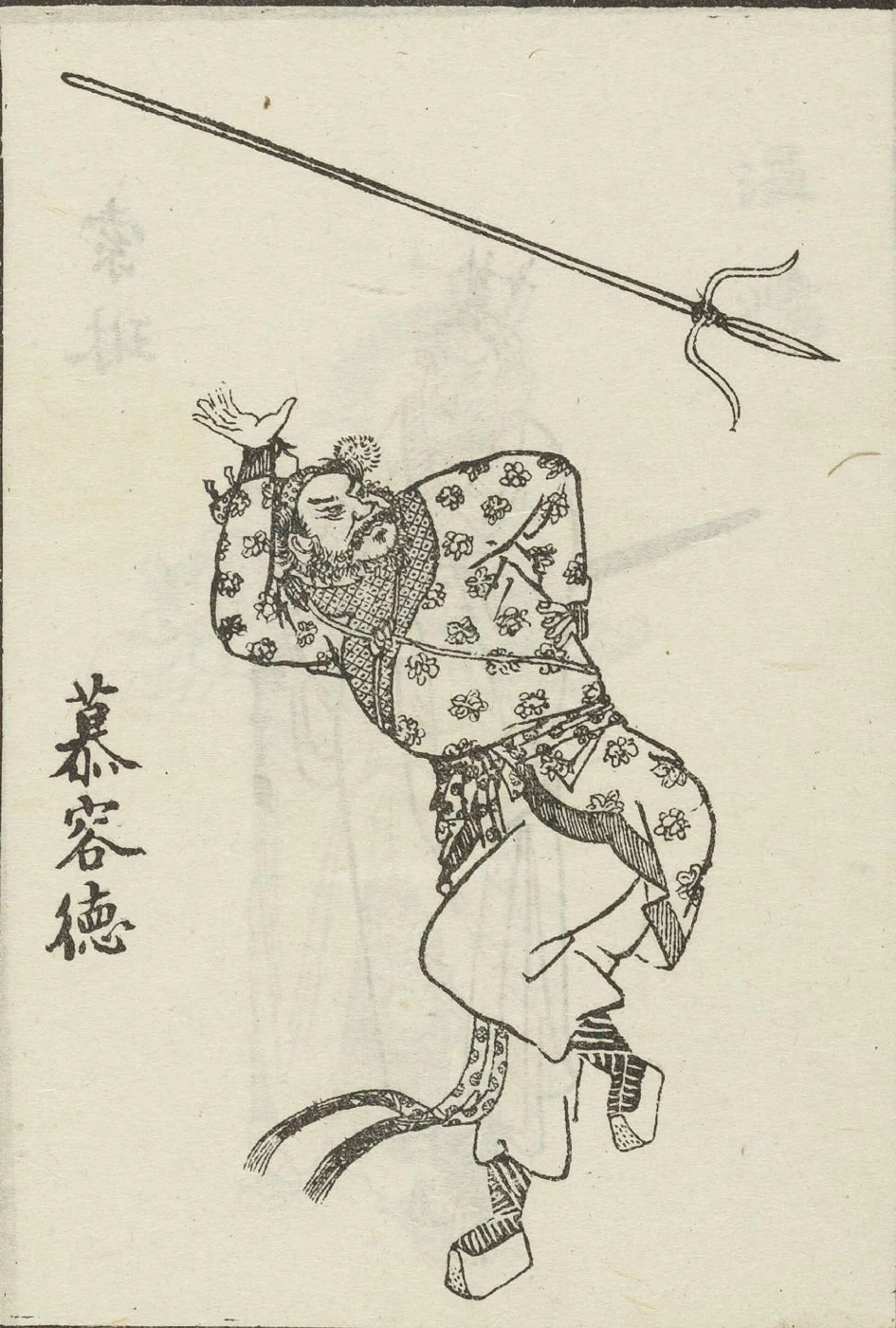 Southern Yan
Emperor
Murong De
Murong De (336–405), courtesy name Xuanming, later renamed Murong Beide, was a Xianbei native of Jicheng County, Changli Commandery (present-day Yi County, Liaoning). He was the founding emperor of Southern Yan during the Sixteen Kingdoms period, with the temple name Shizong and the posthumous name Emperor Xianwu. He was the youngest son of Murong Huang, Emperor Wenming of Former Yan, and the younger brother of Muron
Southern Yan
Historical figure
Murong Chao
Murong Chao (385–410), courtesy name Zuming, was a Xianbei and the last emperor of Southern Yan. He was the grandson of Murong Huang, Emperor Wenming of Former Yan, the nephew of Murong De, Emperor Xianwu of Southern Yan, and the son of Murong Na, Prince of Beihai. Murong Chao was born in the Western Qiang region and, in his youth, moved between Later Liang and Later Qin with his mother. During the Later Qin period,
KEY PEOPLE
Related entries
Bibliography
- 《晋书》
- 《资治通鉴》
- 《十六国春秋》